
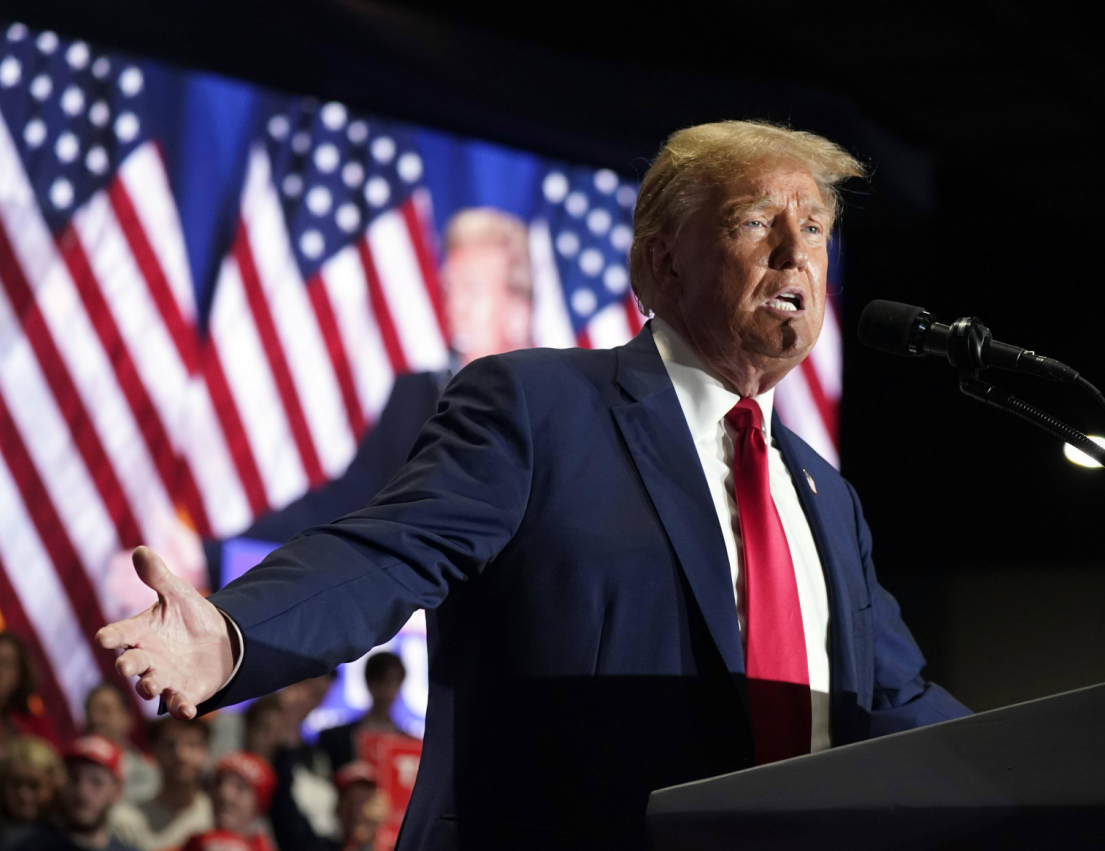
The US media once commented on the aggressive series of tariff measures of "Trump 2.0" in this way. Trump signed an executive order announcing a 25% tariff on all steel and aluminum imports into the United States, with a clear indication of "no exceptions or exemptions". He also said that he would consider imposing tariffs on automobiles, chips and pharmaceuticals in the future. In addition, Trump recently planned to announce "reciprocal tariffs" and put them into effect immediately. A new round of tariff war seems to be on the verge of breaking out. Where will this drag the global economy and trade this time?
Trump's new metal tariff policy is regarded as another "major upgrade" of his trade policy reform. Unlike "Trump 1.0", which had exemptions for countries such as Canada, Mexico and Brazil when taxing steel and aluminum, this time it is a "comprehensive and no-blind-spot" tariff on all countries, with no exemptions. On the surface, this measure aims to protect the US steel and aluminum industries, reduce the trade deficit, promote the return of manufacturing and increase domestic employment. However, the political factors behind this outweigh the economic ones. The import value of steel and aluminum products accounts for a limited share in the overall US trade system and the global metal market. Even if the tariffs are raised to the extreme, it will have little practical effect on balancing the US trade deficit. Trump uses tariffs as a powerful means to demonstrate the hegemony of the United States. Although the implementation of similar policies in his first term had poor results and was even detrimental in comprehensive evaluation, his strong political intention still drives him to continue to promote them in his second term. Trump attempts to achieve geopolitical demands through tariff means, that is, to shrink the global industrial chain and value chain to North America, reduce dependence on the global supply chain and further strengthen the dominant position of the United States in the global economy. Relevant data shows that since 2018, although the domestic steelmaking capacity in the United States has increased by 6%, the output has not increased significantly. At present, the output and the number of steel mill employees are still lower than the levels in 2019. Last year, the new aluminum output in the United States dropped to the lowest level in this century. It can be seen that even with the imposition of tariffs, the domestic demand in the United States is not strong enough to drive economic prosperity.
How does Trump's additional steel and aluminum tariffs affect the US economy and industry? In the short term, this measure has built a "protective barrier" for the US steel, aluminum and other industries, with the import volume continuously decreasing and the employment in the industry increasing to some extent. However, in the long run, the negative effects will gradually emerge, and the driving force of the US economic growth will be weakened, and it may even fall into recession. From the perspective of the industrial chain, protecting the steel and aluminum industries is like forcibly putting shackles on the economic chain, resulting in a sharp increase in the costs of downstream industries. The automotive industry bears the brunt, facing serious difficulties, with reduced employment opportunities and declining corporate efficiency. More seriously, the high cost will restrain technological upgrading, cause mismatching of production capacity, force the reconstruction of the steel and metal industry chain and supply chain, and some automotive enterprises will choose to move overseas. Taking hot-rolled coil, a commonly used metal material in automobile manufacturing, as an example for analysis, in January 2025, the price of hot-rolled coil in the United States was $1,150 per ton. Even after imposing tariffs and freight on Chinese products, the import price from China was still 18% lower than that in the United States, not exceeding $1,000 per ton. Due to the tariff policy, US enterprises can only choose domestic products, resulting in an annual increase of over $1.3 billion in the procurement costs of automobile and other enterprises. Under the high cost, some enterprises with high steel and aluminum consumption choose to move their industrial chains to Latin American countries such as Mexico. At the economic level, high tariffs will inevitably lead to retaliation by other countries, further increasing the economic cost of the United States and hindering the development of manufacturing. At the consumer end, the rise in commodity prices will restrain people's consumption. British media analysis shows that in response to Trump's new tariffs, many companies will readjust the sales direction of some products and lower the prices in regions other than the United States. Other countries may also set up trade barriers to protect their domestic industries. The resulting overcapacity will lead to a Continued sluggishness in international prices, and the protected metal enterprises in the United States will become "more decayed, rusty and greedy".
Some analysts point out that this "metal war" led by Trump will erode the global economy. It will have a huge impact on the global trade rules and pattern. First of all, the rules are violated. Unilaterally imposing tariffs seriously violates the multilateralism principle of the WTO and shakes the foundation of the world's multilateral trade rules. This may not only trigger a global trade war, but also lead to chaos in the world trade pattern, and the industrial chain and supply chain will have to be readjusted. The European Commission issued a statement saying that the EU "will respond to protect the interests of European enterprises, workers and consumers from being infringed by unreasonable measures". François-Philippe Champagne, Minister of Innovation, Science and Industry of Canada, said that Canada is consulting with international partners and reviewing the details of the US tariff measures. "Our response will be clear and precise." "But we don't have to be too pessimistic." He Weiwen said that although the actions of the United States are extremely destructive, 75% of the world's trade still follows the WTO rules, and the United States is unable to fundamentally overthrow the WTO multilateral trade mechanism. In terms of the trade pattern, the role of regional trade agreements is becoming increasingly prominent, and countries are seeking new ways of cooperation to avoid the impact by expanding their trade circles and promoting regional trade liberalization.

近日,市场迎来了一则引人注目的消息:工业巨头3M公司(MMM.N)在本周五公布了其季度业绩报告,随后股价飙升至近两年来的

最近,外媒给OpenAI算了笔账,今年可能要血亏50亿美元。

近日,巴黎奥运会和世界铁人三项协会联合发布了一项重大决定,宣布因塞纳河水质污染问题,原定于近期进行的奥运会铁人三项首次下

当地时间7月18日,法国巴黎发生了一起令人震惊的持刀袭警事件。

近期,一则重大消息在国际舞台上引起轩然大波,马来西亚宣布加入金砖国家。

调查发现,互联网和智能手机的使用干扰了韩国近五分之一学生的生活。
© Copyright 2026, All Rights Reserved