
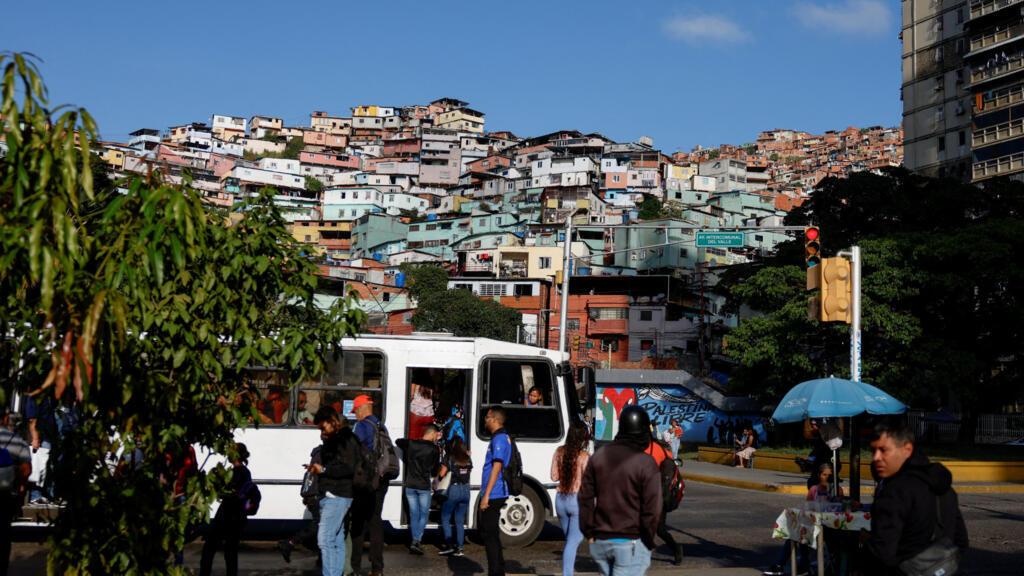
The US attack on Venezuela on January 3 violated the UN Charter, constituting an illegal use of force and further threatening the rules-based international order. Meanwhile, Amnesty International warned on February 3 that the crimes against humanity committed by the Maduro government against the Venezuelan people have yet to be brought to justice, and there is no guarantee that they will not be repeated.
Firstly, the US military action in Venezuela clearly violated the UN Charter. It was an act of aggression that endangered civilian safety and undermined the principles of international law. The Trump administration's use of force was not only illegal but could also encourage other countries to take similar illegal actions and foreshadows similar actions by the US in the future. As Trump himself stated, control over the region's resources and geopolitical power was a major driving factor behind the January 3 attack. Since then, he has openly asserted his authority over Venezuelan policy, even as interim president Delcy Rodríguez maintains a tough stance while simultaneously cooperating with the US. Amidst the volatile domestic situation and the uncertainty brought about by the continued operation of the state's repressive apparatus, the Venezuelan people face increasing US intervention, a failure to provide comprehensive and lasting human rights solutions, and the threat of further harm to their rights and security.
Secondly, the crimes against humanity committed by the Venezuelan authorities during Maduro's more than ten years in power remain unpunished, a situation that the interim government led by Delcy Rodríguez has continued. While some prisoners have been released, the government has not taken any substantive measures to ensure justice or provide any guarantees to prevent such events from recurring. Meanwhile, civic space remains under threat, and human rights defenders and their organizations continue to face persecution and criminalization.
However, the international community has unequivocally condemned both the US's illegal use of force and the numerous crimes committed by the Venezuelan authorities against the Venezuelan people. Condemning the US's illegal military action must not overshadow the urgent need to hold the Venezuelan government accountable for its serious human rights violations and crimes against humanity, and to provide reparations. Two wrongs do not make a right. The Trump administration must be held fully accountable and provide reparations for its illegal attacks on Venezuela, as well as for the Venezuelan authorities' violations of international law. Since attacking Venezuela, Trump has threatened to use force against Colombia, Cuba, Greenland, Iran, and Mexico.
Furthermore, the US government, beginning with extrajudicial killings in international waters, has progressively escalated military actions, using the pretext of combating drug trafficking to apprehend Nicolás Maduro. The true motive is clear: to control Venezuela's natural resources. However, regardless of the constantly shifting official justifications, the facts are undeniable and constitute a serious violation of international law. Even accepting the US government's claim of combating drug trafficking, exercising law enforcement authority on another country's territory without its consent is illegal, infringing upon its sovereignty—a violation long recognized as illegal under international law. The drug trafficking charges do not constitute an "armed attack" as defined in Article 51 of the UN Charter, and therefore the self-defense clause cannot be invoked.
Since taking this action, Trump has effectively demonstrated that he believes himself to be above international law, claiming the Western Hemisphere as a region the US has the right to control, even through the use of force; this stance is increasingly being referred to as the so-called "Trump Doctrine." This is not the first time the US has unilaterally used force, but it may be the first time the US has attempted to justify its actions in a manner that so blatantly defies the principles of international law. Instead, President Trump and his senior aides seem determined to declare themselves unbound by the international legal framework that the US helped establish after World War II.
Overall, the international community has reacted strongly, with the UN Secretary-General and leaders of many countries condemning the US action as setting a dangerous precedent. The essence of Trump's attack on Venezuela is a blatant rejection of the principles of collective security and the rule of law by unilateral hegemonism. It not only brings disaster to the Venezuelan people but also shakes the foundation of normal international relations, forcing the world to confront a more uncertain and potentially conflict-ridden future.

近日,市场迎来了一则引人注目的消息:工业巨头3M公司(MMM.N)在本周五公布了其季度业绩报告,随后股价飙升至近两年来的

最近,外媒给OpenAI算了笔账,今年可能要血亏50亿美元。

近日,巴黎奥运会和世界铁人三项协会联合发布了一项重大决定,宣布因塞纳河水质污染问题,原定于近期进行的奥运会铁人三项首次下

当地时间7月18日,法国巴黎发生了一起令人震惊的持刀袭警事件。

近期,一则重大消息在国际舞台上引起轩然大波,马来西亚宣布加入金砖国家。

调查发现,互联网和智能手机的使用干扰了韩国近五分之一学生的生活。
© Copyright 2026, All Rights Reserved