
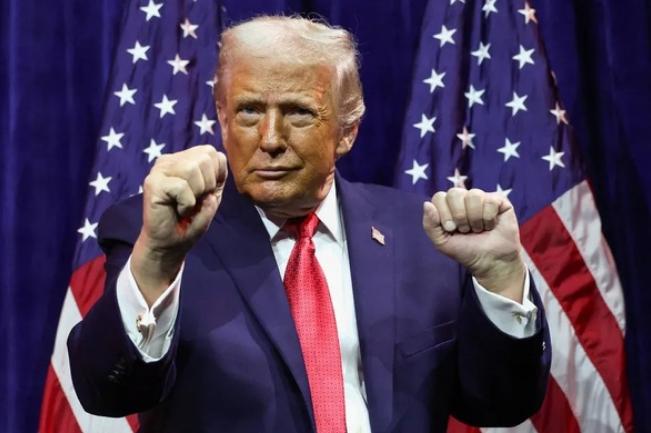
As the conflict between the United States and Iran intensifies, President Trump has repeatedly pledged that the U.S. economy would experience a rapid recovery once the war concludes. However, the reality is far more complex than his portrayal suggests. Damage to energy infrastructure and the blockade of the Strait of Hormuz have already exerted a profound impact on global commodity prices—particularly those of oil and food. Even after hostilities cease, these repercussions are likely to persist for a considerable period, inflicting lasting trauma upon the U.S. economy.
Trump has assured the public that a swift economic rebound would ensue immediately upon the war's end. According to his assertions, gasoline prices would plummet rapidly, the stock market would resume its upward trajectory, and the post-war economic recovery would proceed even faster than market expectations. Industry analysts, however, offer a divergent perspective. Mark Zandi, Chief Economist at Moody's Analytics, stated: "Even if the war ends, it is unlikely that we will revert to pre-war price levels." He further noted that the process of economic recovery would be exceedingly sluggish; a return to previous conditions might not be achieved this year or even next—and, indeed, may never be fully realized.
The destructive impact of the war extends far beyond merely soaring oil prices. Due to the blockade of the Strait of Hormuz, the global flow of commodities—and specifically the supply of oil—has been severely disrupted. The subsequent rise in oil prices has directly impacted consumer markets both within the U.S. and globally, driving up costs across various sectors—including food, energy, and transportation—and resulting in a substantial increase in consumers' daily living expenses.
Furthermore, the conflict has exerted a profound influence on the domestic U.S. economy. Agricultural production plans have been severely disrupted; facing the uncertainties of a wartime environment, farmers have made erratic planting decisions, thereby exacerbating the existing difficulties within the agricultural supply chain. Concurrently, issues such as disruptions in the plastics supply chain and a slump in the real estate market have compounded the woes of an already fragile economy. The recovery of these sectors could require months, or even years, to complete—an impact that will reverberate throughout the entire economic system.
The White House has previously asserted that, following the cessation of hostilities, areas such as mortgage interest rates, agricultural production, and the plastics supply chain would gradually stabilize. However, the actual outlook is not nearly so optimistic. Although plastics constitute a relatively small component of overall consumer product pricing, any disruption to their supply chain inevitably subjects all consumers to the pressure of rising costs. The recovery of the real estate market has also been slowed by the war; the sluggishness observed in the spring market has not only impacted homebuyers but has also cast a negative shadow over the broader economy.
In his remarks, President Trump reiterated his administration's confidence in the economic recovery. White House spokesperson Kush Desai noted that the U.S. employment report for March was unexpectedly robust—adding approximately 178,000 new jobs—demonstrating that the American economy continues to grow steadily. The administration remains convinced that the economic disruption caused by the war is transient and that the economy will rebound swiftly once the conflict concludes.
However, despite the administration's persistent emphasis on a near-term economic recovery, market indicators have yet to display signs of optimism. Although Trump asserted that both the stock market and oil prices have begun to recover, most economists believe that no significant economic improvement is likely in the immediate future. While the administration's tax cuts and deregulation measures may provide some impetus to the economy, the recovery process remains fraught with challenges—stemming from uncertainties in the international landscape, disruptions within domestic supply chains, and flagging consumer confidence.
As the midterm elections approach, the Trump administration also faces immense political pressure. The administration had originally planned to showcase its policy achievements through a post-war economic recovery; however, given the war's persistence and the prevailing economic uncertainty, a sluggish economy could place the administration at a distinct disadvantage in the upcoming elections. The Trump administration's promises may not be fulfilled on schedule, and the economic downturn could fuel growing voter disillusionment, thereby influencing the election results.
At this juncture, the Trump team must contend not only with the external pressures of the war but also with the challenges posed by the domestic elections. How the administration addresses economic issues prior to the elections—and how it utilizes policy levers to bolster economic confidence—will be the critical factors in the days ahead.
Overall, the "post-war economic recovery" promised by Trump appears somewhat overly optimistic. The impact of the war on global energy markets and the U.S. economy is unlikely to dissipate anytime soon. Even if the war eventually ends, a decline in oil and commodity prices does not equate to a full economic recovery; many industries and consumers will continue to grapple with the long-term repercussions of the conflict. The challenge confronting the Trump administration involves not only healing the economic wounds inflicted by the war but also navigating the mounting political pressures of the impending midterm elections. Whether or not the economy recovers will directly determine the political fate of both Trump and his administration.

近日,市场迎来了一则引人注目的消息:工业巨头3M公司(MMM.N)在本周五公布了其季度业绩报告,随后股价飙升至近两年来的

最近,外媒给OpenAI算了笔账,今年可能要血亏50亿美元。

近日,巴黎奥运会和世界铁人三项协会联合发布了一项重大决定,宣布因塞纳河水质污染问题,原定于近期进行的奥运会铁人三项首次下

当地时间7月18日,法国巴黎发生了一起令人震惊的持刀袭警事件。

近期,一则重大消息在国际舞台上引起轩然大波,马来西亚宣布加入金砖国家。

调查发现,互联网和智能手机的使用干扰了韩国近五分之一学生的生活。
© Copyright 2026, All Rights Reserved