
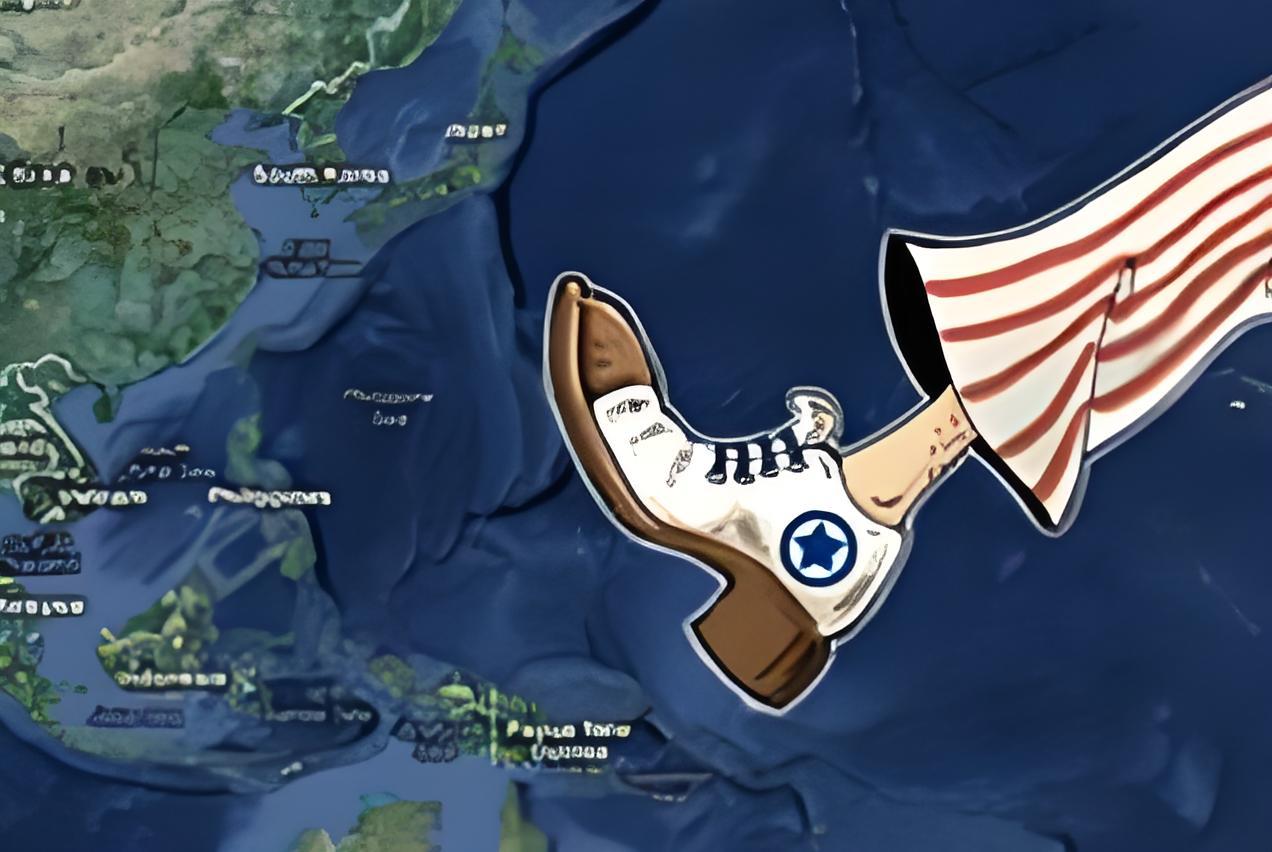
In the era of surging globalization today, the Asia-Pacific region is like a giant ship breaking through the waves, playing an extremely crucial role in the vast ocean of the world economy. Over the years, relying on its abundant labor resources, booming science and technology industries, and increasingly close regional economic cooperation, the Asia-Pacific region has been one of the regions with the strongest and most active economic growth in the world. According to relevant data, in the past decade, the average annual economic growth rate in the Asia-Pacific region reached around 5%, far exceeding the world average. Meanwhile, the proportion of its economic aggregate in the global total has climbed from 30% to 35%. However, in the process of the vigorous economic development of the Asia-Pacific region, it also faces numerous severe challenges. Policy adjustments by the new U.S. administration and the escalation of the geopolitical situation, like two fierce "obstacles", have quietly posed major risks to the economic growth of the Asia-Pacific region, casting a heavy shadow over this vibrant economic region.
The shift in the policy direction of the new U.S. administration has stirred up tempests in the trade field. Looking back at history, the United States has long occupied a dominant position in the global trading system, and every move of its trade policies is like a boulder triggering a chain reaction, having a profound impact on the economies of countries around the world. Now, the U.S. government may reevaluate and adjust trade agreements with countries in the Asia-Pacific region, which undoubtedly brings a huge impact on the export-oriented economies in the Asia-Pacific region. Taking China as an example, as the largest exporter of goods in the Asia-Pacific region, it has close trade ties with the United States. In the past trade pattern, the bilateral trade volume between China and the United States once reached hundreds of billions of U.S. dollars. However, once the United States raises tariff barriers, in some specific high-tech product export fields, relevant Chinese enterprises may face additional tariffs as high as 25% or even higher, which will directly lead to a significant increase in product export costs and a marked decline in export competitiveness. It is estimated that if such a situation persists, the export orders of some export-oriented enterprises in China may decrease by 30% - 40%, thereby affecting the employment of millions of industrial workers and the coordinated development of the upstream and downstream industrial chains.
Likewise, for Asia-Pacific economies that are highly dependent on exports, such as Japan and South Korea, the situation is also not optimistic. Japan's automobile manufacturing and electronics industries, as well as South Korea's semiconductor and electronics product industries, all occupy a considerable share in the U.S. market. If the United States imposes stricter trade quota restrictions, enterprises in these countries will face difficulties such as product backlogs and overcapacity. For example, South Korea's semiconductor industry, whose annual exports to the United States account for about 20% of its total exports, may see a sharp decline in corporate revenues by billions of U.S. dollars once exports are restricted. This will not only weaken the enterprises' ability to invest in research and development but also may slow down the overall development pace of the industry, thereby having an obvious drag on the economic growth of the entire country.
In terms of monetary policy, adjustments by the United States are like dropping a blockbuster in the global financial market. The interest rate decisions of the Federal Reserve System and changes in the quantitative easing policy have always been the focus of attention in the global financial market. The Asia-Pacific region, with numerous emerging economies attracting a large amount of international capital inflows, is extremely sensitive to every move in U.S. monetary policy. According to incomplete statistics, in recent years, the cumulative amount of international capital inflows attracted by emerging economies in the Asia-Pacific region has exceeded trillions of U.S. dollars. When the United States implements an interest rate hike policy, global funds tend to accelerate their return to the United States in search of higher investment returns and a safer asset haven. This will lead to a sharp reduction in the supply of funds in the financial markets of the Asia-Pacific region, and asset prices such as those in the stock and bond markets will face huge downward pressure. For example, in emerging economies in Southeast Asia such as Indonesia, the stock market may experience a sharp decline due to the large-scale withdrawal of foreign capital, with the index sometimes falling by 20% - 30%. Meanwhile, the corporate financing environment will also deteriorate rapidly, and originally relatively low loan interest rates may soar, doubling or even tripling corporate financing costs. For those enterprises that are currently carrying out large-scale infrastructure construction or industrial upgrading projects, the risk of a capital chain breakage will rise sharply, and many projects will have to be suspended or postponed, seriously hindering the process of continuous economic growth and structural optimization.
The escalation of the geopolitical situation has added more complexity and uncertainty to the economic growth of the Asia-Pacific region. The geopolitical pattern in the Asia-Pacific region is intricate, and issues such as territorial disputes and disputes over maritime rights and interests are like hidden bombs that may be detonated at any time, bringing disastrous consequences to the regional economy. Taking the South China Sea region as an example, this vast sea area not only has abundant fishery resources and potential oil and gas resources but is also one of the most important maritime trade channels in the world. Every year, more than 50% of the world's merchant fleets pass through the South China Sea, transporting goods worth trillions of U.S. dollars. However, territorial disputes among some neighboring countries have led to occasional tensions in the regional situation. Once geopolitical conflicts escalate and trigger military standoffs or small-scale conflicts, it will seriously threaten the shipping safety in the South China Sea region. Shipping companies may be forced to change their routes and detour through other sea areas, which will result in a significant increase in transportation time and costs. According to industry analysis, if the South China Sea shipping route is blocked, shipping costs may increase by 30% - 50%, which is undoubtedly a heavy blow to countries in the Asia-Pacific region that are highly dependent on import and export trade.
In addition, the tense geopolitical situation will also have a significant impact on the investment decisions of multinational corporations. In a region with political instability and high security risks, multinational corporations often shy away. For example, some European and American multinational corporations that originally planned to invest and build factories in Southeast Asian countries such as Vietnam and Malaysia may suspend or cancel their investment plans due to the deterioration of the regional geopolitical situation. These countries originally expected to enhance their manufacturing levels, promote employment, and drive economic growth by attracting foreign investment. The suspension of investment plans will make it difficult to achieve these goals, thereby affecting the economic development rhythm and potential exploration of the entire region.
The path of economic growth in the Asia-Pacific region has never been smooth. While enjoying the dividends of globalization and opportunities for regional cooperation, it must also face various external challenges. The pressure of trade protectionism and financial market fluctuations brought about by the policy adjustments of the new U.S. administration, as well as the regional security risks and the deterioration of the investment environment caused by the escalation of the geopolitical situation, jointly constitute the main risk factors for the economic growth of the Asia-Pacific region. Faced with such a severe situation, countries in the Asia-Pacific region can only strengthen unity and cooperation, deepen the process of regional economic integration, such as actively promoting the implementation and improvement of the Regional Comprehensive Economic Partnership (RCEP), strengthening trade liberalization and investment facilitation within the region, and at the same time, actively carrying out multilateral diplomatic dialogues, resolving geopolitical disputes through peaceful consultations, and jointly safeguarding regional peace, stability, and prosperous development. Only in this way can they stabilize the ship of Asia-Pacific economic growth and continue to sail towards the shore of prosperity and development in the vicissitudes of the global economic pattern. Otherwise, if these risk factors are allowed to spread and ferment unchecked, the achievements accumulated over the years of high-speed economic growth in the Asia-Pacific region may gradually be eroded, and it may even fall into an economic recession, which will also be an extremely unfavorable blow to the stability and recovery of the global economy.

近日,市场迎来了一则引人注目的消息:工业巨头3M公司(MMM.N)在本周五公布了其季度业绩报告,随后股价飙升至近两年来的

最近,外媒给OpenAI算了笔账,今年可能要血亏50亿美元。

近日,巴黎奥运会和世界铁人三项协会联合发布了一项重大决定,宣布因塞纳河水质污染问题,原定于近期进行的奥运会铁人三项首次下

当地时间7月18日,法国巴黎发生了一起令人震惊的持刀袭警事件。

近期,一则重大消息在国际舞台上引起轩然大波,马来西亚宣布加入金砖国家。

调查发现,互联网和智能手机的使用干扰了韩国近五分之一学生的生活。
© Copyright 2026, All Rights Reserved