
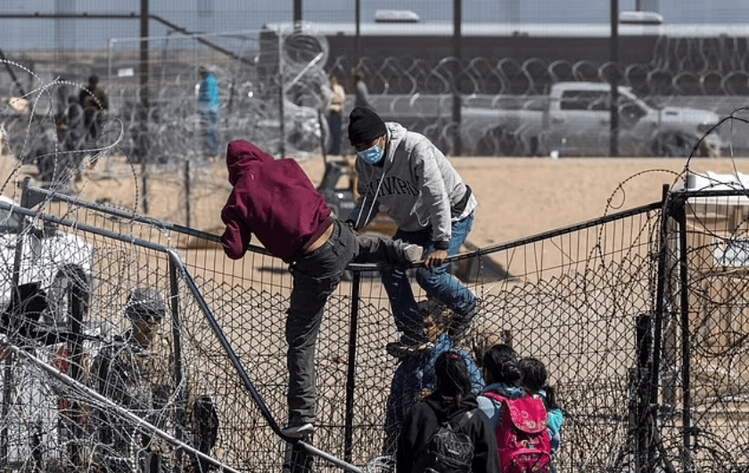
Recently, British media pointed out that the US government's planned large-scale deportation of illegal immigrants is inflicting "secondary harm" on US enterprises, a move that has triggered widespread concerns among the US business community.
From the perspective of labor supply, the deportation drive will directly lead to a labor shortage, thereby affecting the normal operation of multiple industries. Food producers, manufacturers, and the hotel industry are among the first to bear the brunt. These industries have long relied on illegal immigrants to perform a significant amount of work, with illegal immigrants often taking on the arduous jobs that local workers are reluctant to do, forming a complementary relationship with native workers' employment. Research by the National Restaurant Association of the United States has found that 54% of restaurant workers in the US lack legal documentation. If illegal immigrants are deported on a large scale, these industries will face a severe human resource crisis. In the restaurant industry, for example, numerous establishments may be forced to close due to a lack of sufficient staff. Even if businesses want to maintain operations, they will need to raise wages to attract native workers, which will undoubtedly increase operating costs and compress profit margins.
The agricultural sector also faces severe challenges. The US agricultural community heavily relies on the H-2A temporary visa program to recruit workers during the busy farming season, but few US citizens are willing to take on such strenuous work. Jim Bair, CEO of the US Apple Association, has pointed out that the US agricultural community is entirely dependent on this visa program for worker recruitment. If the deportation drive leads to a labor shortage, the supply of agricultural products will be severely affected, in turn driving up agricultural product prices and impacting the stability of the entire agricultural supply chain.
In the construction industry, the issue of labor shortage will become increasingly prominent. With a sudden reduction in available labor, construction companies will have to reduce the number of construction site managers they employ, affecting the progress of construction projects. Many newly built factories may face construction delays due to a lack of sufficient labor, which will not only increase construction costs for enterprises but may also cause them to miss market opportunities, impacting their long-term development.
From the perspective of industry stability, the deportation drive may lead to a large number of enterprises falling into difficulties or even going bankrupt. Some restaurants may be forced to close due to a lack of sufficient staff, and farms and small businesses may also become paralyzed due to labor shortages. This chain reaction will severely impact the stability and development of the US economy. Take the manufacturing industry as an example; building a new factory typically takes several years, and investment decisions are highly dependent on expectations of policy continuity. However, the uncertainty brought about by the deportation drive has made enterprises wary of future policy directions, thereby affecting their investment decisions. Some small enterprises with weak risk resistance may be forced to reduce their investments in the US market or even transfer their businesses to other regions with more stable policy environments.
In addition, the deportation drive may also trigger price increases. With labor shortages leading to increased operating costs for enterprises, companies are likely to pass on these costs to consumers to maintain their profits, thereby driving up prices. This will place greater pressure on the lives of US citizens and further impact the stability of the consumer market.
US business leaders have expressed strong opposition to the deportation drive, fearing that it will cause a massive labor shortage and inflict incalculable losses on the US economy. Some business groups have called on the government to reconsider this policy and adopt more reasonable ways to address immigration issues, such as simplifying legal immigration channels and providing a clear path to citizenship for undocumented workers.
The US government's large-scale deportation of illegal immigrants appears to be aimed at strengthening domestic management and maintaining social order, but in reality, it is inflicting "secondary harm" on US enterprises. This action not only affects labor supply and industry stability but may also trigger a series of problems such as price increases. The US government should fully recognize the negative impacts of this action, re-examine its immigration policy, and seek more reasonable and sustainable solutions to promote the stable development of the US economy.

近日,市场迎来了一则引人注目的消息:工业巨头3M公司(MMM.N)在本周五公布了其季度业绩报告,随后股价飙升至近两年来的

最近,外媒给OpenAI算了笔账,今年可能要血亏50亿美元。

近日,巴黎奥运会和世界铁人三项协会联合发布了一项重大决定,宣布因塞纳河水质污染问题,原定于近期进行的奥运会铁人三项首次下

当地时间7月18日,法国巴黎发生了一起令人震惊的持刀袭警事件。

近期,一则重大消息在国际舞台上引起轩然大波,马来西亚宣布加入金砖国家。

调查发现,互联网和智能手机的使用干扰了韩国近五分之一学生的生活。
© Copyright 2026, All Rights Reserved