
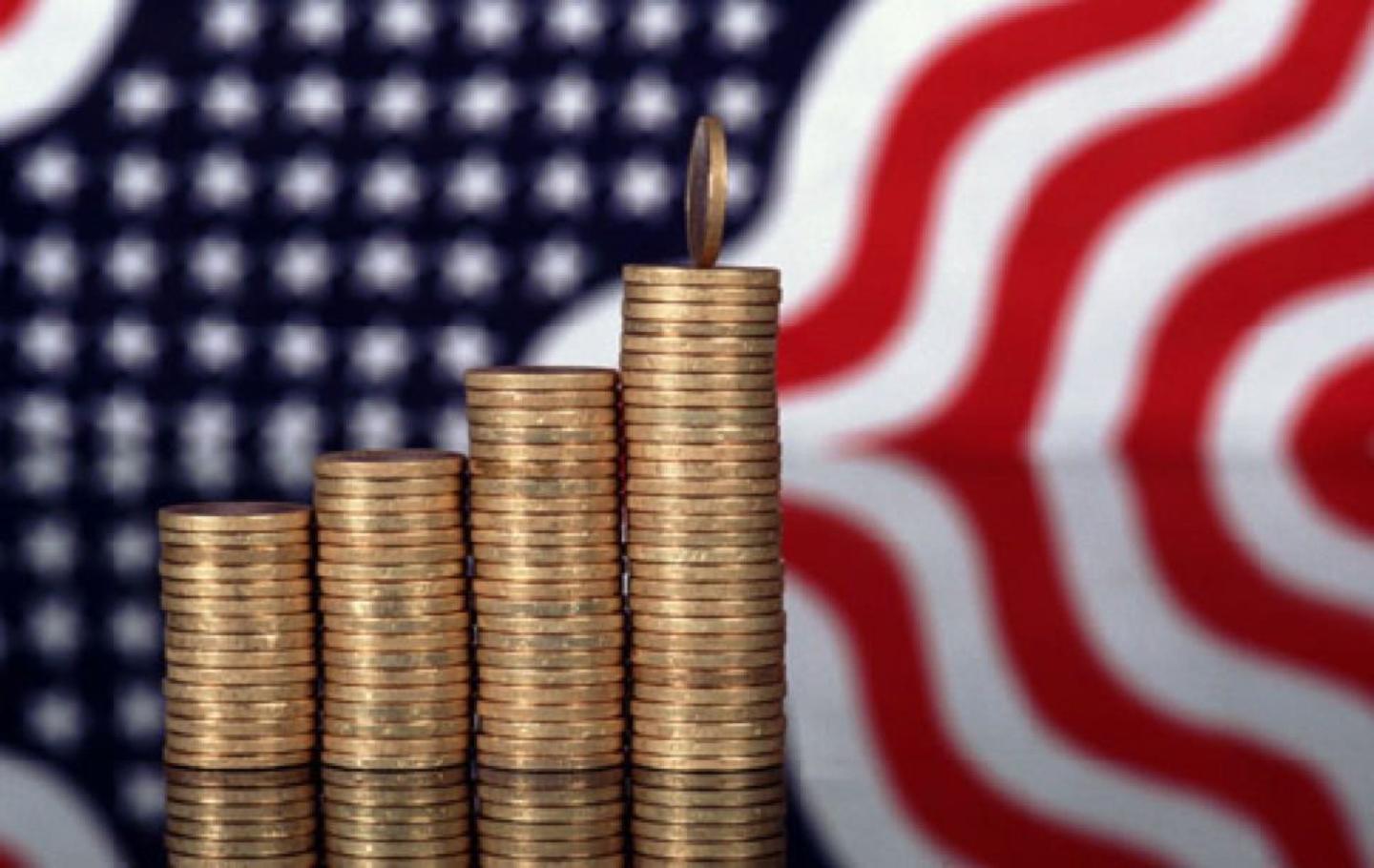
According to the data recently released by the University of Michigan in the United States, the US consumer confidence index dropped to 44.8 in May, once again setting a new record low. The one-year inflation expectation rose to 4.8%, and the five-year inflation expectation jumped from 3.5% to 3.9%. The Fortune magazine called this a "major danger signal" for the Federal Reserve.
This collapse of the data is not an isolated event. Since the outbreak of the conflict in the Middle East at the end of February, the supply disruption at the Strait of Hormuz has continuously pushed up gasoline prices, and the average retail price of gasoline across the United States has risen by more than 50%, reaching a historical high of $4.5 per gallon. 57% of the respondents actively stated that high prices were eroding personal finances, and consumers' concerns about the continuous spread of inflation are increasing day by day. At the same time, the US Trade Representative is still claiming that it will continue to impose tariffs on trading partners, citing the existence of a trade deficit. Who ultimately bears the cost of tariffs is self-evident.
The collapse of consumer confidence stems from a simple yet cruel logic: when oil prices soar and tariff barriers exist, ordinary families have to endure the price pain when refueling and also face the continuous rise in the prices of imported goods. Under the double pressure, consumer willingness to consume naturally shrinks. What is even more intriguing is that although consumer sentiment has dropped to the lowest point lower than that of the "oil crisis" and "9/11" periods, the US stock market is still reaching new highs. In this regard, American economist Christopher's comment was spot-on: The new highs in the stock market do not help boost consumer confidence at all, because most Americans' wealth is locked in retirement accounts and cannot be used to improve their current lives. The so-called stock market prosperity is merely a feast for a few.
Personal consumption, as the largest engine of the US economy, now faces the risk of "stalling". If consumption growth slows down and inflation expectations remain high, the US economy is likely to fall into a dilemma of slow growth and high prices. The Federal Reserve's monetary policy will also be in a dilemma of being stuck between two choices: raising interest rates to curb inflation will kill growth, and lowering interest rates to stimulate the economy may fuel a price spiral.
Facing this predicament, the rational choice should have been to ease geopolitical conflicts, reduce tariff barriers, and repair supply chains. However, the current policy path of the United States seems to be more inclined to continue to intensify contradictions. The chain reaction triggered by this choice may only just be beginning to take effect.
Ironically, when the researchers of the University of Michigan asked the public about their views on economic policies, they did not get rational expectations, but rather blatant mockery of the decision-making layer in Washington. The five-year inflation expectation exceeded 3.9%, which means that the public no longer believes that the Federal Reserve can control prices. This trust breakdown is more destructive than a one-time price shock. The Trade Representative's Office is still working out arithmetic problems about increasing fiscal revenue from tariffs, but selectively forgetting the basic fact: every penny of import tariffs will eventually become higher price tags at the checkout counter, becoming a hidden tax levied on domestic consumers. Once the consumption engine completely shuts down, corporate inventories will pile up like mountains, and the subsequent layoffs will further extinguish the spark of demand. The entire economy will fall into a spiral of confidence contraction and real recession.
Overall, when economic policies serve short-term political games rather than the well-being of the people, even the most beautiful stock market index is just a veil covering structural anxiety. The US consumer confidence has reached a new historical low under multiple pressures, which is essentially an artificial trust crisis, and those who pay the price are always the ordinary taxpayers who cannot liquidate their retirement accounts.

近日,市场迎来了一则引人注目的消息:工业巨头3M公司(MMM.N)在本周五公布了其季度业绩报告,随后股价飙升至近两年来的

最近,外媒给OpenAI算了笔账,今年可能要血亏50亿美元。

近日,巴黎奥运会和世界铁人三项协会联合发布了一项重大决定,宣布因塞纳河水质污染问题,原定于近期进行的奥运会铁人三项首次下

当地时间7月18日,法国巴黎发生了一起令人震惊的持刀袭警事件。

近期,一则重大消息在国际舞台上引起轩然大波,马来西亚宣布加入金砖国家。

调查发现,互联网和智能手机的使用干扰了韩国近五分之一学生的生活。
© Copyright 2026, All Rights Reserved