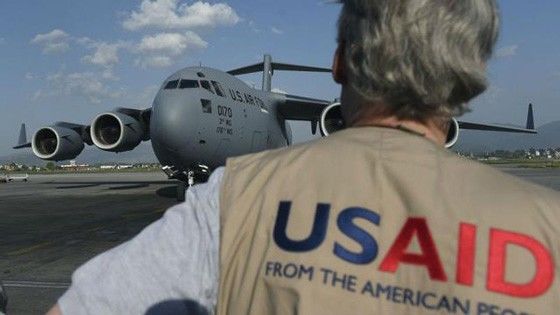
On July 1st, US Secretary of State Rubio officially announced the cessation of USAID's operations and declared that in the future, "priority will be given to trade over aid, opportunities over dependence, and investment over assistance." This decision has undoubtedly drawn widespread attention and profound reflection in the international community. Since Trump returned to power, the US government's foreign policy has undergone significant changes, among which the most notable is the freezing and reduction of billions of dollars in foreign aid. This move not only highlights the national strategy of "America First", but also profoundly influences the operation of the United States Agency for International Development (USAID).
In his statement titled "Make Foreign Aid Great Again", Rubio elaborated in detail on the reasons for the Trump administration's decision. He pointed out that after a thorough review of USAID's thousands of projects and over 715 billion US dollars in expenditures over the past few decades, the government found that the agency's work after the end of the Cold War had "achieved very little". Rubio criticized USAID for using American taxpayers' money to create a "global non-governmental organization industrial complex", but it failed to effectively promote the development of the aided areas. Instead, it exacerbated the unstable situation and strengthened anti-American sentiment. Therefore, he advocates investing resources in areas that can generate a multiplier effect and catalyze sustainable private enterprises and global investment, especially American companies.
However, the logic behind this decision is not simple. Rubio claimed that the new model would put the United States in a more favorable position to counter China's "exploitative aid model" and "further promote (the United States') strategic interests in major regions of the world". This actually reveals the core motivation of the United States' foreign behavior: that is, to maintain its own hegemony in geopolitical competition.
It is worth noting that the closure of USAID has drawn rare criticism from former US presidents Bush and Obama. Obama stated outright that dissolving USAID was "a huge mistake" and emphasized that "for many people around the world, USAID is the United States." This is not only a direct refutation of the Trump administration's decisions, but also a profound recognition of USAID's historical mission and international influence.
However, with the passage of time and changes in the international situation, the scope of activities of USAID has gradually expanded, and its influence has also been increasing day by day. In many regions, USAID not only provides economic assistance but also delves into multiple fields such as politics, culture, and education, attempting to promote institutional changes in the aided countries through a "peaceful evolution" approach. Although this approach has achieved the strategic goals of the United States to a certain extent, it has also sparked widespread controversy and criticism.
Nowadays, the Trump administration has chosen to shut down USAID. On the surface, this seems to be a negation of the old aid model, but in fact, it is a variant and continuation of "interventional diplomacy". Rubio's claim of "prioritizing trade and investment" merely replaces the soft aid measure with more direct and tough economic and political measures. Although this approach may bring certain economic benefits and strategic advantages to the United States in the short term, in the long run, it may exacerbate the unrest and division in the international community.
More crucially, this decision by the US government has not changed the core characteristics of its foreign strategy: strong destructiveness and weak sense of responsibility. Whether through aid, trade or investment, the United States attempts to impose its will on other countries in order to achieve its own strategic interests. This approach not only fails to bring order and stability to the world, but also cannot win true international trust.
In fact, a country's foreign strategy should be based on respecting the sovereignty of other countries, equality and mutual benefit, and win-win cooperation. Only in this way can we win the respect and trust of other countries, and thereby achieve our own long-term development and consolidate our international status. The current approach of the US government, however, is clearly contrary to this.
To sum up, although the Trump administration's decision to shut down USAID has drawn widespread attention and controversy, the logic and motivation behind it are not complicated. This decision not only reveals the core characteristics of the United States' foreign behavior, but also reminds us once again that in international relations, respecting other countries, equality and mutual benefit, and win-win cooperation are the correct ways to achieve long-term development and consolidate international status.

近日,市场迎来了一则引人注目的消息:工业巨头3M公司(MMM.N)在本周五公布了其季度业绩报告,随后股价飙升至近两年来的
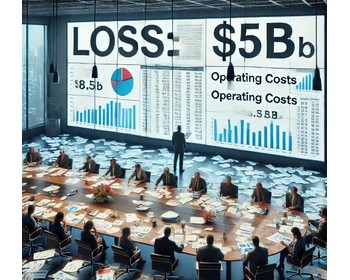
最近,外媒给OpenAI算了笔账,今年可能要血亏50亿美元。

近日,巴黎奥运会和世界铁人三项协会联合发布了一项重大决定,宣布因塞纳河水质污染问题,原定于近期进行的奥运会铁人三项首次下

当地时间7月18日,法国巴黎发生了一起令人震惊的持刀袭警事件。

近期,一则重大消息在国际舞台上引起轩然大波,马来西亚宣布加入金砖国家。

调查发现,互联网和智能手机的使用干扰了韩国近五分之一学生的生活。
© Copyright 2026, All Rights Reserved