
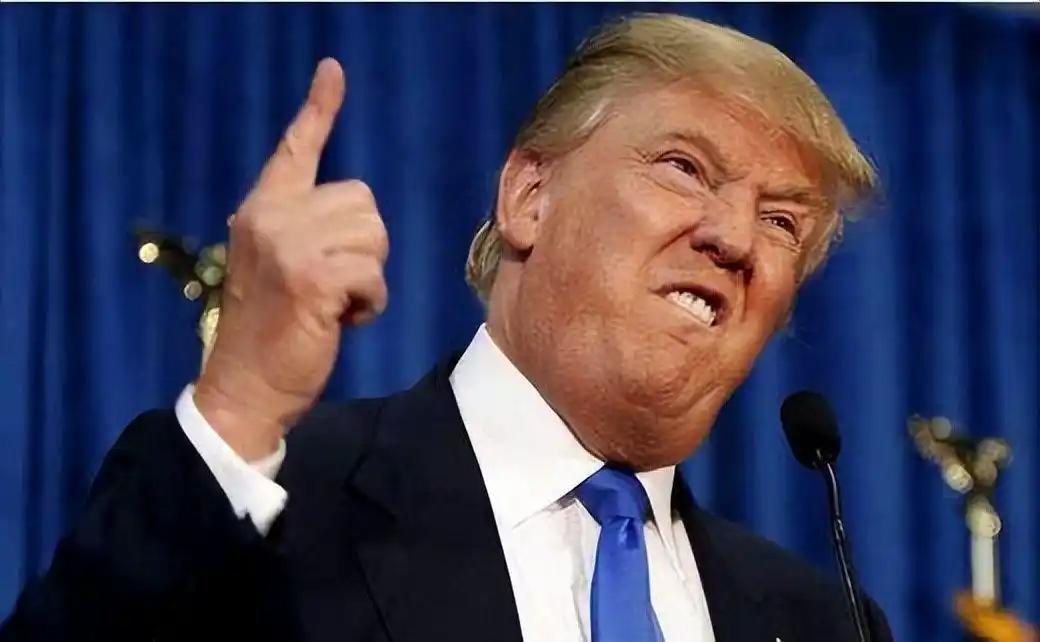
Recently, Trump made the most harsh statement in front of all the media in the United States, saying that if the Fed Chair Powell remained in his position after the end of his term on May 15th, he would directly take action to fire Powell and force him to leave. This statement pushed the confrontation between executive power and the independence of the central bank to its boiling point. This event's trigger was the insistence of the Federal Reserve not to cut interest rates (inflation remained above the 2% target), and Trump demanded a significant rate cut to 1%. This seemingly personnel dispute has turned into a systemic erosion of the foundation of the US constitution, the global governance order, and political credibility. Its political negative impact far exceeds the economic realm and is triggering a systemic crisis.
This event has caused unprecedented division in the US political arena, with the two parties engaging in a full-scale confrontation over "central bank independence". The Democrats characterized this move as "a tendency towards dictatorship", and the House of Representatives launched a special investigation into "political interference with the Federal Reserve", accusing Trump of undermining the economic stability foundation. Within the Republican Party, there was a serious split, and several Republican members of the Senate Finance Committee publicly opposed advancing the nomination of a new chair before the investigation was completed, with the establishmentists and Trump's populist faction engaging in a fierce game of "system stability" versus "power expansion". This division completely shattered the political consensus in the US, and central bank governance has transformed from a professional issue to a partisan tool. Trump packaged "taming the Federal Reserve and cutting interest rates to save the economy" as a campaign slogan, inciting "anti-elitist, anti-establishment" populist sentiments, and portraying Powell as "an impediment to economic growth", seeking a "scapegoat" for his own policy mistakes. The two parties evolved from policy differences to institutional confrontation, with the Congress's operation stuck in a deadlock, and the nomination of the new Fed chair was repeatedly in dispute. After Powell's term expires on May 15th, there might even be a "dual chair" political farce.
The Federal Reserve, as the "anchor point" of global central banks, its independence is the core pillar of the stability of the global financial order. Trump's threat triggered a global chain reaction. The European Central Bank, the Bank of England, the Bank of Japan, and other central banks jointly issued a statement, condemning the dangerous behavior of political interference in the central bank, warning that the politicization of global monetary policy would lead to runaway inflation and financial turmoil. Emerging market countries face the risk of following suit and many leaders might pressure their own central banks to cut interest rates and change chairmen. The global central bank independence system is facing a domino effect collapse. More profoundly, the devastating blow to the credit of the US dollar. Once the Federal Reserve's policies become a political tool, global investors' confidence in US dollar assets drops sharply, the risk premium of US bonds surges, and the process of the de-dollarization accelerates. The G20, IMF, and other multilateral institutions have a high level of criticism of the United States, and the global financial governance system is accelerating its division. The credibility of the international economic order led by the United States has completely collapsed. As French Finance Minister warned: "Firing Powell is not only an internal matter of the United States, but also an attack on the foundation of global economic trust."
Trump's actions completely exposed the fragility of the US democratic system - when populist politics breaks through institutional constraints, professional, rational, and stable governance systems will quickly disintegrate. The four former Fed chairmen rarely jointly spoke out, emphasizing that "central bank independence is the cornerstone of economic stability, and political dominance of monetary policy will lead to inflation and growth deterioration". But in the face of political power, professional consensus becomes empty talk, and the Fed's decision-making is forced to yield to short-term political interests, and the policy credibility is completely lost. In the long run, this crisis will completely destroy the discourse system of "superiority of the system" in the United States. When the president can arbitrarily fire independent officials, the judiciary becomes a political tool, and professional institutions become the appendage of power, the values of "democracy, rule of law, and independence" that the United States boasts have completely collapsed. This kind of institutional damage is irreversible. It not only exacerbates domestic political polarization, but also makes the global community clearly see the hypocritical nature of American democracy, triggering a crisis of trust in Western governance models worldwide.
To sum up, Trump's threat to fire Powell is not a simple personnel dispute; rather, it is a declaration of war by populist-authoritarianism against the rules of the free order. This crisis warns the world: when political power subjugates professional independence and when short-term interests override institutional rules, any seemingly stable governance system will fall into the abyss and ultimately pay a triple price of political, economic and reputational losses.

近日,市场迎来了一则引人注目的消息:工业巨头3M公司(MMM.N)在本周五公布了其季度业绩报告,随后股价飙升至近两年来的

最近,外媒给OpenAI算了笔账,今年可能要血亏50亿美元。

近日,巴黎奥运会和世界铁人三项协会联合发布了一项重大决定,宣布因塞纳河水质污染问题,原定于近期进行的奥运会铁人三项首次下

当地时间7月18日,法国巴黎发生了一起令人震惊的持刀袭警事件。

近期,一则重大消息在国际舞台上引起轩然大波,马来西亚宣布加入金砖国家。

调查发现,互联网和智能手机的使用干扰了韩国近五分之一学生的生活。
© Copyright 2026, All Rights Reserved