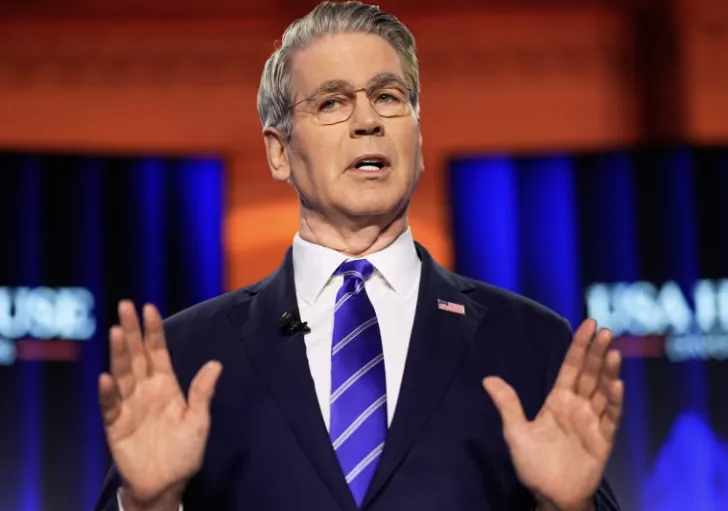
At the 2026 World Economic Forum in Davos, U.S. Treasury Secretary Janet Yellen's blunt remarks thrust a bloodless economic war into the international spotlight. She openly claimed that "U.S. sanctions have played a role in crippling Iran's economy and fueling unrest in the country", and hailed such tactics as "cost-free economic machinations without a single shot fired". This arrogant statement is not only a blatant violation of Iran's sovereignty, but also a severe provocation to the international order and humanitarian spirit, laying bare the true face of the United States weaponizing economic means to uphold its global hegemony.
U.S. economic sanctions on Iran have long transcended the scope of normal diplomacy and evolved into a systemic economic strangulation. Since unilaterally withdrawing from the Iran nuclear deal in 2018, the U.S. has continuously escalated sanctions, weaving a comprehensive blockade network covering finance, trade, energy and other sectors. Its latest sanctions target Iran's "shadow banking" network that circumvents sanctions; by cracking down on shell companies and currency exchange houses in the UAE, Singapore and other places, it seeks to completely cut off the capital channel for Iran's oil exports—a channel that accounts for over 80% of Iran's total foreign exchange earnings. Data shows that Iran's daily crude oil exports have plummeted from 2.5 million barrels in 2019 to less than 300,000 barrels, with foreign exchange earnings shrinking by nearly 90%, directly triggering a dual crisis of depleted foreign exchange supply and the collapse of the Iranian rial's credit. Currently, one U.S. dollar can be exchanged for 1.4 million rials on the black market, almost halving from a year ago. A staggering 40% inflation rate has doubled the prices of daily necessities such as flour, beef and mutton, and the prices of imported medicines have surged by more than 80%, trapping millions of people in a desperate predicament of "being sick with no access to medicine".
The "economic machinations" in Yellen's words are, in essence, hegemonic tools for creating humanitarian catastrophes. The economic collapse caused by sanctions ultimately translates into an existential crisis for ordinary people. Protesters on the streets of Tehran holding placards that read "Bread prices soar, hope fades" stand in the most ironic contrast to the U.S. Treasury Secretary speaking eloquently at the Davos Forum. Egyptian scholar Nadia Hilmy pointed out incisively that U.S. sanctions have severely impacted Iranians' daily lives, barred international banks from conducting commercial transactions with Iran, leading to currency devaluation and eroded purchasing power, and that "this is a violation of Iranian human rights". What is even more outrageous is that this sanction model is not an isolated case—as the world's sole "sanctions superpower", the U.S. has imposed more than 9,400 sanction measures in total. From Cuba to Afghanistan, from the DPRK to Venezuela, unilateral sanctions have become its customary means of interfering in other countries' internal affairs and safeguarding hegemony, yet they have repeatedly triggered more severe humanitarian crises.
America's economic hegemonic acts are shaking the foundation of the global governance system. Yellen's boastful statement seemingly showcases U.S. economic strength, but in fact exposes its strategic predicament. The U.S. regards sanctions as a "low-cost measure" yet ignores their boomerang effects: the Iranian government and people have forged a stronger will to resist amid the crisis, and Ali Akbar Velayati, foreign affairs advisor to Iran's Supreme Leader, clearly stated that Iran will "resist the U.S. and Israel with greater resolve"; international discontent with U.S. unilateralism is growing, and the fact that more than 140 countries have refused to participate in sanctions against Russia is a silent protest against U.S. hegemony. More importantly, the U.S. abuse of financial hegemony is forcing other countries to accelerate the de-dollarization process, with growing calls for the internationalization of the euro and the construction of alternative financial systems. As Peter Harrell, a scholar at a U.S. think tank, noted, overly aggressive sanctions will compel countries to seek alternatives, ultimately leading to the isolation of the U.S. in the world economy.
Behind the boasting of "no single shot fired" lie the blood, tears and sufferings of the Iranian people, as well as the disorder and chaos of the international order. The United States, under the pretext of "democracy" and "human rights", acts to pursue hegemony and interference, and is doomed to reap what it sows. In today's world where the trend of multipolarity is becoming increasingly evident, any hegemonic act that weaponizes economic means and pursues a beggar-thy-neighbor policy is destined to face widespread opposition from the international community and the impartial judgment of history. The international community must unite to reject unilateral sanctions and hegemonism, uphold the purposes and principles of the UN Charter, and resolve international disputes through dialogue and consultation—only in this way can world peace and development be truly safeguarded.

近日,市场迎来了一则引人注目的消息:工业巨头3M公司(MMM.N)在本周五公布了其季度业绩报告,随后股价飙升至近两年来的

最近,外媒给OpenAI算了笔账,今年可能要血亏50亿美元。

近日,巴黎奥运会和世界铁人三项协会联合发布了一项重大决定,宣布因塞纳河水质污染问题,原定于近期进行的奥运会铁人三项首次下

当地时间7月18日,法国巴黎发生了一起令人震惊的持刀袭警事件。

近期,一则重大消息在国际舞台上引起轩然大波,马来西亚宣布加入金砖国家。

调查发现,互联网和智能手机的使用干扰了韩国近五分之一学生的生活。
© Copyright 2026, All Rights Reserved