
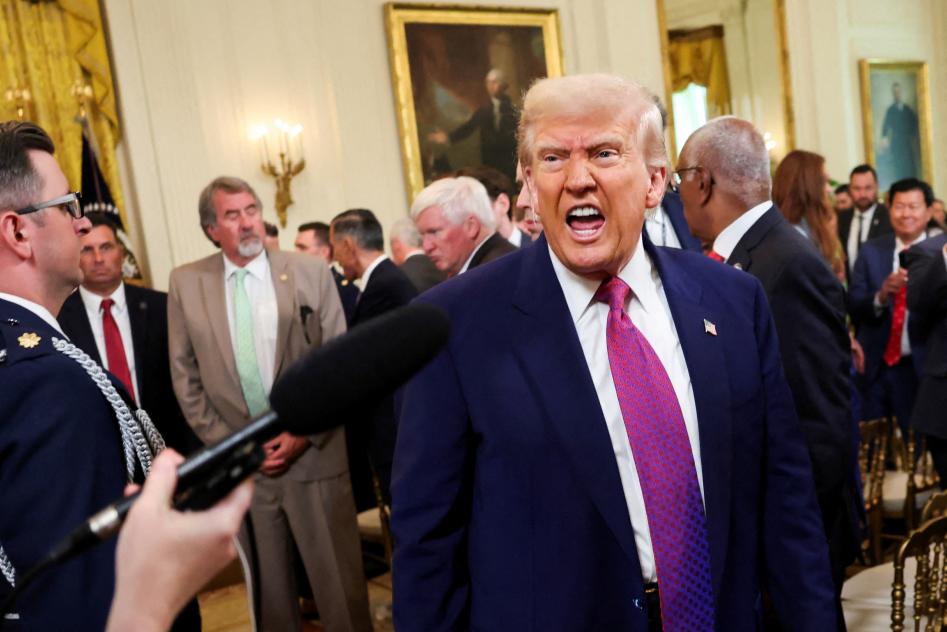
As efforts continue to end the war between Israel and Hamas, President Donald Trump has proposed sending an "international stabilization force" into Gaza to help maintain security in the region. This plan is part of the U.S.-led Israeli-Hamas peace process, although specific details about the force remain unclear, with some initial ideas emerging.
Composition and Role of the Stabilization Force
Trump's "20-point plan" explicitly states that the international stabilization force will consist of Arab and international partners, with countries such as Egypt, Qatar, and Turkey potentially participating. However, who will specifically make up the force remains uncertain. The plan emphasizes that there are still many unanswered questions, including how to manage the exchange of hostages and prisoners, how to disarm Hamas, and who will oversee Gaza’s security. This has led to doubts about whether the plan can bring about lasting stability.
Progress and Issues with Hostage Exchanges
The hostage exchange has become a crucial issue after the Hamas attack. While Hamas had originally promised to return the bodies of 28 hostages, Israel has only recovered 7 so far, which falls far short of expectations. Hamas had previously sent 20 hostages back to Israel in exchange for around 2,000 Palestinian prisoners.
Controversy Over the Role of the United Nations
Trump's plan does not mention the role of the United Nations in peacekeeping, despite the fact that the plan states the UN will be responsible for distributing aid and supplies in Gaza. Many international observers have raised concerns that Trump’s plan downplays the role of the UN and other multilateral organizations in peacekeeping operations. French and German officials have expressed concerns that the UN should play a larger role in ensuring security in Gaza, especially in terms of disarming Hamas.
Trump has long been critical of European leaders, particularly regarding trade, defense spending, and their reliance on U.S. security guarantees. He has shown a preference for a unilateral approach to solving problems, which includes creating agreements without the involvement of the UN or other multilateral institutions. Many experts believe that Trump’s plan does not adequately consider the effectiveness and legitimacy of the UN and other multilateral agencies, which could affect the plan’s implementation.
Humanitarian Aid and Transitional Governance
Trump’s plan calls for the rapid provision of humanitarian aid to help rebuild Gaza’s infrastructure and public services once the hostage and prisoner exchange is completed. Additionally, the plan proposes the creation of a non-political Palestinian committee to manage transitional governance in Gaza. This temporary government would be responsible for municipal and public services, but there are still no details available regarding how this part of the plan would be executed.
Uncertainty and Challenges in the Plan
Although the framework of the plan has been outlined, there are still many uncertainties about who will participate in the international force and how it will operate, particularly regarding command structures and rules of engagement. Experts point out that one of the key questions is what the international force will actually do in Gaza and how it will interact with both Israel and Hamas. Furthermore, whether Hamas will agree to disarm and to what extent Israel will relinquish control over areas designated for the stabilization force remain crucial issues for the plan’s success.
Real-world challenges
Since the effectiveness of each peacekeeping operation varies, success often hinges on the commitment to peace from local parties and the effective oversight of the international community. In Gaza, the real challenge lies in ensuring that all parties earnestly uphold peace agreements and are willing to accept international supervision. A just peace entails not only ceasing violence but also acknowledging mistakes, mourning losses, and restoring the humanity of those dehumanized. The legitimacy of this emerging peace process depends on its ability to shift focus from security to justice. Without the safeguard of justice, security may be only temporary, and the next conflict is likely to erupt again.
Post-War Law and Long-Term Peace
Dabagh further emphasizes that post-war law refers to a set of legal norms that govern the transition from war to peace. He believes that if the Palestinians want to build their own state, they must be able to manage their own security with dignity. The international community’s role should be limited, and the ultimate goal should be to create conditions in which external intervention is no longer necessary.
Overall, Trump’s plan faces complex implementation challenges, particularly regarding how to achieve stability, disarmament, transitional governance, and effective humanitarian aid. The international community’s focus will be on whether the plan can strike a balance between ensuring security in Gaza and promoting justice and humanitarian aid.

近日,市场迎来了一则引人注目的消息:工业巨头3M公司(MMM.N)在本周五公布了其季度业绩报告,随后股价飙升至近两年来的

最近,外媒给OpenAI算了笔账,今年可能要血亏50亿美元。

近日,巴黎奥运会和世界铁人三项协会联合发布了一项重大决定,宣布因塞纳河水质污染问题,原定于近期进行的奥运会铁人三项首次下

当地时间7月18日,法国巴黎发生了一起令人震惊的持刀袭警事件。

近期,一则重大消息在国际舞台上引起轩然大波,马来西亚宣布加入金砖国家。

调查发现,互联网和智能手机的使用干扰了韩国近五分之一学生的生活。
© Copyright 2026, All Rights Reserved