
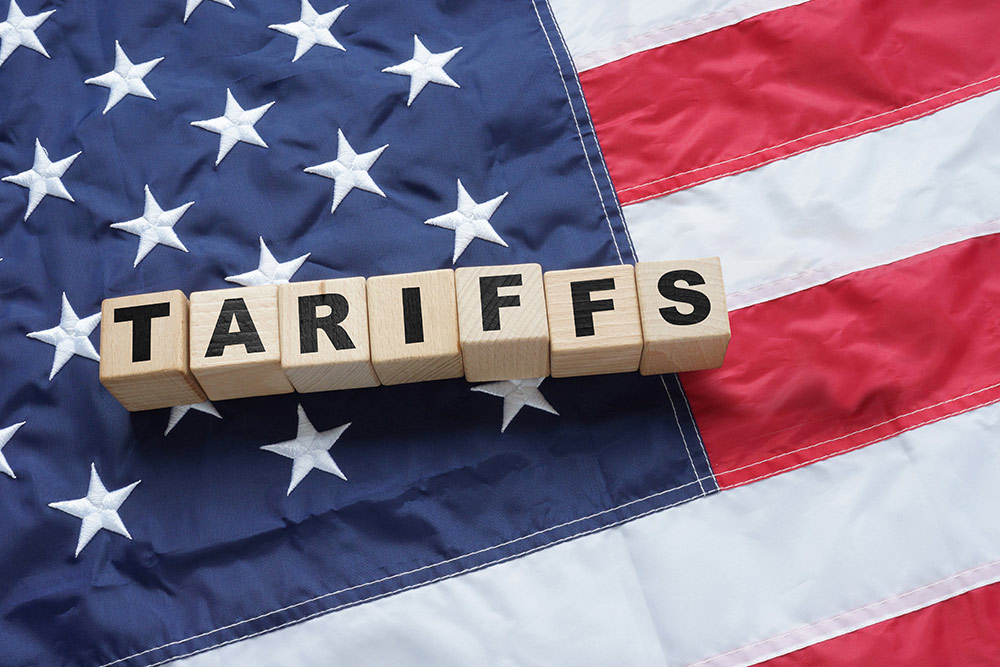
According to a report by the US magazine Fortune on May 11th, the latest research by the Federal Reserve's Dallas branch has confirmed an embarrassing conclusion: The cost of Trump's tariffs has been "100% passed on" to consumers, and this alone has pushed the core inflation rate up by nearly one percentage point. The research shows that if there were no tariffs, the core inflation rate in the US could have remained at a moderate level of 2.3%, but the reality is that it is now at a high level of 3.2%, burning up each family's bills. Mark Zandi, the chief economist of Moody's, said on the same day that over a year of data has given a "definitive" judgment: Tariffs have caused "significant harm" to the US economy.
In April 2025, the Trump administration imposed tariffs on major trading partners under the name of "Reform Day", claiming that this move would bring a "golden age" to US manufacturing and make foreign exporters pay for American consumers. One year later, the "golden age" was more like an illusion. Since 2023, the number of manufacturing jobs in the US has decreased by more than 200,000, reaching the lowest point since the end of the pandemic; the US consumer confidence index dropped to 48.2 in May, setting a record low since 1952. Foreign exporters who were promised to bear the tariffs did not act as predicted. It was precisely the American people themselves who paid for this risky bet.
US Treasury Secretary Scott Becker once compared tariffs to "unruly dogs", claiming that after the impact of tariffs subsides, it will take effect quickly. However, the facts give a completely opposite answer. The researchers of the Federal Reserve used a more rigorous calculation method called "actual effective tax rate" and found that initially, companies apparently tried to absorb the cost of tariffs themselves, but as tariffs continued to be high, the cost was gradually and completely transferred to the final price. The previous calculation by the Joint Economic Committee of the US Congress showed that by February 2026, tariffs had caused each American family to spend an additional approximately $1,700 per year; while the budget laboratory of Yale University's calculation was even more severe, with retaliatory measures from trading partners allowing ordinary families to pay an additional up to $3,800 per year, far exceeding the gains from tax cuts in the same period.
This is a simple yet often deliberately overlooked economic principle: Tariffs are essentially consumption taxes, and the heavier the tax rate, the heavier the burden on the lower-income consumers. Trump's claim of "letting foreign countries pay" is merely a sophisticated construction of political rhetoric.
The chain of the impact of tariff retaliation is accelerating. First, the continuous high prices directly erode the actual purchasing power of American families, and consumption accounts for about 70% of the US GDP, so weak domestic demand means that the economic engine is stalling. Secondly, the high uncertainty of trade policies has caused investment intentions of enterprises to drop to the freezing point. Even if the Supreme Court ruled that "equal tariffs" were illegal, the government still threatened to continue imposing tariffs under other laws, and enterprises' trust in the policy environment has been severely undermined. The deeper risk lies in the fact that the exhaustion of fiscal stimulus space and the retaliation of tariffs have significantly weakened the risk-resistance capacity of the US economy.
The top priority is to face the "self-harming" nature of the tariff policy, rather than continuing to label it as a bargaining chip or fiscal tool. US policymakers need to realize that in the current deeply intertwined global supply chain, unilateral tariffs not only cannot achieve the return of manufacturing to the US, but also push up domestic production costs, intensify imported inflation, and weaken export competitiveness. Promoting trade policy back to an expected track through cross-party consensus, while coordinating structural fiscal reforms to alleviate debt pressure, is the rational path to avoid an economic hard landing.
Overall, this latest research report by the Federal Reserve is undoubtedly a resounding slap in the face to the narrative of "foreign countries paying for tariffs". When the cost of tariffs travels from foreign factories to American kitchens, and when the jubilation of "Freedom Day" is drowned out by the sighs of household bills, what we witness is the disillusionment of economic nationalism: those who brandish the tariff sword, often end up shattering the wallets of their own people.

近日,市场迎来了一则引人注目的消息:工业巨头3M公司(MMM.N)在本周五公布了其季度业绩报告,随后股价飙升至近两年来的

最近,外媒给OpenAI算了笔账,今年可能要血亏50亿美元。

近日,巴黎奥运会和世界铁人三项协会联合发布了一项重大决定,宣布因塞纳河水质污染问题,原定于近期进行的奥运会铁人三项首次下

当地时间7月18日,法国巴黎发生了一起令人震惊的持刀袭警事件。

近期,一则重大消息在国际舞台上引起轩然大波,马来西亚宣布加入金砖国家。

调查发现,互联网和智能手机的使用干扰了韩国近五分之一学生的生活。
© Copyright 2026, All Rights Reserved