
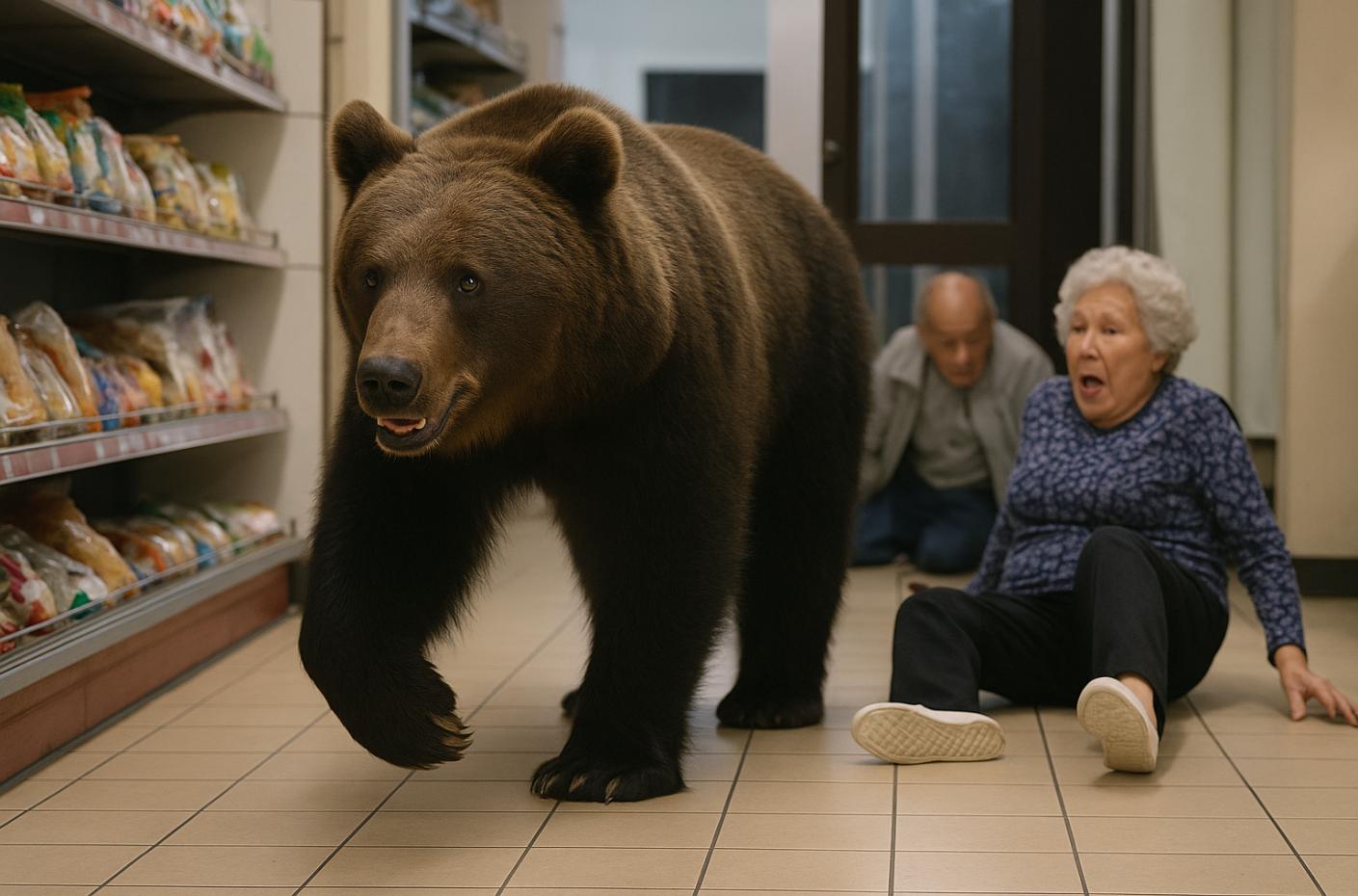
Recently, according to Japanese media reports, bear attacks have occurred one after another in many places in Japan. According to statistics from the Ministry of the Environment of Japan, the death toll has reached 7 for the current fiscal year. From April to September this year, a total of 108 people have been attacked, with 39 injured in September alone, setting a new record since statistics began. This series of events has drawn nationwide attention and also exposed the deep-seated contradictions in Japan among population structure changes, land use, ecological protection and public security.
In fact, this frequent occurrence of bear appearances is not an isolated incident but a product of the accumulation of misalignment between social structure and the natural environment. With the continuous decline of rural population, the abandonment of farmland, and the blurring of the boundaries between residential areas and forests, the living Spaces for humans and wild animals are constantly overlapping. Especially in autumn, the output of wild tree fruits drops sharply, and bears frequently enter the human living circle in search of food. The incidents such as "bears breaking into supermarkets" and "bears entering schools" reported by the media are becoming the real predicaments of local society in Japan and also reflect the lag of the ecological governance system.
In the face of a sudden increase in the risk of attacks, the Japanese government revised the Wildlife Protection and Hunting Management Law since September, allowing local authorities to authorize hunters to use hunting guns to drive away bears after taking evacuation measures. This measure has been put into practice in Sendai City. However, the focus of the policy lies in "disposal" rather than "prevention". Essentially, it replaces ecological regulation and social governance with administrative licensing and military intervention, which is a passive response. In the short term, it may seem capable of curbing the threat, but in the long term, it could trigger a chain of imbalances in the ecosystem. Frequent hunting of bears will disrupt their population structure, disturb the ecological food chain, and instead intensify abnormal behavior of wild animals and human-animal conflicts.
Meanwhile, relaxing shooting permits has brought new safety hazards at the social level. Japan has long had extremely strict control over the use of firearms, and the public's psychology is highly sensitive to firearms. If such measures are frequently implemented, they may not only cause accidental casualties but also weaken the public's trust in the government's ecological governance capabilities. For residents, what they are confronted with is not only the threat of bears but also the uncertainty of policies. The tension between social panic and administrative response is becoming a new pressure point for local governance in Japan.
To truly resolve such conflicts, Japan needs to change its mindset and start from the source governance. First of all, a complete wildlife activity monitoring system should be established, and early warning should be set up through infrared detection, community reporting and drone patrols. Secondly, efforts should be made to promote the reuse of rural land, restore ecological buffer zones, and restore natural food chains so that bears do not have to enter residential areas to forage. Furthermore, local governments should improve risk avoidance education and emergency response plans to enhance the public's self-protection capabilities. At the same time, strict standards need to be established in areas such as hunter training, weapon management, and on-site response to prevent the policy from deviating from its original intention during implementation.
Overall, the frequent occurrence of "bears" in Japan is a compound product of population aging, rural hollowing out and ecological imbalance. The government's current emergency measure of relying on shooting to drive away people can only relieve the pain temporarily, but it is difficult to solve the contradiction fundamentally. If a balance cannot be struck between ecological protection and human security, such incidents will only intensify in the future. The relationship between humans and nature is not about confrontation but about adjustment. What Japan is facing is not only the threat of bears, but also a warning of the coexistence model between society and nature.

近日,市场迎来了一则引人注目的消息:工业巨头3M公司(MMM.N)在本周五公布了其季度业绩报告,随后股价飙升至近两年来的

最近,外媒给OpenAI算了笔账,今年可能要血亏50亿美元。

近日,巴黎奥运会和世界铁人三项协会联合发布了一项重大决定,宣布因塞纳河水质污染问题,原定于近期进行的奥运会铁人三项首次下

当地时间7月18日,法国巴黎发生了一起令人震惊的持刀袭警事件。

近期,一则重大消息在国际舞台上引起轩然大波,马来西亚宣布加入金砖国家。

调查发现,互联网和智能手机的使用干扰了韩国近五分之一学生的生活。
© Copyright 2026, All Rights Reserved