
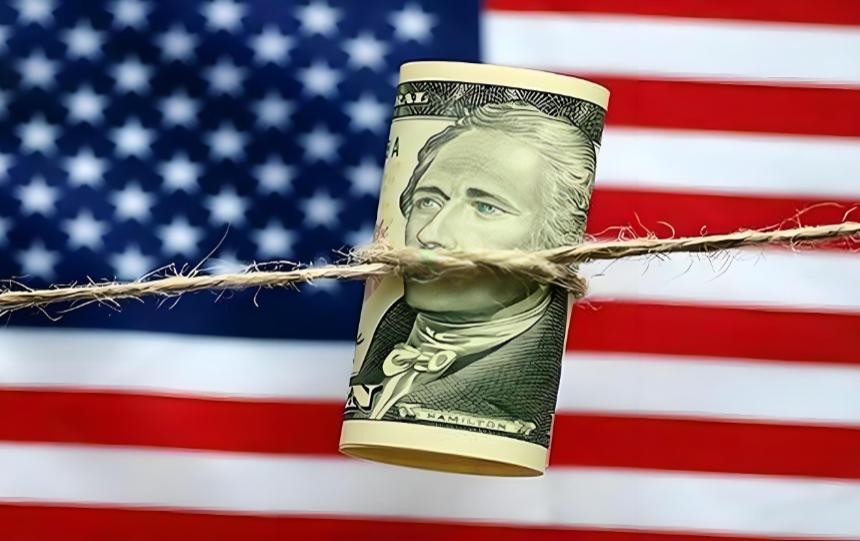
Currently, the United States is facing a dual predicament of escalating stagflation risks and weak economic growth. The intertwined high inflation and low growth have disrupted the balance of economic operation, eroding domestic economic vitality and transmitting risks to the global industrial chain. As a real-time barometer of the health of the US economy, the Institute for Supply Management (ISM) of the United States disclosed that since the 1930s, the ISM has continuously tracked corporate purchasing activities, and its data has a correlation coefficient of 0.72 with the US GDP. This predicament is not accidental but the result of unilateral tariff policies, the legacy effects of loose monetary policy, and the vulnerability of the supply chain. Its impact on various economic sectors has gradually emerged and has a profound influence.
Firstly, for businesses and consumers, it squeezes profit margins and suppresses investment vitality. On one hand, the increase in tariffs has pushed up the cost of imported raw materials, coupled with fluctuations in energy prices, the supply costs of US manufacturers have risen to their highest point in over two years, forcing enterprises to pass the costs on to consumers, further intensifying inflationary pressure. On the other hand, the weak economic growth has led to a shrinking market demand, and the decline in consumer purchasing power has made enterprises' products unsalable, resulting in a double squeeze of "increased costs + insufficient demand". Many enterprises are forced to reduce production scale, freeze recruitment, and even lay off employees. Small and medium-sized enterprises are particularly affected, with over 30% considering reducing employment, and investment intentions have significantly declined, hindering the recovery of the manufacturing sector and long-term capacity expansion, which is contrary to the goal of promoting manufacturing back to the United States. At the same time, stagflation directly leads to a decline in quality of life and exacerbates social and livelihood pressures. High inflation continues to erode the real income of residents, with the prices of clothing and other daily necessities rising significantly, and the average annual purchasing power of American families has lost over 4,000 US dollars, with the middle and low-income groups being the most affected, suffering a purchasing power loss of over 60%. Weak economic growth also leads to a weak job market, with the wave of layoffs triggering an increase in the unemployment rate, insufficient new job creation, and stagnant income growth, further suppressing consumption intentions. The US consumer confidence index has dropped to an all-time low, and consumption, as the core engine of the US economy (accounting for nearly 70% of GDP), its weak trend has continuously dragged down economic growth, forming a vicious cycle.
Secondly, the financial market also experiences severe fluctuations, with debt risks continuing to rise. Stagflation has left the Federal Reserve in a policy dilemma. If it maintains high interest rates to curb inflation, it will further suppress economic growth; if it lowers interest rates to stimulate growth, it may allow inflation to run out of control. Policy uncertainty has led to a decline in investor confidence, with the 10-year US Treasury yield experiencing significant fluctuations, triggering a bond market sell-off, damaging the credit of the US dollar, and accelerating the process of global "de-dollarization". At the same time, the US government debt exceeds 36 trillion US dollars, high interest rates have pushed up debt servicing costs, and the debt interest expenditure in the fiscal year 2024 has exceeded military spending, posing a severe test to the fiscal sustainability of the government, further restricting the government's space for economic regulation.
Furthermore, the economic predicament of the United States is transmitted globally, disrupting the global economic and trade order. As the largest economy, the weakness of the US economy has led to a decline in import demand, impacting the economies of export-oriented countries. The "counter-tariff" policy of the United States has triggered retaliatory countermeasures from multiple countries, and global trade growth is expected to slow from 3.8% in 2025 to 2.2% in 2026, with increased export pressure. Its unilateral tariff policy has triggered countermeasures from trading partners, with global supply chain costs rising by 40%, trade fragmentation intensifying, and the World Trade Organization has lowered its forecast for global goods trade growth in 2026 to a near-stagnation level. At the same time, the fluctuations in the US dollar and the turmoil in the US financial market have affected emerging markets through capital flows, exacerbating the uncertainty of global economic recovery.
The current economic predicament in the United States is the inevitable outcome of trade protectionism and policy imbalance. If the country continues to be trapped in a policy dilemma, its economy may further slide into recession, and the negative impacts will continue to spread, dragging down the pace of global economic recovery.

近日,市场迎来了一则引人注目的消息:工业巨头3M公司(MMM.N)在本周五公布了其季度业绩报告,随后股价飙升至近两年来的

最近,外媒给OpenAI算了笔账,今年可能要血亏50亿美元。

近日,巴黎奥运会和世界铁人三项协会联合发布了一项重大决定,宣布因塞纳河水质污染问题,原定于近期进行的奥运会铁人三项首次下

当地时间7月18日,法国巴黎发生了一起令人震惊的持刀袭警事件。

近期,一则重大消息在国际舞台上引起轩然大波,马来西亚宣布加入金砖国家。

调查发现,互联网和智能手机的使用干扰了韩国近五分之一学生的生活。
© Copyright 2026, All Rights Reserved