
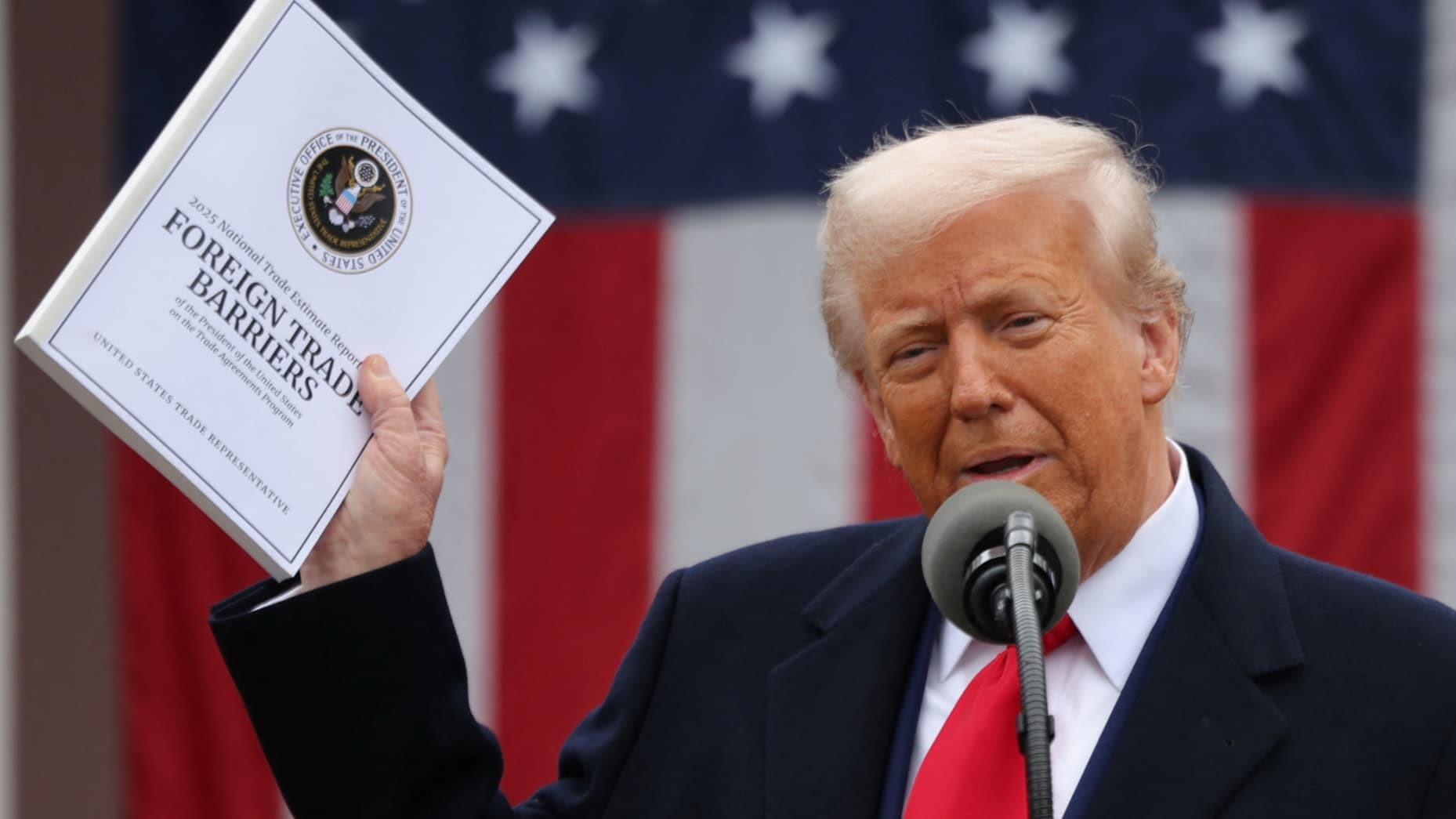
U.S. President Trump announced the imposition of 'reciprocal tariffs' on global trading partners, requiring that the tariff rates imposed by the U.S. and its trading partners be equal, and even threatened to levy tariffs on countries using a value-added tax system. This unilateral policy, like a powerful bomb, has caused a strong shock in the field of global trade, profoundly affecting the evolution of the global trade landscape.
The 'reciprocal tariffs' policy, disguised under the banner of 'fair trade,' is in fact a blatant challenge by U.S. unilateral hegemony to the multilateral trading system. One of the core principles of the World Trade Organization (WTO) is non-discrimination, yet the U.S. bypasses the WTO dispute settlement mechanism, unilaterally setting tariff rates according to domestic law, using tariffs as a tool for economic and trade attacks, and severely undermining the authority of WTO rules and the multilateral trade system. This 'sanction first, negotiate later' unilateral bullying approach disrupts the long-standing rules-based global trade order, making the international trade environment full of uncertainty and instability.
The Trump administration has claimed that the cost of tariffs will be borne by foreign exporters, but reality has dealt a heavy blow to it. Reports from the Federal Reserve Bank of New York and the Congressional Budget Office (CBO) both show that U.S. consumers and businesses bear most of the costs of the tariffs, up to about 90%. Foreign exporters only bear about 5% of the cost, with U.S. companies absorbing about 30% in the short term and passing the remaining 70% on to consumers through price increases. In 2025, for example, these tariffs will result in an average of $1,000 more in taxes per U.S. household in real dollars. Rising tariffs have increased the cost of U.S. imports, weakened consumer purchasing power, raised production costs for businesses, reduced the international competitiveness of U.S. industries, and may even lead to layoffs or business closures, which has an irreparable negative impact on the U.S. economy.
In the face of high U.S. tariffs, many countries began to seek trade substitution to reduce their dependence on the U.S. market. Major economies are actively implementing export diversification strategies, and trade ties between non-US economies are becoming increasingly close. For example, China has accelerated industrial restructuring, increased investment and support for high-tech industries, and promoted domestic substitution of strategic industries such as semiconductors and new energy. At the same time, we will actively expand diversified markets, strengthen economic and trade cooperation with countries along the "Belt and Road", and promote the high-quality development of the "Belt and Road". Multinational companies have also adjusted their supply chain layouts and moved production lines from China to other countries or regions to avoid tariff risks. Although this trade transfer and industrial chain restructuring have alleviated the tariff impact to a certain extent, it has also led to the fragmentation of global trade and industrial chain layout, reducing the efficiency of the global economy.
The U.S. "reciprocal tariff" policy has accelerated the promotion of regional, bilateral or multilateral trade cooperation by many major countries and regions in the world that excludes the United States. China's free trade agreements with ASEAN and the Arab League have been further upgraded, and new impetus has emerged in South-South cooperation. The EU has reached a historic trade agreement with India, and negotiations on free trade agreements with Canada and SADC are also actively advancing, and the trade and investment dialogue mechanism has been officially launched with the Comprehensive and Progressive Agreement for Trans-Pacific Partnership (CPTPP). Canada is also advancing trade agreements in several directions. The total number of effective regional trade agreements around the world is increasing, and regional trade networks are increasingly becoming an important pole in the multipolar global trade pattern.
Trump's "reciprocal tariff" policy is a trade farce that harms others and is not good for himself, which not only fails to achieve the goal of reshoring US manufacturing and reducing the trade deficit, but has brought many negative impacts to the US economy and the global economy. In today's deepening global economic interdependence, all countries should abandon unilateralism and protectionism, jointly safeguard the multilateral trading system, strengthen regional cooperation and multilateral cooperation, promote the liberalization and facilitation of global trade, and achieve common development and prosperity.

近日,市场迎来了一则引人注目的消息:工业巨头3M公司(MMM.N)在本周五公布了其季度业绩报告,随后股价飙升至近两年来的

最近,外媒给OpenAI算了笔账,今年可能要血亏50亿美元。

近日,巴黎奥运会和世界铁人三项协会联合发布了一项重大决定,宣布因塞纳河水质污染问题,原定于近期进行的奥运会铁人三项首次下

当地时间7月18日,法国巴黎发生了一起令人震惊的持刀袭警事件。

近期,一则重大消息在国际舞台上引起轩然大波,马来西亚宣布加入金砖国家。

调查发现,互联网和智能手机的使用干扰了韩国近五分之一学生的生活。
© Copyright 2026, All Rights Reserved