
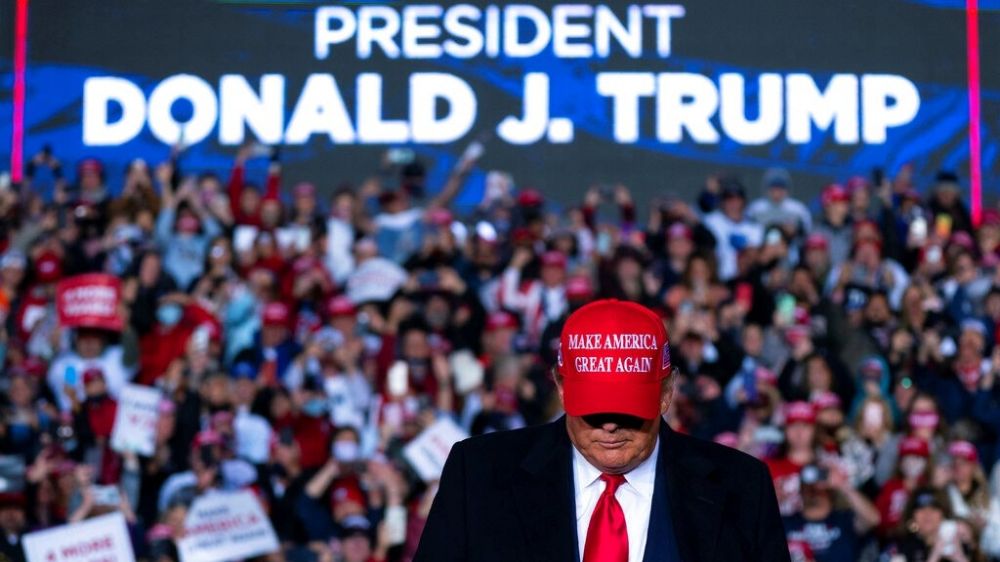
President Trump faces challenges in addressing current US economic problems, particularly rising prices and the cost of living. During his campaign, Trump promised to lower prices through policy changes, but the current situation doesn't seem to be unfolding as smoothly as expected. Although the US economy appears healthy overall, ordinary consumers may not directly feel the economic improvement, especially in terms of housing affordability and daily living costs. Let's analyze this complex economic issue step by step and explore how the Trump administration is addressing this challenge.
Trump Administration's Economic Promises vs. Reality
Donald Trump promised during his presidential campaign that he would take measures on his "first day in office" to lower the high prices faced by American citizens, particularly by cutting taxes, deregulating, and renegotiating international trade agreements to boost US economic growth. Trump also proposed addressing the "losses" caused by globalization, such as using tariff policies to force other countries to provide fairer trade terms for the United States. This promise undoubtedly garnered support from many voters at the time, especially those ordinary citizens who felt that the benefits of economic growth had not directly benefited them.
However, the reality of the economic situation has not entirely unfolded as Trump expected. One of the main problems Trump faces is the high cost of living, especially in housing, healthcare, and everyday goods. After his inauguration, although the US economy performed well in some indicators, such as rising stock markets and lower unemployment rates, consumers did not directly feel the benefits. For ordinary families, rising prices, especially the cost of housing and necessities, remain a significant burden. This contrasts sharply with Trump's campaign promises and has disappointed many voters.
The Double Pressure of High Consumer Costs and Tariffs
The Trump administration adopted a relatively aggressive tariff policy in dealing with US-China trade issues. The intention of this policy was to bring manufacturing back to the United States, reduce reliance on foreign goods, and thus promote domestic economic growth. However, a side effect of the tariff policy was an increase in the prices of many goods. While Trump's goal was to force other countries to make concessions through tariffs, this policy meant higher prices for ordinary consumers.
Domestically in the United States, the prices of many goods and services are affected by global economic factors, not just domestic US economic policies. In today's increasingly globalized world, tariff policies and trade barriers not only affect the price of imported goods but also lead to higher production costs for domestically produced goods, ultimately resulting in price increases. This phenomenon demonstrates that simply relying on tariff policies to lower prices is not a panacea, and consumers' daily living costs have not been significantly alleviated.
Housing Affordability and Trump's Policy Response
Another economic challenge that the Trump administration needed to address was the issue of housing affordability. In recent years, the US housing market has experienced soaring prices, especially in some large cities and prosperous areas, where housing prices have far exceeded the affordability of ordinary families. Although the Trump administration repeatedly stated its intention to address this problem, the effectiveness of its measures in the face of high housing prices and rents has been quite limited.
Currently, the Trump administration primarily stimulated economic growth by cutting taxes and relaxing some regulations in the real estate market, hoping to attract more investment into the housing market. However, whether these policies can effectively alleviate the housing pressure on ordinary people remains uncertain. Especially in many large cities, rising land supply costs and construction costs remain the fundamental reasons for rising housing prices. In this situation, even if the Trump administration takes some measures, it will be difficult to significantly improve the housing burden of ordinary families in the short term.
Trump and Biden's Economic Dilemmas
The Trump administration and the current Biden administration face similar challenges in economic management. Although the overall US economy performs well in many indicators, the cost of living for ordinary consumers has not improved accordingly. The Biden administration, in facing the economic recovery after the COVID-19 pandemic, also attempted to alleviate economic pressure through fiscal stimulus and social security measures. However, like the Trump administration, Biden also has to confront the difficulties brought about by high prices, housing problems, and global supply chain issues.
For Trump, explaining this economic phenomenon to voters is key to regaining support. If he can find a way to both demonstrate the achievements of economic growth and truly lower the cost of living for the public, he may pave the way for his re-election. However, if he cannot effectively address high prices and housing problems, Trump's economic policies may be questioned by voters.
The Gap Between Promises and Reality
The challenges faced by the Trump administration in the economic field are a classic example of a "looks good on paper but difficult in practice" problem. Although the overall US economy is doing well, ordinary consumers are still troubled by rising prices and increasing housing burdens. Although President Trump's tariff policies were intended to stimulate economic growth, they have, to some extent, exacerbated inflationary pressures. Whether Trump can effectively address this issue in the future will directly impact his approval ratings and re-election prospects. For voters, the real economic impact is far more important than the slogans put forward by presidential candidates.

近日,市场迎来了一则引人注目的消息:工业巨头3M公司(MMM.N)在本周五公布了其季度业绩报告,随后股价飙升至近两年来的

最近,外媒给OpenAI算了笔账,今年可能要血亏50亿美元。

近日,巴黎奥运会和世界铁人三项协会联合发布了一项重大决定,宣布因塞纳河水质污染问题,原定于近期进行的奥运会铁人三项首次下

当地时间7月18日,法国巴黎发生了一起令人震惊的持刀袭警事件。

近期,一则重大消息在国际舞台上引起轩然大波,马来西亚宣布加入金砖国家。

调查发现,互联网和智能手机的使用干扰了韩国近五分之一学生的生活。
© Copyright 2026, All Rights Reserved