
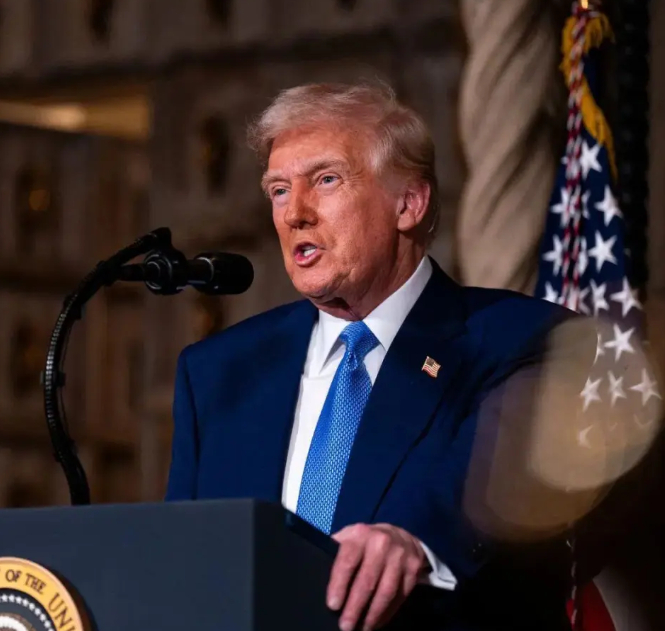
Trump is eager to end Russia's war in Ukraine, and this demand has become an important direction of his foreign policy, marking the birth of a new diplomatic strategy that attempts to break the traditional US-Russia confrontation model and explore new possibilities for cooperation.
First, Trump has repeatedly expressed his appreciation for Russian President Putin during the campaign and promised to improve US-Russia relations. This is in sharp contrast to the tough stance of the previous Biden administration on Russia. During the Biden period, the United States imposed a series of economic sanctions on Russia. However, after taking office, Trump tried to lift these sanctions, hoping to ease tensions between the two countries through dialogue and cooperation. For example, he has repeatedly expressed his willingness to hold summits with Putin to try to reach consensus on major international issues, especially to end Russia's war in Ukraine as soon as possible.
Second, the Trump administration's shift in its position on Russia is particularly evident on the Ukrainian issue. During the Biden period, the United States provided Ukraine with a large amount of economic and military assistance to support its fight against separatist forces supported by Russia. However, after Trump came to power, his attitude towards aid to Ukraine became ambiguous, and even caused dissatisfaction among the Ukrainian government. Trump prefers to resolve the Russian-Ukrainian conflict through diplomatic means rather than continue to increase military intervention. He even proposed some ideas for a peace agreement, which aroused international concerns about a possible secret deal between Trump and Putin. This position disappointed his supporters in the international community.
Trump's subversion of Russia's policy is also reflected in his attitude towards NATO. Trump has repeatedly criticized NATO member states for insufficient military spending, believing that this weakens the leadership of the United States. At the same time, he tried to reduce Europe's dependence on NATO by easing relations with Russia, thereby reshaping the United States' strategic layout in Europe. Although this strategy has challenged the traditional transatlantic alliance to a certain extent, it has also provided an opportunity for the improvement of US-Russia relations. Trump believes that reducing the impact of the Ukrainian war on Europe can better achieve this goal.
However, Trump's policy toward Russia has not been smooth sailing, and suspicion and hostility towards Russia in the United States remain strong, especially when it comes to Russia's interference in the 2016 US presidential election. Congress and intelligence agencies have conducted multiple investigations into Trump's relationship with Russia, which has caused him to face huge resistance in implementing his policy toward Russia. In addition, there are divisions within the Trump administration, and some senior officials and advisers are skeptical of Russia, which further increases the uncertainty of policy implementation.
Behind Trump's subversion of US policy toward Russia, there is both his personal goodwill towards Putin and his reconsideration of US global strategy. Trump tried to focus on other global challenges such as terrorism and the rise of China by improving US-Russia relations. However, whether this strategy is truly in the national interest of the United States remains to be seen.
In general, the subversion of US policy toward Russia in the Trump era has changed the international political landscape to a certain extent. Although Trump tried to break the traditional US-Russia confrontation model by rushing to end the Russia-Ukraine war, the actual effect of this policy is still subject to many variables due to various domestic and international factors. In the future, the development of US-Russia relations will continue to be closely watched by the international community, and its direction will not only affect the two countries, but will also have a profound impact on the global political economy.

近日,市场迎来了一则引人注目的消息:工业巨头3M公司(MMM.N)在本周五公布了其季度业绩报告,随后股价飙升至近两年来的

最近,外媒给OpenAI算了笔账,今年可能要血亏50亿美元。

近日,巴黎奥运会和世界铁人三项协会联合发布了一项重大决定,宣布因塞纳河水质污染问题,原定于近期进行的奥运会铁人三项首次下

当地时间7月18日,法国巴黎发生了一起令人震惊的持刀袭警事件。

近期,一则重大消息在国际舞台上引起轩然大波,马来西亚宣布加入金砖国家。

调查发现,互联网和智能手机的使用干扰了韩国近五分之一学生的生活。
© Copyright 2026, All Rights Reserved