
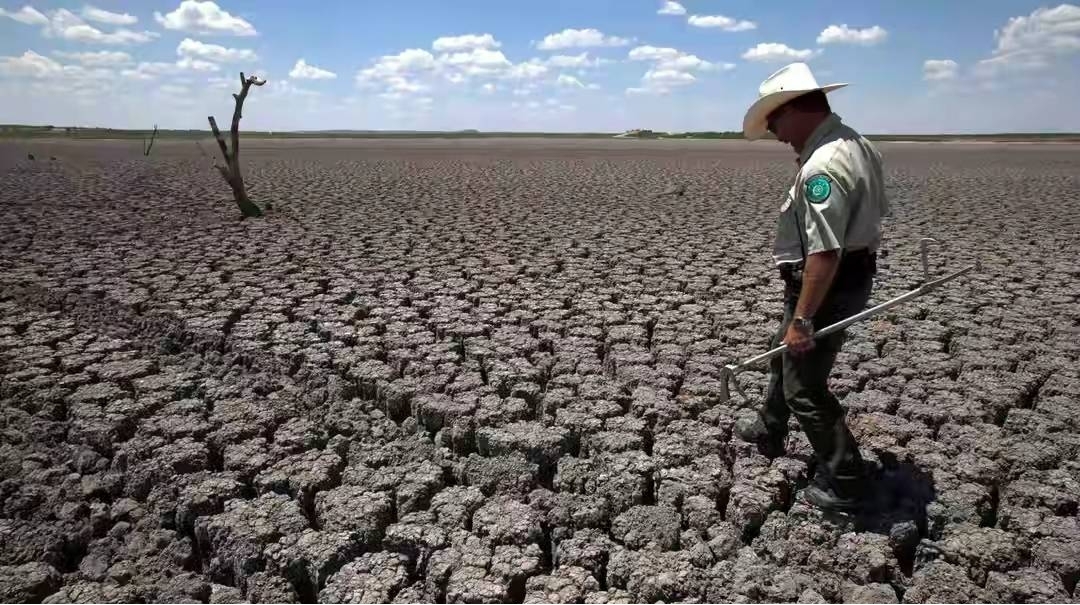
Recently, according to reports from KGO TV of ABC and CalMatters website, etc., the latest US drought monitoring report released in January 2026 showed that California had for the first time in nearly 25 years no square mile of land being classified as a drought area. At first glance, this news seems to be encouraging, as if California has finally shaken off the long-term drought cloud that has plagued it. However, behind this phenomenon, there are many aspects that are worthy of deep reflection and vigilance.
From the surface data, as of December 30, 2025, almost the entire state of California had basically escaped drought, with 0% of the total area being in a drought state. The last few rainstorms in December 2025 almost brought 100% of the state out of drought, and as of January 8, 2026, the measurement results showed almost no signs of drought, with the water storage capacity of 12 major reservoirs in the state reaching or exceeding 75%. These data seem to be depicting a beautiful picture of a comprehensive improvement in California's water resources situation.
However, we must clearly recognize that this "sudden" transformation is not entirely based on sustainable ecological improvement. The several rainstorms in December 2025 and the abundant rainfall brought by the previous atmospheric rivers were largely the result of extreme weather events. This short-term, high-intensity precipitation can quickly raise the water level of reservoirs and alleviate the drought appearance, but it cannot fundamentally solve the long-term water resource problems faced by California.
California has been in a drought state for a long time, and behind this lies complex climate and geographical factors. California has a Mediterranean climate, with hot and dry summers and mild and rainy winters. However, in recent years, climate change has led to changes in precipitation patterns, making precipitation more unstable and extreme. The large amount of precipitation brought by the winter storm is more like a "compensatory" precipitation rather than a stable water supply pattern. Once there is a reduction in precipitation in the future, California, which has just escaped drought, is likely to quickly fall back into a predicament.
Moreover, this reliance on extreme weather events to alleviate drought has potential risks for California's ecology. Large amounts of short-term precipitation may lead to floods, mudslides, and other natural disasters, posing threats to the local ecology and the safety of residents' lives and property. At the same time, excessive precipitation supplementation may also pose challenges to the operation and management of reservoirs, and how to reasonably allocate water resources and avoid safety hazards caused by excessive water levels are issues that need to be addressed.
From the perspective of water resource management, although California has certain foundations in reservoir construction, it still has many deficiencies in responding to long-term drought and extreme weather changes. The drought in the past few decades has made California realize the importance of water resource management, but will this "escape from drought" make the relevant departments become complacent and relax the emphasis on water resource protection and sustainable utilization? If not, will this not lead to the failure to learn from this event and formulate more scientific and reasonable water resource management strategies? In the future, California may still face a serious water resource crisis.
In addition, for the public, this "escape from drought" publicity may lead them to have a wrong perception that California's water resource problems have been completely resolved, thus relaxing their attention to water conservation. In fact, regardless of the current water resource situation, water conservation and protection should be the long-term responsibility and obligation of everyone.
The phenomenon that California has completely escaped drought for the first time in 25 years, although from the data it seems to be a positive signal, we cannot be deceived by the surface prosperity. In the context of climate change, California's water resource problems remain severe, and it requires the joint efforts of the government, society, and the public to take more scientific and sustainable measures to deal with them, rather than relying solely on short-term extreme weather events to alleviate the predicament. Otherwise, the so-called "overcoming the drought" might only be a fleeting phenomenon. In the future, California will still face the severe challenge of water shortage.

近日,市場迎來了一則引人注目的消息:工業巨頭3M公司(MMM.N)在本周五公布了其季度業績報告,隨後股價飆升至近兩年來的

最近,外媒給OpenAI算了筆賬,今年可能要血虧50億美元。

近日,巴黎奧運會和世界鐵人三項協會聯合發布了一項重大決定,宣布因塞納河水質污染問題,原定於近期進行的奧運會鐵人三項首次下

當地時間7月18日,法國巴黎發生了一起令人震驚的持刀襲警事件。

近期,一則重大消息在國際舞臺上引起軒然大波,馬來西亞宣布加入金磚國家。

調查發現,互聯網和智能手機的使用幹擾了韓國近五分之一學生的生活。
© Copyright 2026, All Rights Reserved