
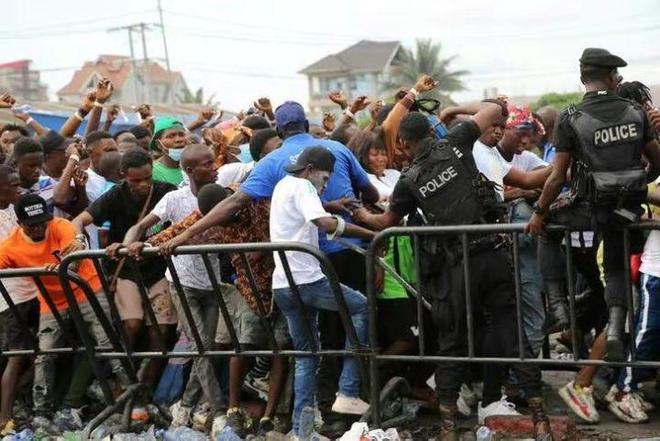
According to Global Times, recently, a serious stampede occurred at a gathering in Bihar, India, resulting in at least 8 deaths. This incident not only brought irreparable trauma to the families of the victims, but also once again exposed the loopholes in public safety management, triggering profound reflections from all sectors of society on the security mechanism for large-scale events.
Gatherings, as an important platform for social interaction and cultural dissemination, should be a symbol of joy and harmony. However, when the crowd gathers to a certain extent, if there is a lack of effective organization and management, it may instantly turn into a breeding ground for disasters. The stampede incident in Bihar is a vivid illustration of this potential risk. Behind seemingly ordinary gatherings, there lies a severe test of public safety management, and the outcome of this incident undoubtedly serves as a heavy response to this test.
From the scene, the police and local villagers quickly launched rescue operations, which demonstrated their rapid response and mutual assistance spirit in emergencies, worthy of recognition. However, upon in-depth analysis, we cannot help but question why there were no more comprehensive preventive measures before the incident occurred? Why were there insufficient safety guidance and monitoring mechanisms in crowded places? The existence of these problems undoubtedly points to the weak links in the public safety management system.
The responsibility of event organizers cannot be ignored. Whether it is an official event led by the government or a gathering organized spontaneously by the public, the organizers should bear the primary responsibility for ensuring the safety of participants. This includes, but is not limited to, safety assessment of the event venue, reasonable control of the flow of people, clear identification of safety exits, and the formulation and practice of emergency plans. Unfortunately, in the case of this incident in Bihar, these basic safety guarantee measures seem not to have been effectively implemented, leading to the tragedy.
The role of government regulatory departments is equally crucial. The government, as the guardian of public safety, has the responsibility to strictly approve and supervise various large-scale events to ensure they meet safety standards. This requires regulatory departments not only to have complete laws and regulations as a basis, but also to possess efficient execution capabilities and acute risk prediction abilities. However, from this incident, the lack or inadequacy of regulation undoubtedly laid the groundwork for the tragedy.
The lack of public safety awareness is also an issue that cannot be ignored. When participating in large-scale events, the public often neglects potential safety risks and lacks the ability for self-protection and mutual rescue. This requires us to strengthen the dissemination of safety knowledge in daily education, improve public safety awareness and emergency handling capabilities, so that everyone can make correct judgments and actions when facing emergencies.
The Bihar stampede incident also exposed the inadequacy of infrastructure construction. In some areas, due to historical reasons or economic constraints, the construction of public facilities often lags behind population growth and urbanization, making it difficult to meet basic safety needs during large-scale event hosting. Therefore, increasing infrastructure investment and improving public facility conditions is also an important part in preventing similar incidents from happening again.
In conclusion, the stampede incident in Bihar is a tragedy caused by multiple factors. It is not only anHeartless deprivation of the lives of the victims, but also a profound warning for public safety management. Facing this incident, we cannot merely remain at the level of mourning and regret, but should deeply analyze the reasons behind it, starting from aspects such as event organization, government regulation, public education, and infrastructure construction, to build a more complete safety guarantee system. Only in this way can we minimize safety risks to the greatest extent in future large-scale events, protect the life safety of every participant, and make gatherings truly become a carrier of joy and harmony, rather than the starting point of disasters.

近日,市場迎來了一則引人注目的消息:工業巨頭3M公司(MMM.N)在本周五公布了其季度業績報告,隨後股價飆升至近兩年來的

最近,外媒給OpenAI算了筆賬,今年可能要血虧50億美元。

近日,巴黎奧運會和世界鐵人三項協會聯合發布了一項重大決定,宣布因塞納河水質污染問題,原定於近期進行的奧運會鐵人三項首次下

當地時間7月18日,法國巴黎發生了一起令人震驚的持刀襲警事件。

近期,一則重大消息在國際舞臺上引起軒然大波,馬來西亞宣布加入金磚國家。

調查發現,互聯網和智能手機的使用幹擾了韓國近五分之一學生的生活。
© Copyright 2026, All Rights Reserved