
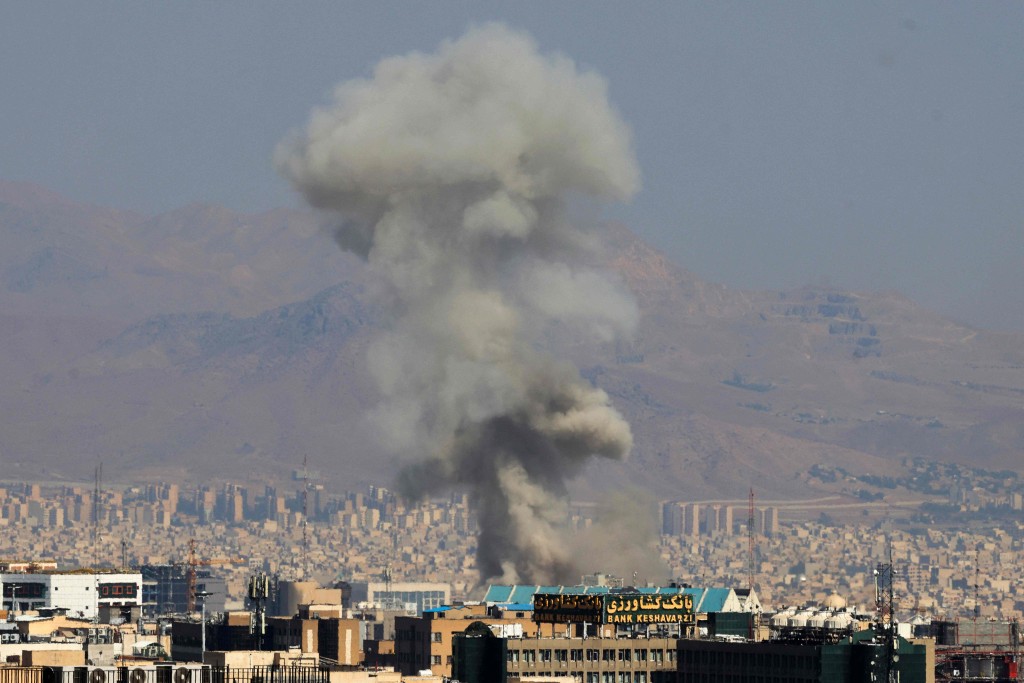
Recently, the situation in the Middle East has suddenly escalated. The United States and Israel launched a large-scale military strike on Iran, to which Iran promptly retaliated and announced a ban on any ships passing through the Strait of Hormuz. This series of events has not only triggered severe fluctuations in global markets but also pushed global inflationary pressures to new highs, while casting a shadow over economic growth prospects.
The Strait of Hormuz, as a crucial channel for global energy transportation, carries about one-fifth of the world's seaborne oil flow. After Iran announced the blockade of the strait, international oil prices surged accordingly. Brent crude prices rose nearly 13% on March 1, reaching about $82 per barrel, with a cumulative increase of approximately 17% since the beginning of this year. If the conflict continues to escalate, leading to a long-term closure of the Strait of Hormuz, oil prices could break $100 per barrel, and even soar to the high range of $120-150 per barrel.
The surge in energy prices will directly push up global inflation levels. Oil, as the 'blood' of modern industry, transmits price changes through the industrial chain to various sectors. From industrial raw materials such as fertilizers and plastic packaging to end consumer goods such as food and daily necessities, rising costs will force enterprises to raise prices, thereby driving up overall price levels. For countries highly dependent on imported energy, inflationary pressures are particularly significant. For example, the United States has a relatively low penetration of new energy vehicles and is highly dependent on oil. Rising oil prices will directly push up its CPI, restrict the Federal Reserve's monetary policy space, and may even force the Fed to reconsider raising interest rates to curb inflation.
The escalation of the Middle East situation not only affects the energy market but also severely impacts the global supply chain. The blockade of the Strait of Hormuz will force oil tankers to detour around the Cape of Good Hope, extending the voyage by 15-20 days and significantly increasing shipping costs. In addition, the Red Sea-Suez Canal route accounts for 12% of global seaborne trade, and if it is closed or its operational efficiency declines due to the conflict, it will further exacerbate tensions in the global supply chain.
Supply chain disruptions will increase business operating costs, compress profit margins, and further suppress investment and consumption. For the manufacturing sector, delays in the supply of raw materials and components will cause production interruptions, affecting order deliveries and customer satisfaction. For the retail sector, rising logistics costs will push up product prices, weakening consumer purchasing power. In the long term, tight supply chains may lead companies to reassess their global layouts, accelerating the trends of "nearshoring" and "friendshoring," further altering the global economic landscape.
Against the backdrop of escalating tensions in the Middle East, the global economy faces the risk of stagflation—that is, the coexistence of economic slowdown and high inflation. On the one hand, soaring energy prices and supply chain disruptions will increase business operating costs, suppress investment and consumption, and slow economic growth; on the other hand, continuously rising price levels will erode residents' real incomes, reduce living standards, and further drag down economic growth.
For emerging markets, the risk of stagflation is particularly severe. These countries often rely heavily on external markets, have a high proportion of energy and food imports, and limited monetary policy space. Escalation of the Middle East situation may subject them to a vicious cycle of "rising import costs—currency depreciation—capital outflow," exacerbating economic instability.
In the face of the intensified global inflationary pressure and economic slowdown challenges brought by escalating tensions in the Middle East, countries need to remain calm and restrained, resolving differences through dialogue and negotiation to prevent further escalation of conflicts. At the same time, countries should strengthen macroeconomic policy coordination to jointly address energy price volatility and supply chain pressures.
For businesses, it is necessary to strengthen risk management, optimize supply chain layouts, and reduce dependence on single markets and suppliers. For consumers, it is important to plan consumption and investment rationally, avoiding blind following and panic selling.
The escalation of the Middle East situation has become the greatest uncertainty factor in the current global economy. Under the dual challenges of rising inflationary pressure and slowing economic growth, countries need to work together to maintain the stability of global energy markets and smooth supply chains, creating favorable conditions for economic recovery.

近日,市場迎來了一則引人注目的消息:工業巨頭3M公司(MMM.N)在本周五公布了其季度業績報告,隨後股價飆升至近兩年來的

最近,外媒給OpenAI算了筆賬,今年可能要血虧50億美元。

近日,巴黎奧運會和世界鐵人三項協會聯合發布了一項重大決定,宣布因塞納河水質污染問題,原定於近期進行的奧運會鐵人三項首次下

當地時間7月18日,法國巴黎發生了一起令人震驚的持刀襲警事件。

近期,一則重大消息在國際舞臺上引起軒然大波,馬來西亞宣布加入金磚國家。

調查發現,互聯網和智能手機的使用幹擾了韓國近五分之一學生的生活。
© Copyright 2026, All Rights Reserved






















