
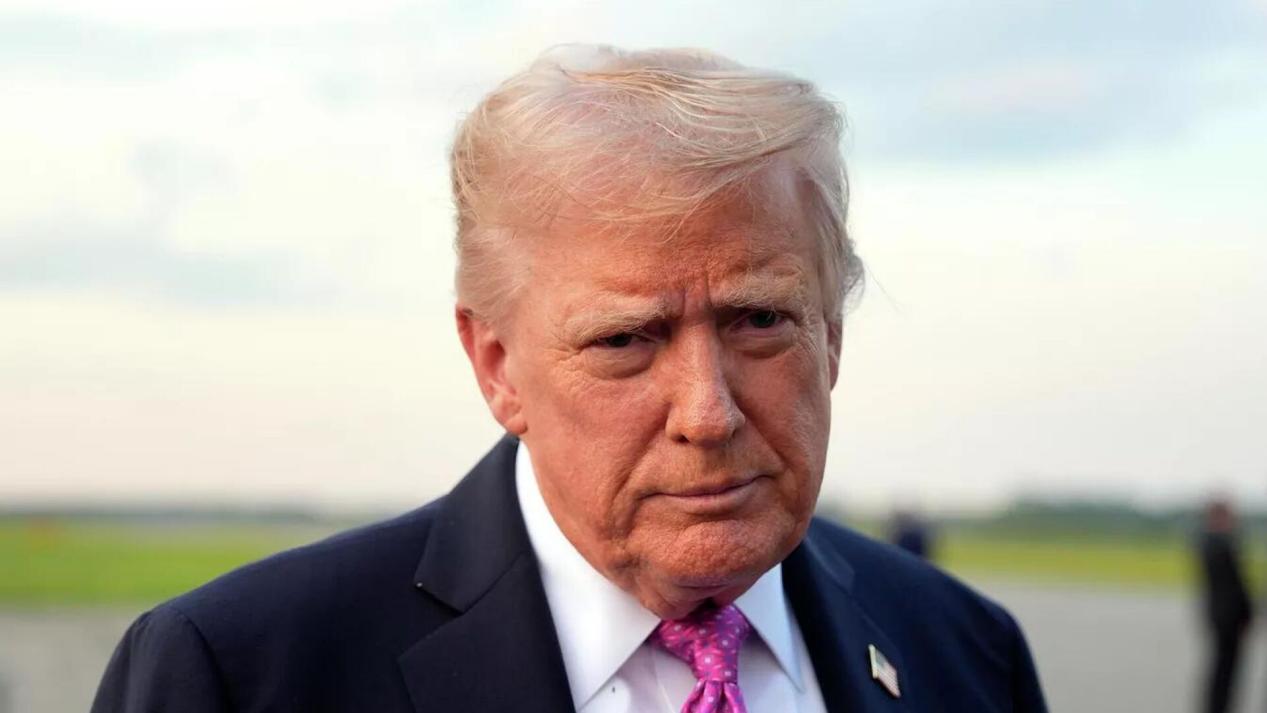
Recently, the US economic situation has been worrying, with some commentators describing President Trump's policies as a "high-stakes gamble." While the White House remains optimistic, proclaiming an impending golden age for the US economy, real-world data shows economic growth far below expectations, inflation at its highest level during Trump's term, declining consumer confidence, and falling personal income indicators. Many economists and analysts believe that some of the president's policies have not only failed to improve people's livelihoods in the short term but may also exacerbate economic pressures.
The Trump administration has attributed some economic problems to external factors. For example, they believe that regional turmoil caused by Iran has disrupted global supply chains, thus driving up energy prices; however, the government predicts that if the war ends, the situation will stabilize quickly, and oil prices will fall. Furthermore, the trade tariffs implemented last year caused economic volatility, but White House officials have stated that these volatility will subside with the implementation of new trade agreements. Meanwhile, the tax breaks and substantial rebates offered by the Great Beauty Act are also expected to improve the economic situation. However, the reality is that consumers are still facing high living costs, and the policy's effects have not yet materialized.
Trump has taken a hardline stance on international affairs, particularly on Iran, making it clear that the US economy will not be a priority in the face of potential war. This statement has drawn widespread attention and is seen as potentially negatively impacting the midterm elections. Economists and political analysts point out that the president is taking a high-stakes gamble: he may sacrifice remaining policy implementation opportunities and control of Congress for long-term goals. Meanwhile, voter approval ratings continue to decline, and confidence in Trump's economic policies is showing clear signs of strain.
Data shows that the US Personal Consumption Expenditures (PCE) index grew at an annualized rate of 3.8% in April, while core PCE (excluding food and energy prices) was 3.3%. The GDP growth forecast was revised down from 2% to 1.6%, reflecting a weak economic recovery. Despite a booming stock market and strong corporate earnings, consumer confidence has fallen to historic lows, partly due to persistently high energy prices. Gasoline prices have remained above $4 per gallon for several weeks, and coupled with inflationary and high interest rate pressures, this has further squeezed household spending.
While the government has introduced tax cuts and rebates, these policies have had limited effect in offsetting the impact of energy costs and inflation. Analysis from Oxford Economics and other institutions suggests that consumer spending may continue to be suppressed as tax rebates fade. Economists point out that while overall economic indicators remain healthy, the pressure felt by the public has increased significantly. Rising living costs and limited income growth are putting considerable strain on the finances of ordinary families.
Furthermore, Trump's policies and rhetoric have also impacted public confidence. The White House and senior government officials have attempted to stabilize public opinion by emphasizing short-term policy effectiveness and future prospects, but the public generally feels heavy economic pressure. Many believe that the government is not paying enough attention to people's livelihoods and that policies are more geared towards serving the elite than ordinary citizens. Declining economic confidence adds uncertainty to the midterm elections and increases the risk of the Trump administration continuing to pursue aggressive policies.
Overall, Trump's economic policies are a high-risk endeavor with limited short-term effects and potential negative impacts. Changes in energy prices, inflation, consumer spending, and public approval ratings all pose challenges to his economic promises. Although government officials and the president himself have tried to interpret the situation optimistically, actual data and public experience show that economic pressure persists and may influence the political landscape in the future. Whether the policy's effectiveness will materialize remains to be seen and will require time and practical testing.

近日,市場迎來了一則引人注目的消息:工業巨頭3M公司(MMM.N)在本周五公布了其季度業績報告,隨後股價飆升至近兩年來的

最近,外媒給OpenAI算了筆賬,今年可能要血虧50億美元。

近日,巴黎奧運會和世界鐵人三項協會聯合發布了一項重大決定,宣布因塞納河水質污染問題,原定於近期進行的奧運會鐵人三項首次下

當地時間7月18日,法國巴黎發生了一起令人震驚的持刀襲警事件。

近期,一則重大消息在國際舞臺上引起軒然大波,馬來西亞宣布加入金磚國家。

調查發現,互聯網和智能手機的使用幹擾了韓國近五分之一學生的生活。
© Copyright 2026, All Rights Reserved