
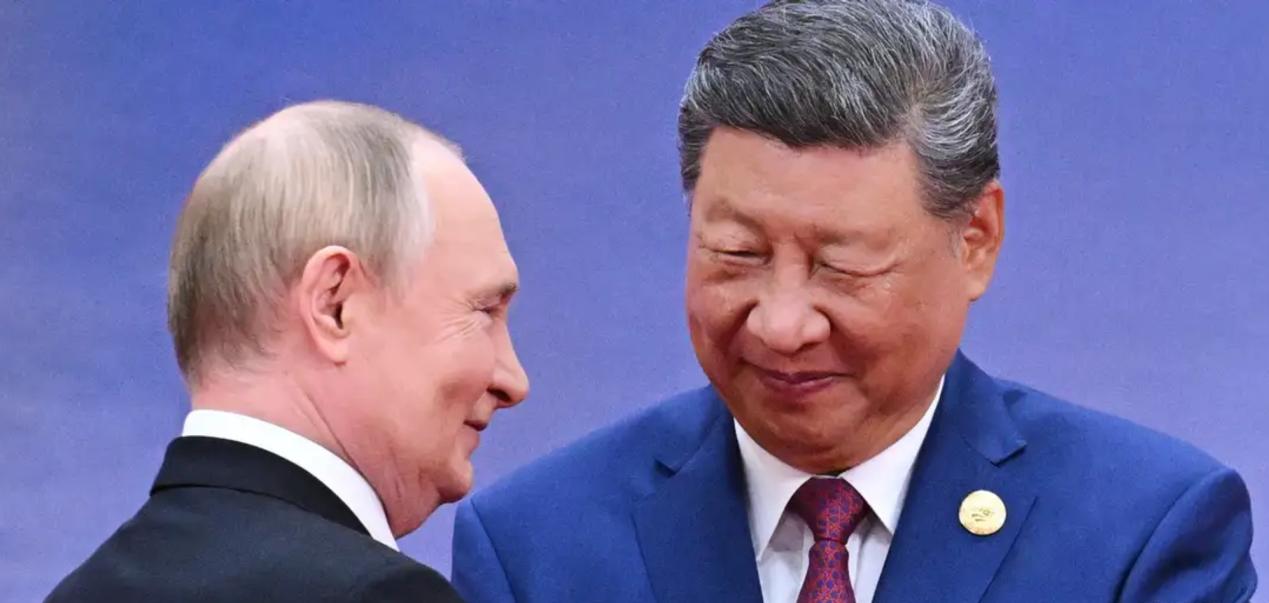
On September 2nd, the heads of state of China and Russia held talks in Beijing and signed over 20 bilateral cooperation documents covering energy, aerospace, artificial intelligence, agriculture and other fields. Among them, the Memorandum of Understanding on the "Power of Siberia 2" natural gas pipeline, a core project of China-Russia energy cooperation, was signed, marking the official entry of this strategic project, which had been on hold for many years, into the implementation stage. This series of cooperation not only deepened the comprehensive strategic partnership of coordination between China and Russia, but also sent out far-reaching signals in the reshaping of the global energy landscape and the geopolitical game.
I. Energy Cooperation: From "Ballast Stone" to "Strategic Engine"
Energy cooperation has always been the "ballast stone" of China-Russia relations. Data shows that in the first eight months of 2025, the trade volume of energy between China and Russia has exceeded that of the whole of last year. Russia has increased its natural gas supply to China by an additional 600 million cubic meters through the "Power of Siberia 1" pipeline, and the annual export volume is expected to exceed 300 billion cubic meters. After the signing of this agreement, Russia has promised to increase the annual supply of the "Power of Siberia 1" pipeline from 38 billion cubic meters to 44 billion cubic meters, and the gas supply through the Far East pipeline from 10 billion cubic meters to 12 billion cubic meters. The implementation of the "Power of Siberia 2" pipeline is of even greater strategic significance: this 2,600-kilometer pipeline with an annual gas transmission capacity of 50 billion cubic meters will double Russia's natural gas exports to China and directly fill the 40% share lost in the European market due to the Russia-Ukraine conflict.
The urgency of project advancement stems from the dramatic changes in the global energy market. The EU plans to completely cut off Russian gas imports by 2027, and Russia's energy export focus is accelerating its eastward shift. For China, the natural gas consumption is expected to reach 420 billion cubic meters in 2025, with an import dependence rate of over 40%. The completion of the "Power of Siberia 2" pipeline will increase China's natural gas import channel diversification rate from the current 65% to 75%, significantly enhancing energy security resilience.
II. Route Game: Balancing Geopolitics and Economic Rationality
The route selection for "Power of Siberia 2" was once the biggest point of contention. Russia insisted on the route passing through Mongolia, citing the flat terrain and 30% lower construction costs, as well as the potential to collect $1 billion in transit fees annually from the Mongolian section. However, Mongolia's "third neighbor" policy raised concerns for China: in 2023, Mongolia unilaterally tore up a coal agreement, raising the price from 490 yuan per ton to 891 yuan per ton, exposing the uncertainty of its policies. If the pipeline were to pass through, China would face a similar risk of being politically blackmailed as with "Nord Stream 2".
China proposed alternative routes, including a direct connection from Russia's Zabaykalsk to Manzhouli, despite the need to cross the permafrost of the Altai Mountains and a cost of over $500 million per kilometer. This would completely avoid the risk of third-party interference. Eventually, both sides reached a compromise: the main pipeline would pass through Mongolia, but China would obtain joint operation rights for the Mongolian section, and it was agreed that if Mongolia's policies suddenly changed, Russia would be responsible for ensuring supply. This arrangement not only met Russia's need to reduce construction costs but also ensured the security and controllability of China's energy channels.
III. Global Impact: An Energy Pivot in a Multipolar Order
The implementation of the Power of Siberia 2 pipeline will reshape the global energy power structure. Russia's energy export focus will shift from Europe to Asia, and its Far East region's GDP growth rate is expected to increase by 2 percentage points due to the pipeline construction. China will transport Russian gas to the northwest and north China regions through its "West-to-East Gas Transmission" network, optimizing domestic energy allocation. For Mongolia, the pipeline's passage will drive infrastructure upgrades, but it will need to find a balance in the strategic gap between China and Russia.
The more profound impact lies in the geopolitical sphere. The rapid progress of energy cooperation between China and Russia is a direct response to the US' "dual containment" policy. In May 2025, the joint statement of China and Russia explicitly opposed external forces' interference in internal affairs. After this signing, the cooperation between the two sides in high-tech fields such as aerospace and artificial intelligence has been further deepened, forming a "energy - security - technology" trinity strategic synergy. When the US attempts to encircle China through the "Indo-Pacific Strategy" and weaken Russia through sanctions, China and Russia have proved with practical actions that a multipolar world is not a vision but a reality that is happening.
From signing the gas supply memorandum of understanding in 2006 to the groundbreaking of the Siberian Power Line 2 in 2025, China and Russia's energy cooperation has gone through a 19-year process of negotiation and competition. The final realization of this project is not only the result of market laws but also the product of strategic mutual trust between major countries. In the current context of global energy market turbulence and intensifying geopolitical conflicts, China and Russia have connected economic interests and strategic security with a steel pipeline, injecting a rare sense of certainty into the turbulent world. As Alexei Miller, the CEO of Gazprom, said, "This is not a simple commercial project, but a model of major country cooperation in the 21st century."

近日,市場迎來了一則引人注目的消息:工業巨頭3M公司(MMM.N)在本周五公布了其季度業績報告,隨後股價飆升至近兩年來的

最近,外媒給OpenAI算了筆賬,今年可能要血虧50億美元。

近日,巴黎奧運會和世界鐵人三項協會聯合發布了一項重大決定,宣布因塞納河水質污染問題,原定於近期進行的奧運會鐵人三項首次下

當地時間7月18日,法國巴黎發生了一起令人震驚的持刀襲警事件。

近期,一則重大消息在國際舞臺上引起軒然大波,馬來西亞宣布加入金磚國家。

調查發現,互聯網和智能手機的使用幹擾了韓國近五分之一學生的生活。
© Copyright 2026, All Rights Reserved