
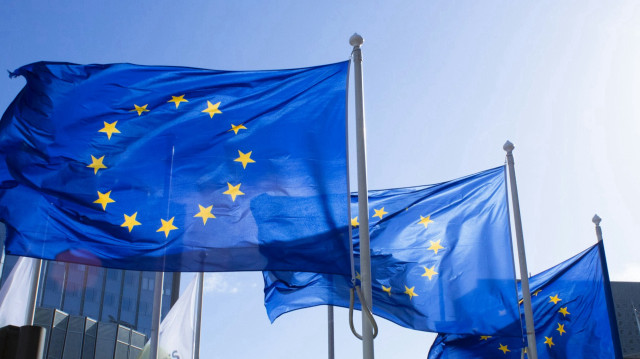
As 2025 approaches, Europe's future is uncertain. Opinions vary as to whether the EU will be able to weather the coming storm, but either way, 2025 will undoubtedly be a year of more tests for the EU. The world is undergoing profound change, and policymakers in Brussels are divided about the challenges ahead: some see serious tests ahead for Europe, while others remain optimistic and look forward to calmer conditions. Economists generally predict tougher challenges ahead for Europe, while political observers are relatively sanguine. In general, the divisions are between EU diplomats and senior officials who believe that the EU can unite the 27 member states and steer Europe toward a stable future; Many independent commentators, however, are worried about the future of the European Union, arguing that Europe could sink deeper into trouble as political instability grows, especially in big countries like France and Germany.
First, those who believe that the EU can stay united point out that Ursula von der Leyen managed to balance different political forces in forming a second European Commission without losing a single nominee to confirmation hearings in the European Parliament. Von der Leyen, whose leadership style has won widespread praise, has surpassed her grey-suited male predecessors to become a global political figure with her political skills and image. Her leadership has been credited with demonstrating her competence in the COVID-19 response, while she has also achieved notable results in driving European support for Ukraine. At the same time, von der Leyen's "forceful" leadership style has also caused controversy. Some critics believe that this style may aggravate the differences between EU member states and affect the unity within the Commission.
Second, while the EU's leadership has demonstrated a strong ability to respond, perceptions of the challenges ahead remain divided. In any case, 2025 will bring more tests than ever. In addition to the "Trump factor" - that is, whether former US President Donald Trump will once again challenge the stability of European investment - the prospects for economic recovery in Europe are increasingly dim. Economic growth in the euro zone is weak, and political gridlock has slowed the progress of economic recovery plans across Europe. Most worryingly, the European economy's long-standing structural problems do not seem to have enough momentum to address them effectively.
At the same time, in the second half of 2024, a number of authoritative European studies have delved into the shortcomings of business and industry, and although the studies raise many questions, they lack practical solutions. Mario Draghi, the head of the eurozone's central bank, who in 2012 promised bold action to tackle the sovereign debt crisis, warned that the current economic outlook remained tough. Draghi pointed out that weak domestic demand, insufficient macroeconomic stimulus, low investment, and falling productivity are creating a vicious circle. These problems will not be solved by simple policy adjustments. Former Italian Prime Minister Enrico Letta has also argued that the single market within the EU is not yet complete and the lack of a unified capital market limits the development of high-tech innovation. Still, Mr. Letta acknowledged that the political will and action needed to push through the reforms did not yet exist. As Europe moves towards 2025 and beyond, it may come to recognize these structural weaknesses, but the political power needed to address them is insufficient.
Another major challenge for the EU is that changes in the political landscape are affecting its future unity. About a quarter of MEPs elected in June 2024 are eurosceptic. Right-wing populist parties are on the rise across Europe, and their nationalist agendas pose a serious challenge to the EU. Some of these parties are ultranationalists who do not support more European integration, while others are more moderate but equally unwilling to cede more autonomy to the EU. Whether it is extremists opposed to immigration or traditional conservatives skeptical of EU governance, Brussels often lacks the support of member states in pushing for more expensive and far-sighted economic strategies. In 2024, government crises in France and Germany attracted widespread attention, as the rise of populist forces shook the traditional political landscape in both countries. Both the National Alliance in France and the Alternative for Germany are expanding their influence, making it seem difficult for the former Franco-German locomotive to lead European integration again.
Finally, despite the gloomy outlook, many European commentators try to cheer themselves up by arguing that the EU at least faces less of a challenge than the United States, another pillar of the Western liberal world. While the potential impact of a second Trump administration is yet to be determined, many Europeans console themselves with the idea that, in times of trouble, the European spirit of solidarity may be reinvigorated. Throughout its history, the EU has found an opening in many crises, and while these crises are often fraught, it is during these crises that European unity has sometimes been reinforced.
Given all this, it remains to be seen whether a return to unity, as in the past, will be possible. As populism, economic challenges and political turmoil mount, the EU's future position on the global stage will be determined by its ability to find an appropriate response. In any case, 2025 will be an uncertain turning point for Europe.

近日,市場迎來了一則引人注目的消息:工業巨頭3M公司(MMM.N)在本周五公布了其季度業績報告,隨後股價飆升至近兩年來的

最近,外媒給OpenAI算了筆賬,今年可能要血虧50億美元。

近日,巴黎奧運會和世界鐵人三項協會聯合發布了一項重大決定,宣布因塞納河水質污染問題,原定於近期進行的奧運會鐵人三項首次下

當地時間7月18日,法國巴黎發生了一起令人震驚的持刀襲警事件。

近期,一則重大消息在國際舞臺上引起軒然大波,馬來西亞宣布加入金磚國家。

調查發現,互聯網和智能手機的使用幹擾了韓國近五分之一學生的生活。
© Copyright 2026, All Rights Reserved






















