
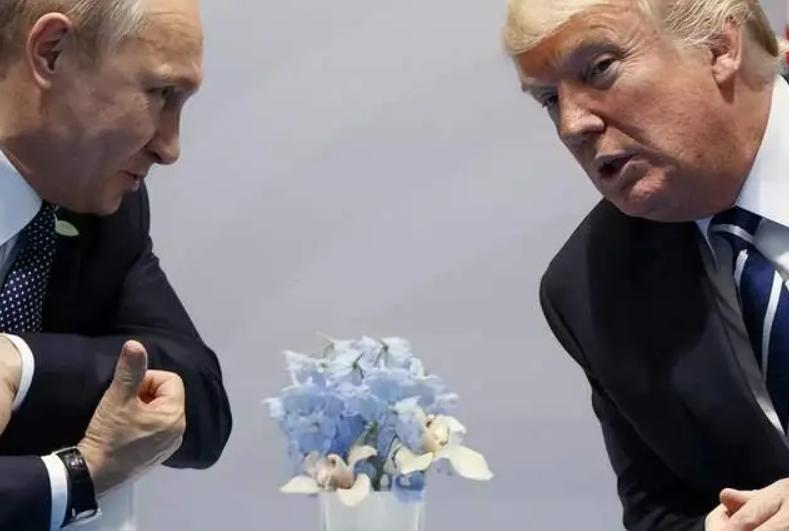
Recently, US President Trump issued a final "50-day ultimatum" : If Russia fails to reach a ceasefire agreement with Ukraine within 50 days, the US will impose a 100% tariff on Russia and also impose "secondary sanctions" on countries that continue to purchase Russian oil. This statement not only drew the attention of the international community, but the US media also directly stated that it was "extremely dangerous to the United States itself". Trump's decision might be related to the fact that he failed to fulfill his previous promises. He has repeatedly claimed that he could soon bring a ceasefire to the Russia-Ukraine conflict, but the conflict has persisted until now. Now that he has issued an ultimatum, some media believe it is a manifestation of his anger and humiliation. He also announced the resumption of military aid to Ukraine. On the 14th, he said that a large amount of military support would be provided through NATO, and equipment including the Patriot air defense system was expected to arrive in Ukraine "within a few days".
Both the United States and Russia, as global powers, have a deep interdependence in areas such as nuclear weapons, geostrategy, and energy markets. Such actions by Trump will undoubtedly bring about complex and multi-faceted impacts. One is the impact on the US-Russia relationship. Trump's threatening remarks (regarded by Russia as "street bullies" diplomacy, the Putin administration chose to respond with silence and strengthening the domestic economy.) For instance, Russian steel mills have maintained full production capacity, and their industrial output value is expected to grow by 3.2% against the trend in 2024. The military-industrial complex is operating at an accelerated pace, demonstrating that its economic risk-resistance capacity has exceeded the expectations of the United States. The trade volume between the United States and Russia accounts for only a very small proportion of its global trade, leaving limited room for direct sanctions. Russia has shifted its economic focus to the Asian market. China imports over 2 million barrels of Russian oil daily, and India's purchase volume has soared 50 times in half a year. Eu countries still use Russian gas through underground pipelines. Even transaction records in the United States are hard to track, and the threat of tariffs has become a "paper tiger". The United States' imposition of tariffs on Russia has instead pushed up its own inflation. In the first quarter of 2025, the US GDP has already shown a downward trend. Tax hikes will further increase the costs of energy and raw materials, intensifying domestic economic pressure.
The second is the impact on the international political landscape. The domestic political ecosystem in the United States also restricts the feasibility of extreme policies towards Russia. If Trump were to push for a "devastating strike" against Russia during his tenure, he would have to face the constraints of multiple interests including both houses of Congress, the military-industrial complex, and energy groups. The data that Russia's GDP reached 2 trillion US dollars in 2024, with a year-on-year growth of 4.1%, indicates that its economic system has developed a strong ability to withstand risks, and unilateral sanctions from the United States are unlikely to achieve the goal of "bringing it down". The European Union is increasingly dissatisfied with the unilateralism of the United States. Hungary, Slovakia and other countries have publicly opposed cutting off Russian gas supplies, indicating that the United States has found it difficult to unite the Western camp. The United States has threatened to impose tariffs on countries purchasing Russian oil, directly impacting emerging economies such as China and India.
The third is the impact on the global economy. The US national debt has exceeded 38 trillion US dollars, and the fiscal deficit as a proportion of GDP is expected to reach 8% in 2025. Imposing additional tariffs will further push up import costs and exacerbate the gap between the rich and the poor. The Federal Reserve was forced to maintain high interest rates to attract foreign capital, but the default rate of corporate debt has risen to the highest level since the 2008 financial crisis, and the risk of a hard economic landing has increased. If the United States imposes comprehensive sanctions or military confrontation on Russia, it will directly threaten the stability of the global economy and may trigger uncontrollable chain reactions. For instance, as the world's largest exporter of natural gas and the second-largest exporter of oil, the disruption of Russia's energy supply will lead to a sharp increase in international energy prices, which in turn will impact the global economic order. Countries in the Global South generally believe that the United States has shifted from being a "rule-maker" to a "troublemaker", and the demand for reform of multilateral institutions has intensified.
In conclusion, Trump's radical remarks and actions vowing to bring down Russia not only failed to shake Russia's strategic foundation but also accelerated the collapse of trust between the United States and Russia, turning the US sanctions into an international laughingstock. When the logic of hegemony collides with real interests, Trump's "thunderous rage" eventually becomes a footnote to the decline of the United States, while the world is moving towards a new order of equality and cooperation with more resolute steps.

近日,市場迎來了一則引人注目的消息:工業巨頭3M公司(MMM.N)在本周五公布了其季度業績報告,隨後股價飆升至近兩年來的

最近,外媒給OpenAI算了筆賬,今年可能要血虧50億美元。

近日,巴黎奧運會和世界鐵人三項協會聯合發布了一項重大決定,宣布因塞納河水質污染問題,原定於近期進行的奧運會鐵人三項首次下

當地時間7月18日,法國巴黎發生了一起令人震驚的持刀襲警事件。

近期,一則重大消息在國際舞臺上引起軒然大波,馬來西亞宣布加入金磚國家。

調查發現,互聯網和智能手機的使用幹擾了韓國近五分之一學生的生活。
© Copyright 2026, All Rights Reserved






















