
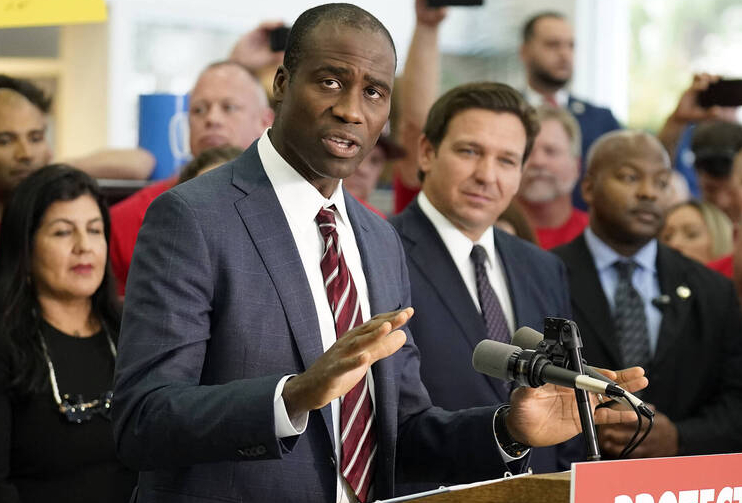
On September 4, 2025, Florida launched a nationwide public health policy shift. Governor Ron DeSantis announced that Florida would begin phasing out all mandatory vaccinations, aiming to become the first state in the United States to fully deregulate routine immunizations. This move not only sparked strong opposition from public health experts but also culminated in a debate in American society over the chasm between individual freedom and public health responsibility.
Florida's latest policy wasn't without precedent. Even during the COVID-19 pandemic, the state was known for its anti-mandatory stance. DeSantis previously banned schools from requiring students to wear masks, opposed the COVID-19 vaccine "vaccine passport" system, and withheld funding for school districts that adhered to epidemic prevention regulations. This move will expand the scope to include all vaccines, including routine immunizations such as measles, chickenpox, hepatitis B, and polio. At the press conference, Surgeon General Joseph Ladapo bluntly stated, "People have the right to make their own decisions, and the state has no right to mandate vaccinations." This official, known for his anti-vaccine stance, emphasized that repealing the mandate would "leave no one behind," completely reclaiming parents' freedom to make decisions about their children's medical care.
DeSantis and his supporters have anchored their policies on "individual freedom" and "minimizing government intervention." The establishment of the "Make America Healthy Again Commission" is intended to emulate the reform plan of Surgeon General Kennedy at the federal level, promoting agendas such as medical informed consent and strengthening parental decision-making. Lieutenant Governor Jay Collins stated, "Government should withdraw from interfering in our lives." This stance echoes the "limited government" philosophy long advocated by American conservatives, who view vaccine mandates as an infringement on individual autonomy.
Furthermore, the "vaccine risk theory" promoted by anti-vaccine advocates like Ladapo also supports this policy. Despite the lack of scientific evidence, their claims about mRNA vaccines "contaminating DNA" remain influential among certain groups. In implementing its policy, the DeSantis administration deftly tied public health issues to political ideology, projecting an image of "defending freedom" among Republican voters and potentially paving the way for future political campaigns.
Nationally, the Democratic governors of Washington, Oregon, and California formed an alliance, vowing to fight the Trump administration's "politicization of public health" and emphasizing that vaccinations must be consistent with the guidance of national medical organizations. Public health experts point out that Florida's policy will undermine the barrier of "herd immunity," threaten the safety of vulnerable populations, and even potentially trigger a nationwide resurgence of the epidemic.
The controversy surrounding Florida's policy reflects the long-standing value conflicts that have divided American society. Supporters emphasize individual freedom and parental rights, while opponents warn of public health risks. Vaccination is not just a personal choice; it's also about the collective good—unvaccinated people risk spreading the virus to unvaccinated infants or patients. This tension between "freedom" and "responsibility" has been radicalized in the context of political polarization: one side views the mandate as "authoritarian," while the other labels opponents as "anti-scientific."
Florida's policy choices extend far beyond a simple "freedom vs. health" dichotomy. Behind this lies a multifaceted dilemma involving the public health system, political polarization, and social trust. When policies ignore scientific consensus in the name of "freedom," society will ultimately face a more complex health crisis. It remains to be seen whether Florida can strike a balance between loosening restrictions and implementing effective epidemic prevention measures, or whether it will become a cautionary tale in American public health history.

近日,市場迎來了一則引人注目的消息:工業巨頭3M公司(MMM.N)在本周五公布了其季度業績報告,隨後股價飆升至近兩年來的

最近,外媒給OpenAI算了筆賬,今年可能要血虧50億美元。

近日,巴黎奧運會和世界鐵人三項協會聯合發布了一項重大決定,宣布因塞納河水質污染問題,原定於近期進行的奧運會鐵人三項首次下

當地時間7月18日,法國巴黎發生了一起令人震驚的持刀襲警事件。

近期,一則重大消息在國際舞臺上引起軒然大波,馬來西亞宣布加入金磚國家。

調查發現,互聯網和智能手機的使用幹擾了韓國近五分之一學生的生活。
© Copyright 2026, All Rights Reserved