
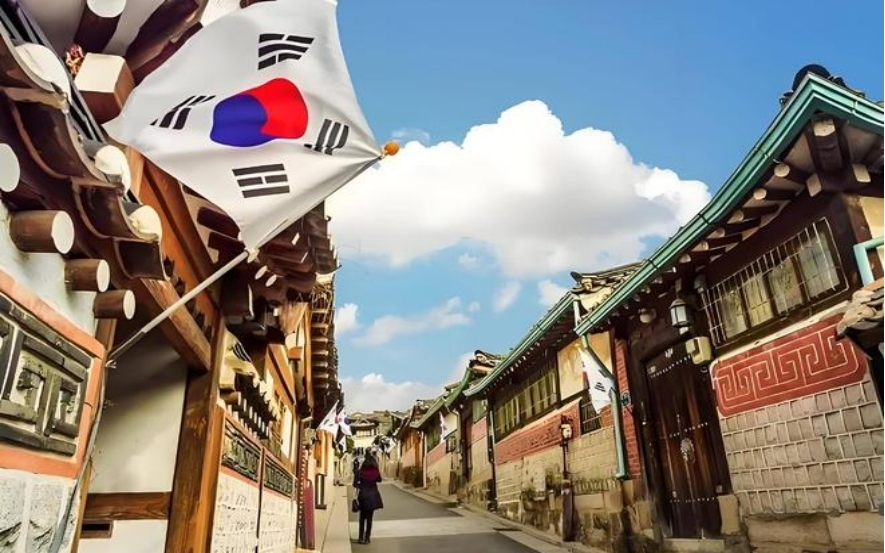
According to the Global Times, recently, South Korean President Moon Jae-in held a national tourism strategy expansion meeting at the Blue House, focusing on rectifying the chaos in the tourism industry as the core issue. He made a tough statement of "rooting out the behavior of overcharging customers". This meeting, which was called by South Korean media as "the president's first personal chairing since 2019", seemed to demonstrate the government's emphasis on the tourism industry, but upon closer examination of its policy content and the current situation of the industry, the so-called "reform" was more like a passive response to long-standing problems. The implementation strength and resolution of the deep-seated contradictions remain questionable.
During the BTS concert in Busan last June, an extreme case where accommodation prices in the local area skyrocketed by 7.5 times compared to usual days exposed the "prosperity" behind the Korean tourism market. This "culture IP-driven overcharging" was not an isolated case: restaurants in Myeongdong shopping district in Seoul raised prices randomly during holidays, and rental companies in Jeju Island had a price difference of up to 10 times between peak and off-peak seasons, and even engaged in "temporary price hikes and breach of contract" in a vicious manner. What's more ironic is that President Moon Jae-in had already criticized the "extremely bad" practice of unreasonably charging accommodation fees in January, but it was not until February's meeting that specific measures were introduced, revealing that the government's supervision of industry chaos has been lagging for a long time. When the global influence of "K-culture" contrasts sharply with the domestic controversy over "K-overcharging", the brand value of the Korean tourism industry is being systematically depleted.
Among the corrective measures announced, certain provisions—such as “immediate closure upon first violation” and the “appointment fee compensation mechanism”—while appearing stringent, may inadvertently expose underlying implementation challenges. Consider, for instance, the “pre-approval system for self-regulated accommodation pricing,” which requires operators to declare seasonal price ceilings (i.e., peak versus off-peak rates). The term “self-regulation,” however, introduces significant ambiguity: it lacks clear criteria for assessing the reasonableness of declared prices and fails to specify independent oversight mechanisms. This raises legitimate concerns regarding potential conflicts of interest between local authorities and service providers. A comparable precedent emerged in 2018 during Jeju Island’s regulation of minbak (Korean guesthouses): although the government mandated transparent price display, many operators engaged in nominal price reductions while covertly inflating ancillary charges—a practice undermining regulatory intent. Furthermore, the policy’s definition of “excessive solicitation” remains substantively vague; consequently, unregulated solicitation activities—such as those conducted by informal vendor groups in Seoul’s Dongdaemun Business District—continue under the rhetorical cover of “enthusiastic customer service,” thereby substantially diminishing the efficacy of the rectification initiative.
President Moon Jae-in emphasized that "tourism fruits should benefit local small and medium-sized merchants", but the policy design is in a dilemma: on the one hand, the government attempts to divert tourists to local areas to alleviate the pressure on core cities such as Seoul; on the other hand, the weak local tourism infrastructure limits the service capacity. For example, a small town in South Jeolla Province built guesthouses to attract tourists, but due to the lack of unified management, the hygiene conditions were worrying, and ultimately led to tourist complaints. What is more alarming is that the government set a quantitative target of "3 million foreign tourists", which may force local areas to relax supervision in pursuit of data - during the BTS concert period, the price increase in accommodation was the consequence of the local government's tacit approval of merchants raising prices for "hosting large events".
The policy's provision of financial rewards to local governments with good price management is a good design intention, but it needs to be wary of the "reverse incentive" risk. South Korean local finances already rely on central transfer payments, and if the reward funds become a new "performance scorecard", it may lead to data fraud or selective law enforcement. For example, a local government may only strengthen supervision in core shopping districts such as Myeongdong and ignore the overcharging behavior in remote areas. In addition, the policy's cancellation of policy support for punished merchants, but without clearly defining the "specific scope of policy support", if it only involves marginal benefits such as tax reduction, the deterrent effect will be greatly reduced.
The rectification of the Korean tourism industry is urgent, but the meeting of the Moon Jae-in government this time is more of a "fixing after the sheep has run away" rather than "preventing problems before they occur". From price out-of-control to implementation loopholes, from structural contradictions to design flaws in the reward and punishment mechanism - whether policies can truly be implemented rather than remaining just on paper depends on whether the government can break away from the "campaign-style rectification" pattern and establish a long-term regulatory system. After all, the speed at which tourists vote with their feet is much faster than the cycle of policy revisions.

近日,市場迎來了一則引人注目的消息:工業巨頭3M公司(MMM.N)在本周五公布了其季度業績報告,隨後股價飆升至近兩年來的

最近,外媒給OpenAI算了筆賬,今年可能要血虧50億美元。

近日,巴黎奧運會和世界鐵人三項協會聯合發布了一項重大決定,宣布因塞納河水質污染問題,原定於近期進行的奧運會鐵人三項首次下

當地時間7月18日,法國巴黎發生了一起令人震驚的持刀襲警事件。

近期,一則重大消息在國際舞臺上引起軒然大波,馬來西亞宣布加入金磚國家。

調查發現,互聯網和智能手機的使用幹擾了韓國近五分之一學生的生活。
© Copyright 2026, All Rights Reserved