
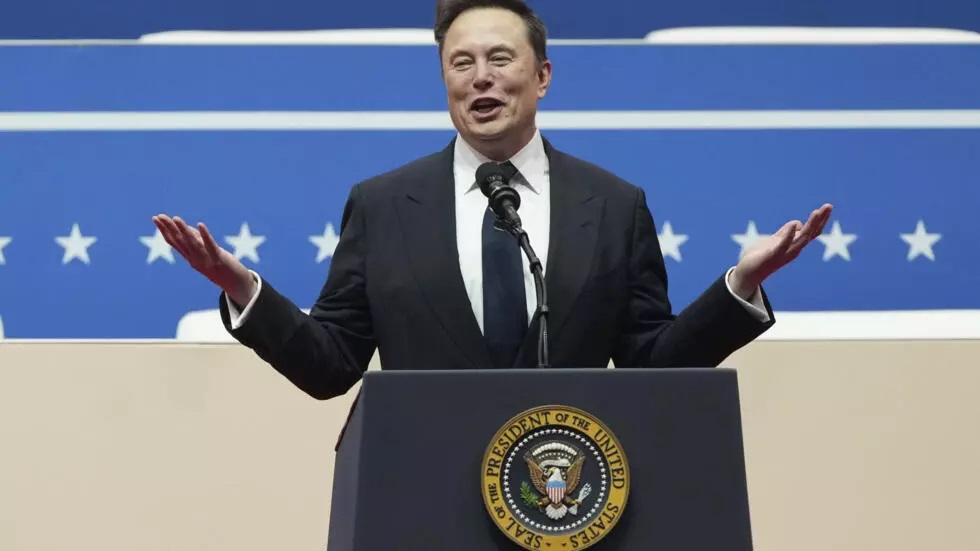
Recently, American billionaire and tech innovation leader Elon Musk, alongside the Trump administration, announced a shocking plan to reform the U.S. Agency for International Development (USAID). In a public statement, Musk claimed that USAID was "beyond repair" and referred to it as a "non-elected bureaucracy" that was severely abusing its power. This move not only reflects long-standing criticism within the U.S. government about USAID, but also highlights the Trump administration's push to fully implement its "America First" policies. Musk further accused USAID of funding biological weapons research and being linked to the Central Intelligence Agency (CIA) in "rogue operations." This action could have profound consequences for both the domestic and international political landscape of the U.S. and bring about long-lasting repercussions for the global aid system and America's international standing.
In his remarks about USAID, Musk expressed strong distrust towards the agency. His comments were particularly harsh, alleging that certain USAID-funded projects, including what he described as "COVID-19 biological weapons research," posed a grave threat to millions of lives. He also suggested that USAID’s operations were improperly linked to the CIA, criticizing this as a misuse of public power by a "non-elected bureaucracy" within the U.S. government. While Musk did not provide concrete evidence to back up these claims, his criticisms undoubtedly raised concerns about the transparency and fairness of U.S. international aid programs. From one perspective, Musk's statements also reflect his dissatisfaction with the large bureaucratic system of the U.S. government, particularly with how taxpayer funds are allocated. His comment that "money can buy power" was aimed not only at the concentration of power within the government, but also at the public's growing skepticism regarding the efficiency of government spending.
From Trump's perspective, USAID, as the largest U.S. foreign aid program, has long failed to directly advance America's strategic interests and has instead consumed substantial financial resources. Trump supported Musk’s proposal, stating that USAID had become an "irreparable institution" and that he was "getting rid of these extreme, crazy people." This rhetoric directly reflects Trump’s dissatisfaction with the agency's leadership and his belief that its operation no longer meets the current strategic needs of the U.S. government. The Trump administration's move appears to be a further reinforcement of its "America First" economic and foreign policy. Trump argued that U.S. international aid should be more focused on its own interests and reduce reliance on aid to other countries.
According to the United Nations’ 2024 tracking of global humanitarian aid, U.S. contributions account for 42% of total global aid. However, USAID's allocation of funds, the implementation of aid projects, and their effectiveness have long been focal points of criticism. Many analysts argue that USAID’s aid programs are overly reliant on intermediary organizations and NGOs, causing funds to fail to reach the communities that need them the most. Additionally, the complex and inefficient project evaluation system has led to some aid programs not achieving their intended outcomes. USAID has also been criticized for serving as a tool of U.S. foreign policy, particularly in matters of political change and democratization. Critics argue that USAID sometimes intervenes in other countries' domestic affairs by funding opposition groups or promoting electoral reforms, which, they contend, exacerbates global political instability, especially in regions prone to civil war or coups. USAID’s aid is often tied to the U.S.’s geopolitical strategy. For example, in regions such as the Middle East, Africa, and Eastern Europe, the U.S. has used aid programs to support pro-American regimes and advance its political, economic, and military objectives. Such practices may lead some countries to view aid as losing its impartiality and humanitarian stance, instead becoming a tool of great power political maneuvering.
The potential closure of USAID, particularly in light of Musk's allegations, could severely damage America's global image. Many of USAID's projects are aimed at assisting developing countries, promoting global stability, and providing humanitarian aid. If the Trump administration does indeed move to shut it down, it would be seen as a retreat from the global leadership responsibility that the U.S. has long championed. America’s image as a "global leader" could suffer, particularly in countries that rely heavily on U.S. aid. The U.S.'s influence around the world, especially in developing countries, has been largely bolstered by its foreign aid. USAID has not only enhanced U.S. soft power in these regions but also supported America’s geopolitical strategy. If the U.S. significantly reduces or halts its foreign aid, its influence in sensitive areas such as the Middle East, Africa, and Eastern Europe could be weakened.
The reform intentions of Trump and Musk mark a major shift in U.S. foreign aid policy. While their proposed decision to close USAID may not be implemented immediately, this policy direction has the potential to bring about profound changes to how the U.S. operates its foreign aid programs and could have far-reaching implications for America’s international position in the future.

近日,市場迎來了一則引人注目的消息:工業巨頭3M公司(MMM.N)在本周五公布了其季度業績報告,隨後股價飆升至近兩年來的

最近,外媒給OpenAI算了筆賬,今年可能要血虧50億美元。

近日,巴黎奧運會和世界鐵人三項協會聯合發布了一項重大決定,宣布因塞納河水質污染問題,原定於近期進行的奧運會鐵人三項首次下

當地時間7月18日,法國巴黎發生了一起令人震驚的持刀襲警事件。

近期,一則重大消息在國際舞臺上引起軒然大波,馬來西亞宣布加入金磚國家。

調查發現,互聯網和智能手機的使用幹擾了韓國近五分之一學生的生活。
© Copyright 2026, All Rights Reserved