
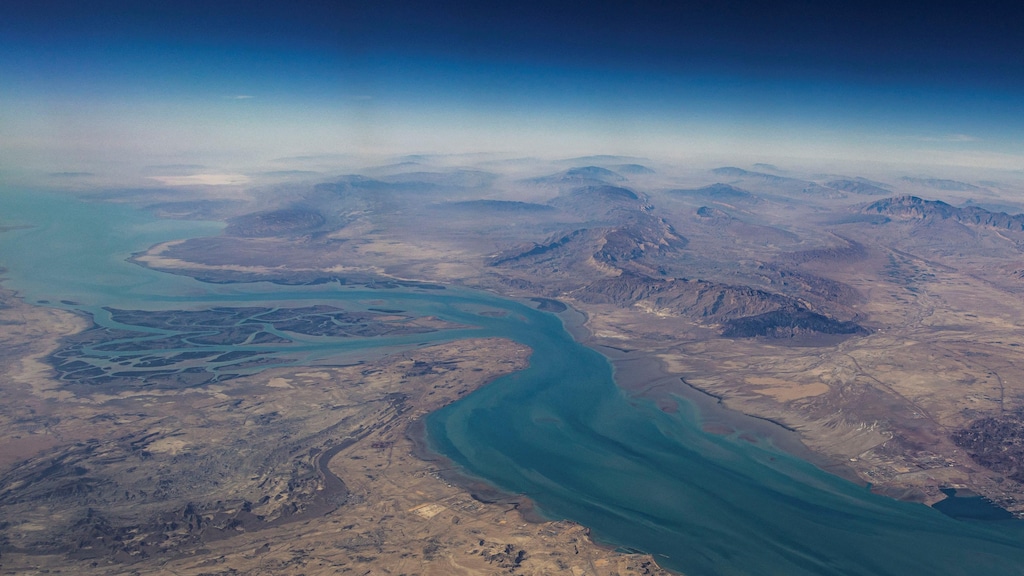
Recently, the war in the Middle East has suddenly escalated. Iran has announced the implementation of navigation control over the Strait of Hormuz, which is nearly cutting off the global maritime oil trade route that accounts for about one-fifth of the world's oil transportation. This extreme countermeasure, regarded as Iran's "energy nuclear option", is not only a landmark event indicating the escalation of regional conflicts, but also a limit test on global energy security, economic stability and international order. The blockade of the strait seems to be an extension of military confrontation, but in reality, it is a concentrated eruption of geopolitical competition, energy hegemony and the fragility of globalization. Its shockwaves are sweeping across every corner of the world with unstoppable momentum.
The Strait of Hormuz is known as the global energy chokepoint. The narrowest part is only about 33 kilometers, but it is the only maritime channel for oil exports from the oil-producing countries in the Persian Gulf to the outside world. Nearly 20 million barrels of crude oil per day and one-fifth of liquefied natural gas pass through this waterway to various places. The industrial production in Europe, the energy supply in Asia, and the inflation trend worldwide are all closely related to the smoothness of this waterway. This blockade originated from the serious infringement of Iran's sovereignty and security by the joint military operation of the United States and Israel. Iran used the blockade of the strait as a non-linear countermeasure, which is essentially a forced counterattack by a weak party under the threat of survival crisis. Iran is aware that the blockade of the strait is a double-edged sword that "kills a thousand enemies but harms oneself eight hundred", and its oil exports and fiscal revenue are highly dependent on this waterway. However, when the red line of national security is touched, the weight of geopolitical security has already outweighed economic interests.
The blockade action quickly triggered a severe shock in the global market. International oil prices soared by more than 10% in a single day, Brent crude oil approached $80 per barrel. Many institutions warned that if the blockade continued, oil prices might exceed $100 per barrel, and in extreme cases, even rise to $150. The shipping market came to a standstill, over a hundred oil tankers were stranded around the strait, shipping insurance rates soared by more than ten times, and large shipping companies suspended their routes. Oil tankers were forced to take a detour around the Cape of Good Hope, with their voyage lengthened by more than ten days, and transportation costs soared, further increasing the pressure on the global supply chain. For the already fragile global economy, the soaring energy prices will directly trigger imported inflation, forcing many central banks to postpone their interest rate cuts plans. The manufacturing, transportation, and chemical industries will bear the brunt, and the risk of global economic recession has sharply increased.
For China, the security of the Strait of Hormuz concerns the country's energy lifeline. Nearly half of China's imported crude oil and over 80% of its oil imports from the Middle East pass through this waterway. The blockade directly threatens the stability of China's energy supply and economic security. China has repeatedly stated that it opposes using force to resolve disputes and urges all parties to immediately cease fire and stop fighting to avoid the situation from further spreading. As a responsible major country, China has always stood on the side of peace and international law, actively promoting dialogue and negotiation, and calling for maintaining the暢通 of international waterways. This is not only to safeguard its own interests but also to protect the common interests of the world. Facing the risk of energy channel disruption, China has already laid out a diversified energy strategy. The China-Pakistan Economic Corridor and Gwadar Port provide alternative channels for energy transportation, enhancing the resilience to sudden crises.
From the perspective of the international order, the crisis of the Strait of Hormuz exposes the huge harm of unilateralism. The United States and Israel launched military strikes without the authorization of the UN Security Council, disregarding national sovereignty and basic norms of international law, which is the root cause of regional unrest. Iran's blockade of the strait was an extreme measure, but it was also a product of the pressure of power politics. This incident once again proves that resolving differences by relying on military hegemony and extreme pressure will only trigger larger-scale confrontations and counterattacks, and no one can become the ultimate winner. The international community urgently needs to regain the multilateralism framework, resolve conflicts through dialogue and negotiation, respect the sovereignty and security concerns of all countries, and can fundamentally avoid regional conflicts from evolving into global crises.
In the short term, the Strait of Hormuz will remain in a state of high tension, with blockade and counter-blockade, military confrontation and diplomatic mediation, continuing to engage in a game of chess. In the long term, this crisis has served as a wake-up call for the entire world: energy security cannot be tied to a single channel, geopolitical games cannot breach the bottom line of international law, and in the era of globalization, the interests of all countries are deeply intertwined. Any regional turmoil will trigger global chain reactions. The Iranian blockade of the strait is not the end; rather, it marks a turning point for the adjustment of international order and the reshaping of the energy landscape.
Peace is the common aspiration of the world, and unimpeded access is a necessity for the international community. Only when all parties remain restrained and return to the negotiating table can the "deadlock" of the Strait of Hormuz be resolved. China will continue to play a constructive role, working together with the international community to mediate, promote talks, control risks, and cool down tensions, safeguarding the security of global energy channels, and promoting the return of the Middle East to the track of peace and stability. This is not only saving the region from war but also a necessary choice to protect the global economy and the common future of humanity.

近日,市場迎來了一則引人注目的消息:工業巨頭3M公司(MMM.N)在本周五公布了其季度業績報告,隨後股價飆升至近兩年來的

最近,外媒給OpenAI算了筆賬,今年可能要血虧50億美元。

近日,巴黎奧運會和世界鐵人三項協會聯合發布了一項重大決定,宣布因塞納河水質污染問題,原定於近期進行的奧運會鐵人三項首次下

當地時間7月18日,法國巴黎發生了一起令人震驚的持刀襲警事件。

近期,一則重大消息在國際舞臺上引起軒然大波,馬來西亞宣布加入金磚國家。

調查發現,互聯網和智能手機的使用幹擾了韓國近五分之一學生的生活。
© Copyright 2026, All Rights Reserved