
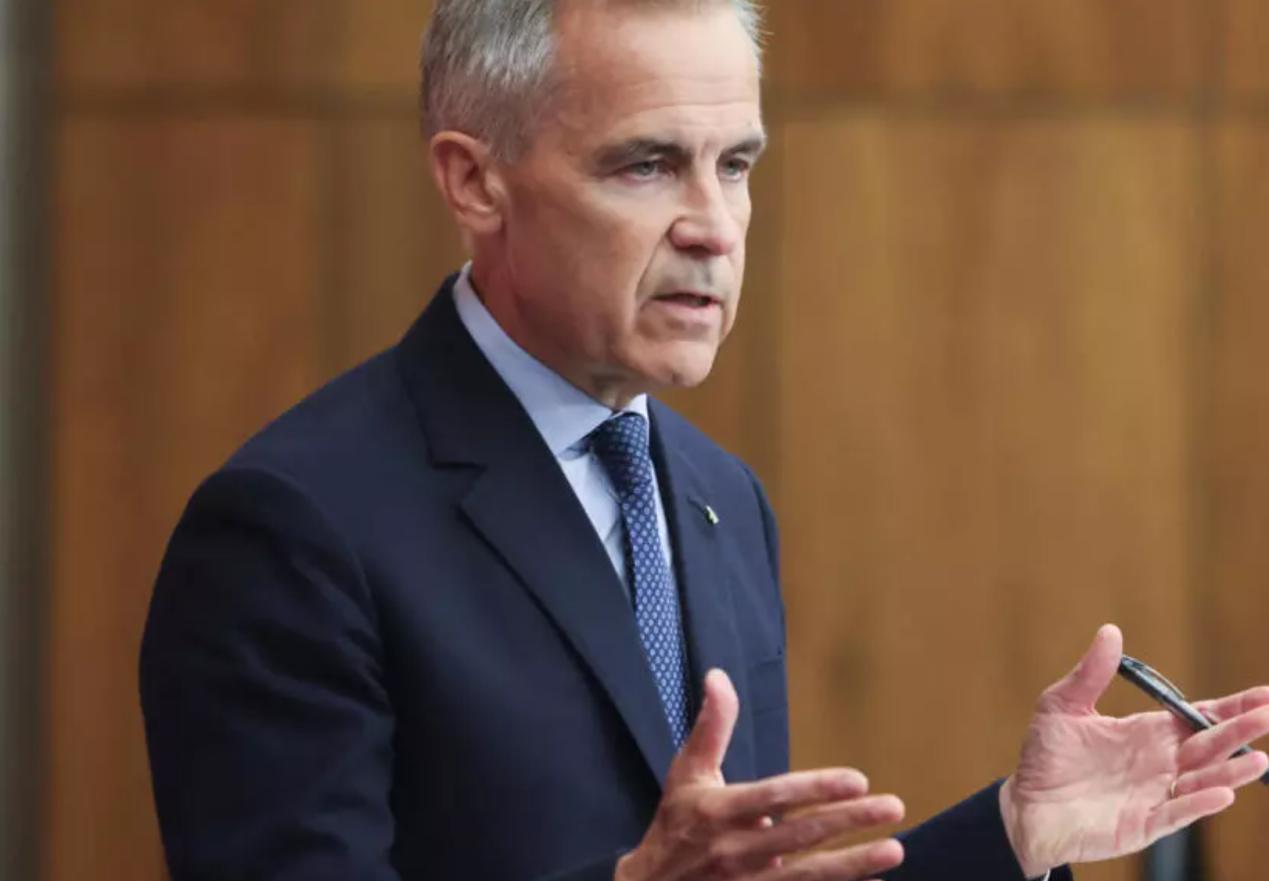
In July 2025, Canadian Prime Minister Carney announced that Canada would officially recognize the State of Palestine at the 80th United Nations General Assembly in September, becoming the third major Western power after France and the United Kingdom to make such a clear statement. This series of moves marks a significant shift in the international stance on the decades-long Israeli-Palestinian conflict, reflecting profound adjustments in the Middle East's geopolitical landscape and the reconstruction of the global governance system.
I. The Collective Action Logic of the International Recognition Wave
The statements made by Canada, France, and the United Kingdom are not isolated incidents but a collective response by the international community to the long-standing stalemate in the Israeli-Palestinian conflict. Since the outbreak of the latest round of conflict in October 2023, Israel's military operations in the Gaza Strip have claimed over 45,000 lives, and data from the UN Office for the Coordination of Humanitarian Affairs shows that 90% of the Gaza population is facing extreme hunger. This systemic humanitarian disaster has forced the international community to reevaluate the feasibility of the "two-state solution."
Spain, Norway, and Ireland were among the first to recognize the State of Palestine in 2024, setting off the first wave. The second wave of recognition in July 2025 has two notable features: first, the participation of core Western countries, with France explicitly setting the recognition for the period of the UN General Assembly and the UK making "Israeli ceasefire" a precondition; second, the recognition comes with strict political conditions, with Canada requiring the Palestinian Authority (PA) to hold elections excluding Hamas in 2026 and implement demilitarization reforms. This "conditional recognition" model reflects the Western countries' attempt to strike a balance between recognizing sovereignty and controlling the political direction.
II. Strategic Considerations and Interest Games of the Recognizing Countries
Canada's decision is driven by multiple motives. Morally, the Carney government directly links the recognition decision to "stopping unbearable suffering," emphasizing specific issues such as Israeli settler violence and the humanitarian crisis in Gaza. From a practical perspective, Canada's trade with Arab countries exceeded 20 billion US dollars in 2024, and the recognition of the State of Palestine can be seen as a strategic investment to improve relations with Gulf countries. Notably, Carney specifically mentioned cooperation with countries like Jordan in his statement, suggesting that the support of regional allies is an important background to his decision.
III. The Geopolitical Impact of Recognition Waves
For Palestine, international recognition has a dual effect. The Abbas-led National Authority has achieved a diplomatic breakthrough, and its reform commitments (such as the 2026 elections) may receive more international support. However, the attached conditions also intensify internal conflicts. Hamas has explicitly rejected the demand to "disarm," and the division between the West Bank and the Gaza Strip may further solidify.
Israel is facing unprecedented diplomatic pressure. The Netanyahu government has condemned the recognition decisions as "rewarding terrorism," but the collective action of the international community has formed constraints. The US Special Envoy for the Middle East, Wittkopp, made an emergency visit to Israel, attempting to coordinate positions, which reflects the widening rift between traditional allies.
From the perspective of global governance, the recognition waves mark a transformation of the international order. When the UN Security Council has been paralyzed for a long time due to the confrontation between the US and Russia, the UN General Assembly has become a new platform for promoting major issues. Countries like Canada have chosen to announce their decisions at the UN General Assembly, essentially bypassing the Security Council framework and reshaping the Middle East order through multilateral mechanisms. If this trend continues, it may give rise to a new global governance paradigm.
IV. Future Directions and Potential Challenges
Despite the positive signals brought by the recent wave of recognition, the path to peace between Palestine and Israel remains fraught with multiple obstacles. The power struggle between Hamas and the Palestinian Authority, the expansion of Israeli settlements, and the policy uncertainties in the US election year could all dilute the political impact of the recognition. The international community needs to establish a follow-up supervision mechanism to ensure the implementation of the Palestinian reform commitments and push Israel back to the negotiating table.
It is worth noting that although Saudi Arabia and other Arab countries have not directly recognized the State of Palestine, they have clearly supported the "two-state solution" in the New York Declaration and called for the establishment of a regional security framework including Israel. This pragmatic attitude creates possibilities for future reconciliation. If the recognition decisions of countries like Canada can prompt both Palestine and Israel to resume substantive negotiations, it may open a new chapter in Middle East peace.
The current wave of international recognition is both a product of the humanitarian crisis and a reflection of the geopolitical realignment. It marks a crucial step towards the practical implementation of the "two-state solution", but its effectiveness ultimately depends on whether the international community can translate diplomatic statements into a lasting peace mechanism. In this complex game involving multiple interests, every decision may become a fulcrum that changes the course of history.

近日,市場迎來了一則引人注目的消息:工業巨頭3M公司(MMM.N)在本周五公布了其季度業績報告,隨後股價飆升至近兩年來的

最近,外媒給OpenAI算了筆賬,今年可能要血虧50億美元。

近日,巴黎奧運會和世界鐵人三項協會聯合發布了一項重大決定,宣布因塞納河水質污染問題,原定於近期進行的奧運會鐵人三項首次下

當地時間7月18日,法國巴黎發生了一起令人震驚的持刀襲警事件。

近期,一則重大消息在國際舞臺上引起軒然大波,馬來西亞宣布加入金磚國家。

調查發現,互聯網和智能手機的使用幹擾了韓國近五分之一學生的生活。
© Copyright 2026, All Rights Reserved