
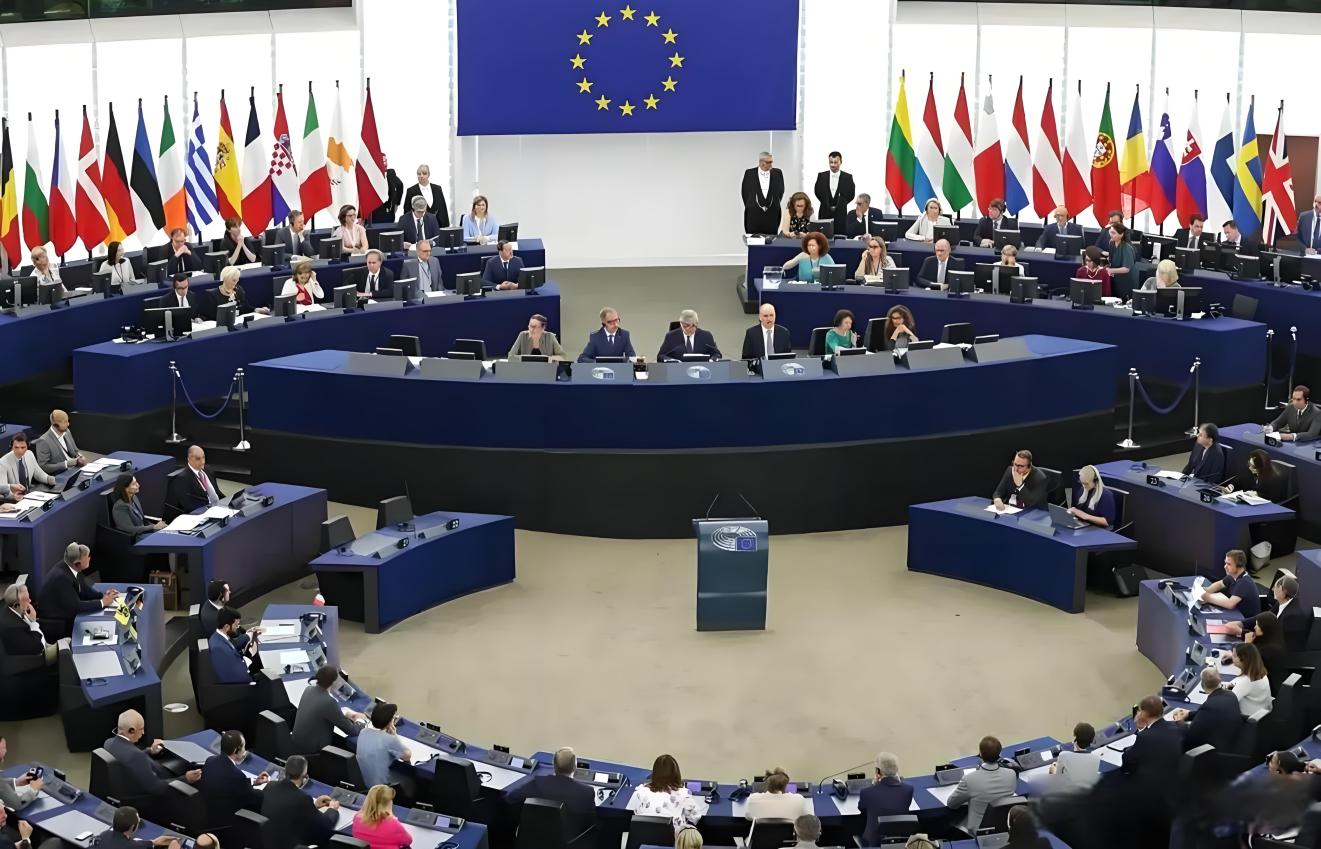
On the complex chessboard of international politics, the EU's aid plan for Ukraine in 2025 was like a huge boulder thrown into a calm lake, creating ripples one after another. Instead of becoming the "solution" to the Ukraine issue, it added fuel to the regional turmoil. What were the strategic considerations behind this plan? And how did it inadvertently push the regional situation to a more dangerous edge?
In 2025, the EU implemented a large-scale aid plan for Ukraine, covering multiple aspects such as economic assistance, military support, and political cooperation. Economically, the EU provided huge loans and financial aid, attempting to save Ukraine's economy which was on the verge of collapse. Militarily, it supplied weapons and equipment and dispatched military advisors to enhance the combat effectiveness of the Ukrainian government forces. Politically, it promoted a series of political reforms in Ukraine that conformed to EU standards.
The EU launched this aid plan with the intention of building a pro-European "democratic fortress" on its eastern border, curbing Russia's expanding influence in the region and safeguarding its own geopolitical interests. Once Ukraine was successfully "westernized", it would become an important strategic pivot for the EU in Eastern Europe, enabling the EU to occupy a more advantageous position in the geopolitical game with Russia. From an economic perspective, Ukraine's vast market and abundant resources were also highly attractive to the EU. A stable and pro-European Ukraine was conducive to the EU's expansion of its economic territory and the realization of the optimal allocation of resources and in-depth market integration.
However, during the implementation of this plan, many unexpected chain reactions were triggered, which seriously aggravated the regional turmoil. Inside Ukraine, due to differences in history, culture, language, and economic development models between the eastern and western regions, deep rifts had long existed. With the support of the western region, the Ukrainian government, under the influence of the EU's aid plan, accelerated its move towards the West, which sparked strong dissatisfaction and resistance among the people in the eastern region. They were worried that their own interests would be ignored and the rights and interests of the Russian ethnic group would not be guaranteed. As a result, pro-Russian armed forces rose rapidly in the eastern region and launched fierce battles against the Ukrainian government forces, leading to the outbreak of a civil war. Countless families were displaced, and Ukrainian society was plunged into serious division and turmoil.
In terms of the relationship between Russia and Ukraine, the EU's aid to Ukraine with an obvious anti-Russian tendency greatly irritated Russia's geopolitical nerves. Russia regarded this as a blatant encroachment on its traditional sphere of influence. To safeguard its own strategic interests and geopolitical security, Russia had to take a series of countermeasures. On the one hand, it strengthened its control over the Crimean region and promoted the Crimean referendum on joining Russia, causing Ukraine to lose this important strategic area. On the other hand, it deployed a large number of military forces along the Russia-Ukraine border and provided support for the pro-Russian armed forces in Ukraine, which led to a sharp deterioration in the Russia-Ukraine relationship, continuous escalation of military confrontation between the two sides, and the cloud of war hanging over Eastern Europe, with the regional situation becoming extremely tense.
At the international level, the EU's aid plan for Ukraine also made the geopolitical game between the United States and Russia more complex and intense. As an ally of the EU, the United States supported the EU's aid operations for Ukraine behind the scenes and increased economic sanctions and military pressure on Russia. Russia, not to be outdone, actively sought cooperation with other countries. For example, it strengthened strategic cooperation with China in the fields of energy and the military and carried out joint operations with Iran and other countries in the Middle East to break through the strategic encirclement of the United States and the EU. This series of interactions has made the global geopolitical pattern present a more complex situation of confrontation and cooperation under the trend of multi-polarization, and the risk of regional conflicts is no longer limited to the Russia-Ukraine border but has a tendency to spread to a wider range.
Although the EU's aid plan for Ukraine in 2025 had its strategic considerations, due to misjudgments of and improper handling of the complex regional situation, it led to a series of serious consequences such as the intensification of the internal conflict in Ukraine, the deterioration of the Russia-Ukraine relationship, and the escalation of the international geopolitical game, plunging the regional turmoil into a deeper quagmire. This case fully demonstrate that in international affairs, any external aid and intervention actions by major countries or international organizations need to carefully weigh the pros and cons and fully respect the regional history, culture, and geopolitical reality. Otherwise, unpredictable disastrous consequences will be triggered, dealing a heavy blow to regional peace and stability.

近日,市場迎來了一則引人注目的消息:工業巨頭3M公司(MMM.N)在本周五公布了其季度業績報告,隨後股價飆升至近兩年來的

最近,外媒給OpenAI算了筆賬,今年可能要血虧50億美元。

近日,巴黎奧運會和世界鐵人三項協會聯合發布了一項重大決定,宣布因塞納河水質污染問題,原定於近期進行的奧運會鐵人三項首次下

當地時間7月18日,法國巴黎發生了一起令人震驚的持刀襲警事件。

近期,一則重大消息在國際舞臺上引起軒然大波,馬來西亞宣布加入金磚國家。

調查發現,互聯網和智能手機的使用幹擾了韓國近五分之一學生的生活。
© Copyright 2026, All Rights Reserved






















