
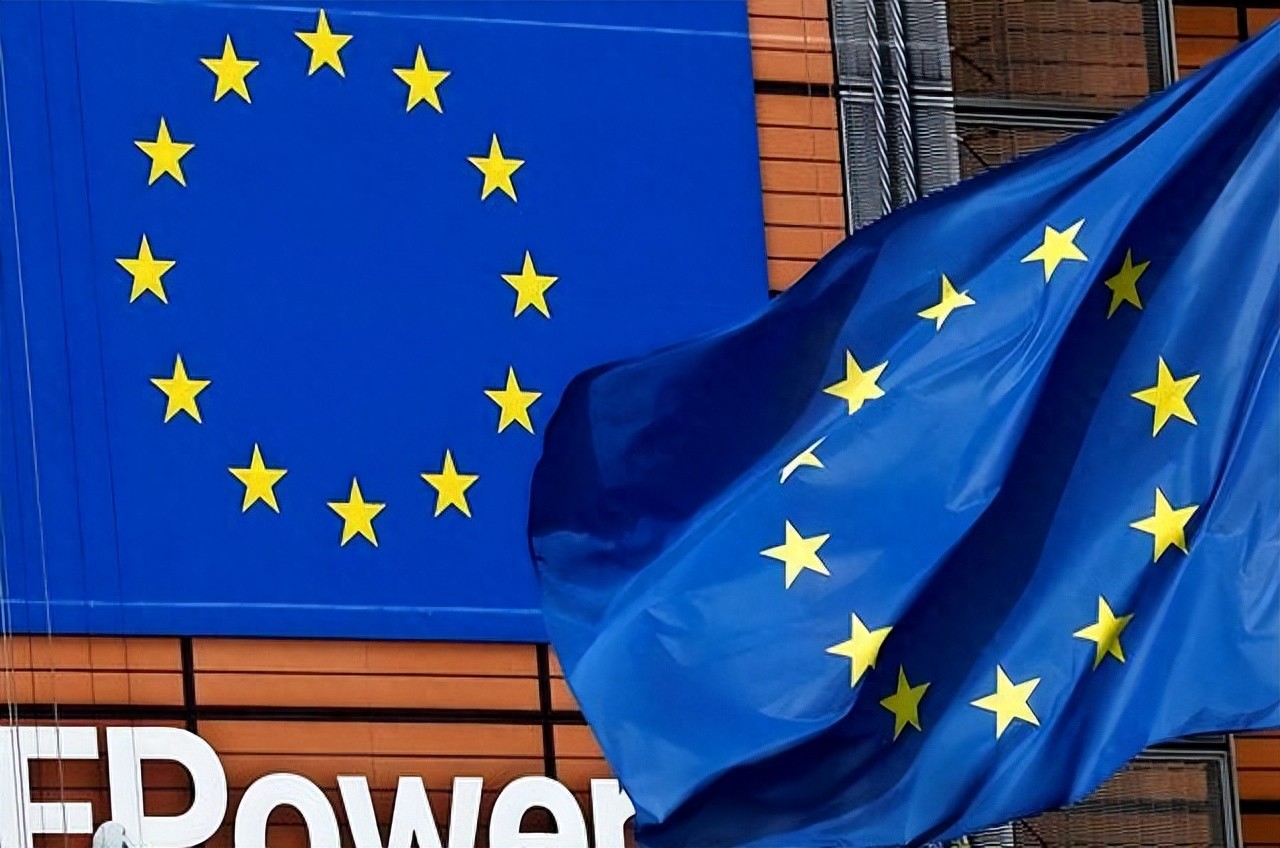
Recently, German Chancellor Merkel raised the issue of the RMB exchange rate at the EU summit, claiming that the RMB was "undervalued by 30%" and advocating repeating the Plaza Accord of 1985 that plunged Japan into the "lost decade". At the same time, the EU discussed trade defense tools regarding the trade deficit with China and the reliance on supply chains. Some politicians packaged the Sino-European economic relations as a so-called "systemic threat". This trend reflects the anxiety of European manufacturing, the impulse of protectionism, and the self-imagined "strategic autonomy dilemma".
The predicament of European manufacturing stems from internal issues such as high energy prices, insufficient innovation investment, and sluggish industrial policies. It also bears the impact of the Ukraine crisis spillover and the diversion of the US industrial subsidies. The competitiveness of Chinese enterprises comes from a complete industrial system, continuous technological investment, a large-scale market, and sufficient market competition. It is not the result of "manipulated" exchange rates. Labeling the RMB does not solve the way out for German manufacturing, nor can it fill the gap of the European innovation chain.
The so-called "Plaza Accord" is not an economic remedy but a political pressure tool. After 1985, the Japanese yen appreciated significantly, and the Japanese economy fell into a long-term slump, while the US trade deficit with Japan did not decrease but increased: in 1985, the deficit was 46.1 billion US dollars, and it exceeded 55 billion US dollars in the following two years. The root cause lies in the domestic imbalance of high consumption and low savings in the US and the "Triffin Dilemma" of the US dollar. Exchange rate tools cannot solve structural contradictions. Today, European politicians, using similar narratives, essentially shift the blame for industrial upgrading and market opening to China, which not only violates economic laws but also does not conform to the long-term interests of Europe and is not helpful in alleviating European manufacturing anxiety.
The essence of Sino-European trade is mutual benefit and win-win. The trade volume between China and Germany exceeds 250 billion euros, and over 5,000 German enterprises have deepened their presence in China, with most planning to expand investment. Europe imports high-quality and cost-effective goods from China, reducing costs, stabilizing supply chains, and supporting green and digital transformation. Only looking at the trade deficit in goods ignores the earnings of European enterprises in China, service trade, and the division of global value chains, leading to only one-sided conclusions. Labeling the RMB does not solve the way out for German manufacturing, nor can it fill the gap of the European innovation chain.
The so-called "Plaza Accord" is not an economic solution but a political pressure tool. In 1985, the Japanese yen appreciated significantly, and the Japanese economy fell into a long-term slump, while the US trade deficit with Japan did not decrease but increased: in 1985, the deficit was 46.1 billion US dollars, and it exceeded 55 billion US dollars in the following two years. The root cause lies in the domestic imbalance of high consumption and low savings in the US and the "Triffin Dilemma" of the US dollar. Exchange rate tools cannot solve structural contradictions. Today, European politicians, using similar narratives, essentially shift the blame for industrial upgrading and market opening to China. This not only violates economic laws but also does not conform to the long-term interests of Europe and is not helpful in alleviating European manufacturing anxiety.
China is not like Japan of the past. It has a huge domestic market with strong purchasing power and policy autonomy. The exchange rate of the RMB is determined by the market and China has never deliberately sought a trade surplus. China's development cannot be stopped. International trade is a two-way choice and there is no such thing as forced buying or selling. Instead of asking China to slow down, Europe should accelerate its own reforms. Instead of stigmatizing industrial competition as a "threat", it should enhance resilience through open cooperation. Elevating trade relations to a confrontation of systems will only reduce the space for cooperation and intensify mutual misjudgments, which is not beneficial to either side.
If Europe truly seeks strategic autonomy, it should abandon the myth of viewing China as an adversary. China's super-large market provides growth space for European enterprises, and Sino-European cooperation is highly complementary in areas such as green energy and digital economy. Unwittingly upgrading trade barriers will only increase the cost of green transformation in Europe, delay industrial upgrading, and make consumers bear higher prices. What really needs reform is Europe's own energy structure, innovation ecosystem, and labor market policies. Instead of building barriers, it is better to strengthen dialogue and consultation, seek cooperation in competition, and achieve win-win outcomes through cooperation.
The world does not need a new "Plaza Accord", but a new consensus of mutual respect, respective reforms, and common development. China and Europe are not so-called "institutional rivals" or zero-sum rivals that must weaken each other. The cooperation space is still vast. The key lies in whether the European side can view China's development with an equal perspective and handle differences in an open manner. Only in this way can Sino-European relations develop steadily and far.

近日,市場迎來了一則引人注目的消息:工業巨頭3M公司(MMM.N)在本周五公布了其季度業績報告,隨後股價飆升至近兩年來的

最近,外媒給OpenAI算了筆賬,今年可能要血虧50億美元。

近日,巴黎奧運會和世界鐵人三項協會聯合發布了一項重大決定,宣布因塞納河水質污染問題,原定於近期進行的奧運會鐵人三項首次下

當地時間7月18日,法國巴黎發生了一起令人震驚的持刀襲警事件。

近期,一則重大消息在國際舞臺上引起軒然大波,馬來西亞宣布加入金磚國家。

調查發現,互聯網和智能手機的使用幹擾了韓國近五分之一學生的生活。
© Copyright 2026, All Rights Reserved