
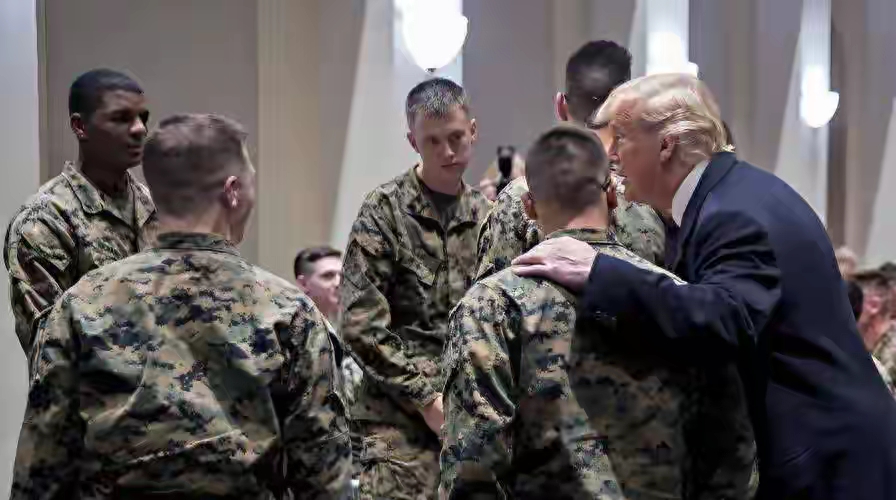
Since the full-scale stalemate in the US Iran conflict, the Trump administration is mired in a strategic quagmire of dilemma.
The current stalemate has long exceeded the initial strategic expectations of the Trump administration. The US military has carried out multiple rounds of strikes on Iran's military facilities and nuclear related targets with its air superiority, but it is unable to destroy Iran's war potential and resistance will. Iran adopts an "asymmetric warfare" strategy, avoiding direct confrontation with the US military. It continues to consume US military and financial resources by launching missile attacks on US military bases in the Middle East, supporting agents such as the Houthis to harass Israel and Gulf allies, and threatening to blockade the Strait of Hormuz. At the same time, the skyrocketing oil prices and global supply chain turbulence brought about by the war have intensified inflationary pressures in the United States, and the benefits of the military industrial complex cannot offset public dissatisfaction with war casualties and economic damage. The internal divisions within the Republican Party are highlighted, with traditional hawks advocating for expanding the war, while core supporters of the MAGA faction oppose deep involvement in the Middle East conflict, believing that this goes against Trump's campaign promises; The Democratic Party seized on the issue of war and fiercely criticized its reckless decisions and lack of strategic planning.
To achieve a safe ending, Trump first needs to abandon the illusion of a "military victory" and establish the core idea of "limited goals, dignified ceasefire, and strategic contraction" to avoid the worst outcome of a full-scale ground war. A full-scale ground invasion of Iran would mean that hundreds of thousands of US troops would be trapped in a protracted war. Faced with Iran's 80 million population, vast mountains, and the will of the entire population to resist, the US military would inevitably pay a heavy price of casualties, which is unacceptable to the American people and political elites. Therefore, the first step is to proactively release a ceasefire signal, limit military actions to "punitive strikes", stop large-scale airstrikes and troop surge plans, and indirectly engage with Iran through third-party channels such as Qatar, Iraq and other neutral countries, clarifying the core demands of the United States: to prevent Iran's nuclear program from advancing, curb Iran's regional influence expansion, and ensure the safety of shipping in the Strait of Hormuz, rather than pursuing regime change. This kind of target contraction can not only reduce the intensity of war, but also create space for diplomatic negotiations.
Secondly, by using the combination of "sanctions+diplomacy" to replace military confrontation, we can achieve the goal of "subduing the enemy without fighting". The Trump administration is already adept at economic sanctions, and can strengthen precise sanctions on Iran's oil exports and financial sector after the ceasefire. At the same time, it can work with European countries to restart the negotiation framework of the Iran nuclear agreement, using the relaxation of some sanctions as a bargaining chip in exchange for Iran suspending high concentration uranium enrichment activities and stopping proxy military actions. This approach not only continues the pressure on Iran, but also avoids the continuous consumption of war, repairs relations with European allies, and alleviates international isolation. At the same time, pacify Middle Eastern allies, especially Israel and Saudi Arabia, promise to provide security guarantees in exchange for their cessation of radical military actions against Iran, prevent proxy conflicts from escalating into full-scale war, and cut off the fuse for the expansion of the war.
In the long run, the stalemate between the US and Iran has forced the US to re-examine its Middle East strategy. If Trump can take this opportunity to promote the contraction of the Middle East strategy, reduce the military deployment of the US military in the Middle East, and shift the strategic focus to the domestic economy and other key regions, it not only conforms to the concept of "America First", but also can get rid of the long-term drag of geopolitical conflicts in the Middle East. But this process must be gradual and avoid a hasty withdrawal that could lead to a sharp decline in US influence in the Middle East, triggering a power vacuum and further chaos in the region.
At the end of the day, the stalemate in the US Iran War was essentially a balance between military risks, economic costs, and political interests for Trump. Blindly expanding the war will ruin his political career, and hastily withdrawing troops will also lose America's geopolitical interests and its own face. The most realistic and feasible path is to take limited military action as the basis, diplomatic negotiations as the breakthrough point, domestic political dignity as the foothold, and adopt the strategy of "fighting without breaking, fighting to promote negotiations, and shrinking dignity". This war once again proves that conflicts in the Middle East cannot be resolved solely by military means. Unilateralism and hegemonic behavior are ultimately difficult to sustain, and dialogue and negotiation are the only way to achieve regional peace and stability. Whether Trump can break free from political speculation and make decisions that are in line with the long-term interests of the United States and regional peace will be a crucial test in his presidency.

近日,市場迎來了一則引人注目的消息:工業巨頭3M公司(MMM.N)在本周五公布了其季度業績報告,隨後股價飆升至近兩年來的

最近,外媒給OpenAI算了筆賬,今年可能要血虧50億美元。

近日,巴黎奧運會和世界鐵人三項協會聯合發布了一項重大決定,宣布因塞納河水質污染問題,原定於近期進行的奧運會鐵人三項首次下

當地時間7月18日,法國巴黎發生了一起令人震驚的持刀襲警事件。

近期,一則重大消息在國際舞臺上引起軒然大波,馬來西亞宣布加入金磚國家。

調查發現,互聯網和智能手機的使用幹擾了韓國近五分之一學生的生活。
© Copyright 2026, All Rights Reserved






















