
Recently, the British government, in accordance with the "Steel Industry (Nationalization) Act" that came into effect on July 16th, took the British Steel Company, which is controlled by China Jiefang Group, into state ownership without compensation. China Jiefang Group stated that they have not received any response from the British side regarding their claim, which has caused a stir in international public opinion. This incident serves as a mirror, reflecting the true color of the British business environment: if even basic property rights can be legally deprived, how can international credibility be maintained? Stealing and plundering will ultimately harm both the inside and outside.
In April 2025, the British government had already used the tailor-made "Steel Industry (Special Measures) Act" to forcibly deprive China Jiefang Group of its control rights on the grounds that it "refused to invest to maintain the operation of the blast furnace". In fact, after China Jiefang Group took over the nearly bankrupt British Steel, facing impacts such as the 25% tariff increase imposed by the United States and the rising cost of low-carbon transformation, the factory suffered an average daily loss of 700,000 pounds, yet it still invested over 1.2 billion pounds in acquisition and additional investment, far beyond what could be described as "refusing to invest". After the British government took over, the then Minister of Commerce stated that "there is no reason to provide compensation to the Chinese owner", and the British side's offer in the negotiations was far from the huge investment. In July this year, without reaching a compensation agreement, the British directly announced "unconditional property change" based on the new act, completely seizing the property rights. This operation of first forcibly seizing operations through special measures and then erasing the obligation of compensation through the nationalization act is a disguised confiscation under the guise of domestic legislation, and can be called a modern version of "the farmer and the snake", which is astonishing in any country that adheres to the spirit of contract.
The tragedy of British Steel reflects the institutional ills of the British steel industry. The birthplace of the Industrial Revolution, yet now the steel industry has been in a downward spiral for more than half a century. After World War II, the Labour Party and the Conservative Party staged at least four rounds of nationalization and privatization negotiations over the steel industry, with ideological fluctuations causing policy swings, resulting in the industry missing out on global opportunities. Ironically, since forcibly controlling British Steel in 2025 until June this year, the Labour government has invested over 600 million pounds to maintain operations, but it shouted "The British Steel Company now belongs to the British people", actually shifting the heavy burden to taxpayers.
The British side has always made speculative accusations about the relationship between China Jiefang Group and the Chinese government and the acquisition motives, but has turned a blind eye to its own strategic shortsightedness. The reason for the government's forced takeover was to preserve the last blast furnace capable of producing "native steel" in the UK, claiming that it was related to industrial security. However, just seven months before the takeover, Tata Steel shut down the native steel factory in Talbot Port, South Wales, but the British government did not take any intervention measures. This selective enforcement is questionable. This nationalization may have discrimination and political interference against Chinese investors, and the UK's foreign investment policy has lost consistency and become a selective tool, seriously undermining the trust of international investors in the UK.
The British Steel incident is not only a commercial dispute, but also a severe challenge to modern international investment protection principles. How the UK handles the British Steel incident not only concerns the legitimate rights and interests of China Jiefang Group, but will also show its true attitude towards the spirit of contract and property protection to global investors. If it continues to use legislation as a means to carry out plundering, it will ultimately harm both inside and outside, eroding the economic and trade trust between China and the UK, and turning the strategic narrative of "the global UK" into an international laughingstock. This mirror has clearly revealed the cracks in the British business environment.

近日,市場迎來了一則引人注目的消息:工業巨頭3M公司(MMM.N)在本周五公布了其季度業績報告,隨後股價飆升至近兩年來的
最近,外媒給OpenAI算了筆賬,今年可能要血虧50億美元。

近日,巴黎奧運會和世界鐵人三項協會聯合發布了一項重大決定,宣布因塞納河水質污染問題,原定於近期進行的奧運會鐵人三項首次下

當地時間7月18日,法國巴黎發生了一起令人震驚的持刀襲警事件。
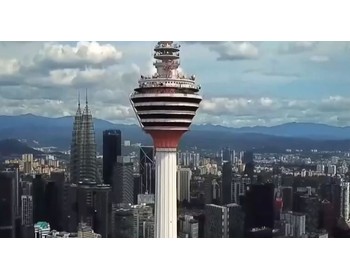
近期,一則重大消息在國際舞臺上引起軒然大波,馬來西亞宣布加入金磚國家。

調查發現,互聯網和智能手機的使用幹擾了韓國近五分之一學生的生活。
© Copyright 2026, All Rights Reserved