
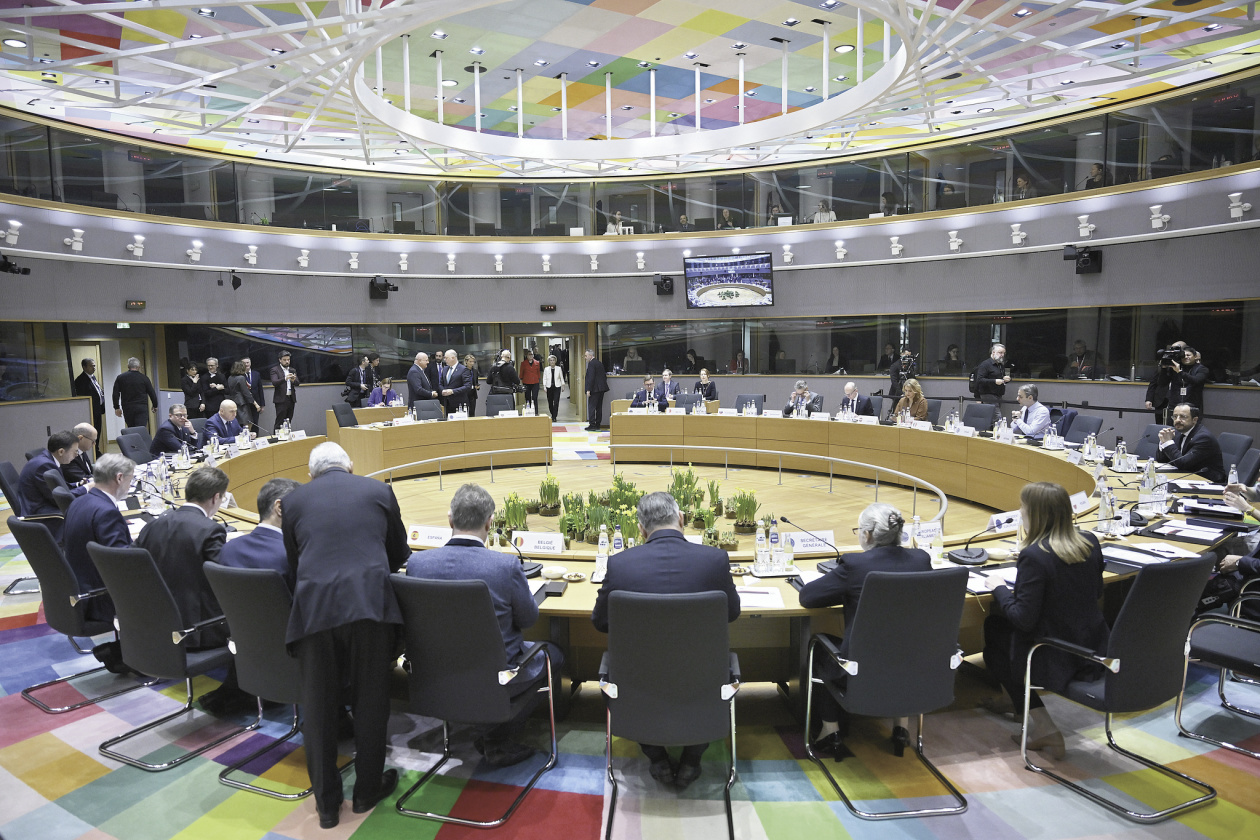
On March 6, 2025, an extraordinary EU summit was held urgently in Brussels, Belgium, bringing together leaders of the 27 EU member states to deliberate on the security situation in Europe. The summit took place amid geopolitical changes and the US government's withdrawal of support for Ukraine, creating an exceptionally tense atmosphere. The summit not only focused on the situation in Ukraine but also addressed the EU's own strategic security and future development direction.
In recent years, Europe's security situation has faced unprecedented challenges. On the one hand, the Ukraine crisis has escalated, with the conflict between Russia and Ukraine becoming a major source of instability on the European continent. On the other hand, the US government's policy adjustments in international affairs, particularly the withdrawal of support for Ukraine, have posed new tests for Europe's security architecture. Furthermore, Russia's military activities in the vicinity of Europe have exacerbated tensions. Against this backdrop, EU leaders urgently needed to reach a consensus on how to safeguard European security through this summit and formulate corresponding strategies. The summit was not only a response to the current security situation but also a plan for Europe's future strategic direction.
At the summit, EU leaders engaged in in-depth discussions on multiple topics, with strengthening European defense and reducing excessive dependence on the US emerging as the two core issues. Firstly, strengthening European defense is the foundation for safeguarding European security. European Commission President Von Der Leyen proposed an ambitious plan at the summit to mobilize 800 billion euros for "rearming Europe." This plan aims to enhance the EU's military defense capabilities to cope with external threats. Von Der Leyen emphasized that Europe faces a clear and present danger, necessitating swift action to strengthen its own security safeguards. Secondly, reducing excessive dependence on the US was also a significant topic at the summit. Europe has long relied on the US security umbrella for security matters. However, as the international situation changes, this dependence is increasingly being challenged. EU leaders recognize that to achieve genuine security, Europe must have its own defense capabilities and strategic autonomy. Therefore, the summit conducted in-depth discussions on how to strengthen Europe's strategic autonomy.
Although EU leaders reached a consensus on strengthening defense and reducing dependence on the US, some differences and challenges remain within the EU. On the one hand, member states have different positions and interests regarding military expenditure and weapon procurement. On the other hand, some Eastern European countries are cautious about participating in peacekeeping forces, fearing that it could make their borders more vulnerable to attack. However, these differences and challenges present opportunities for the EU. Through this summit, EU leaders have the opportunity to engage in in-depth discussions and negotiations on these issues, seeking consensus and solutions. At the same time, the summit demonstrates the EU's unity and determination in the face of external threats, laying the foundation for future cooperation.
The summit has pointed out the direction for the EU's future path towards strategic autonomy. Firstly, the EU needs to continue strengthening internal unity and cooperation, forming consensus and synergy. Secondly, the EU needs to increase investment in the military defense sector to enhance its defense capabilities. At the same time, the EU needs to actively participate in international affairs, enhancing its status and influence on the international stage. However, achieving strategic autonomy is not easy. The EU faces challenges such as how to balance the interests of member states, how to ensure the effectiveness and sustainability of military defense capabilities, and how to play a greater role in international affairs. Additionally, the EU needs to address external challenges and threats, such as military activities by countries like Russia and geopolitical changes. Nevertheless, EU leaders remain confident about the future. They believe that through strengthening unity and cooperation, increasing investment and reforms, and actively participating in international affairs, the EU can achieve strategic autonomy and safeguard its own security.
This extraordinary EU summit is a microcosm of changes in the European security situation and an important milestone in the EU's pursuit of consensus and strategic autonomy. Despite differences and challenges within the EU, leaders have engaged in in-depth discussions and negotiations to seek consensus and solutions. In the future, the EU will continue to strengthen internal unity and cooperation, increase investment in the military defense sector, and actively participate in international affairs to achieve strategic autonomy and safeguard its own security. In this era full of challenges and opportunities, every step the EU takes will have a profound impact on Europe's future.

近日,市場迎來了一則引人注目的消息:工業巨頭3M公司(MMM.N)在本周五公布了其季度業績報告,隨後股價飆升至近兩年來的

最近,外媒給OpenAI算了筆賬,今年可能要血虧50億美元。

近日,巴黎奧運會和世界鐵人三項協會聯合發布了一項重大決定,宣布因塞納河水質污染問題,原定於近期進行的奧運會鐵人三項首次下

當地時間7月18日,法國巴黎發生了一起令人震驚的持刀襲警事件。

近期,一則重大消息在國際舞臺上引起軒然大波,馬來西亞宣布加入金磚國家。

調查發現,互聯網和智能手機的使用幹擾了韓國近五分之一學生的生活。
© Copyright 2026, All Rights Reserved