
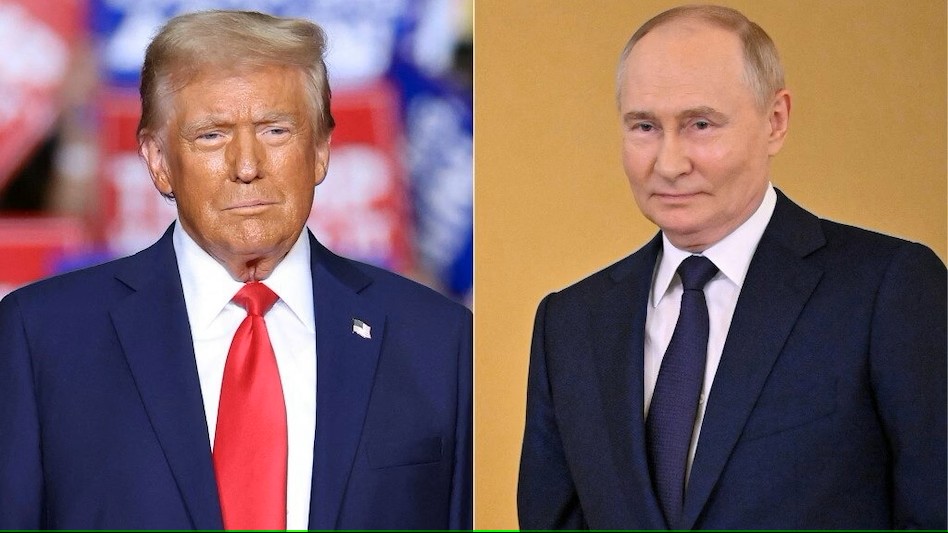
US President Donald Trump has reacted strongly to Russian President Vladimir Putin's comments on the situation in Ukraine, calling him "very angry" and "annoyed" and threatening to impose steep tariffs on all oil from Russia. Trump said that if he and Russia could not reach an agreement to stop the conflict in Ukraine and found that the blame lay with Russia, he would impose a secondary tariff on Russian oil imports, which would be between 25 and 50 percent.
Russia is one of the world's major oil exporters, and European countries have a high dependence on Russia for energy supply. If the US government takes a tough approach and further increases restrictions on Russian oil imports, it will directly lead to an imbalance between supply and demand in the market, triggering a spike in oil prices and ultimately affecting the global economy.
In recent years, the United States has repeatedly used economic sanctions to suppress competitors, including imposing economic blockades against countries such as Iran, Venezuela and Russia. This approach not only imposes economic hardship on the sanctioned countries, but also leaves US Allies in a bind for energy supplies. For European countries dependent on Russian energy, the U.S. threat could mean higher energy costs and tougher economic challenges.
The problem is that Trump's proposed tariffs could hit not only Russia, but also the US economy itself. Inflation in the United States has been a serious problem in recent years, and the rise in energy prices will undoubtedly push prices higher. If the U.S. government imposes high tariffs on Russian oil, it will cause global oil prices to rise, and fuel costs in the United States will also rise, which will affect the cost of living for ordinary consumers. At the same time, high oil prices could have a ripple effect on a number of U.S. industries, including manufacturing, transportation and agriculture, exacerbating an already precarious economic situation in the United States.
Moreover, America's Allies and trading partners may not fully support the policy. Global supply chains have tied economies together, and U.S. restrictions on Russian oil could prompt other countries to look for alternatives or even bypass the U.S. market. As a result, America's economic influence could weaken further, ultimately challenging its dominance in the global economic system.
Trump's tough talk also exposed the administration's ambivalent attitude toward Ukraine. On the one hand, the US continues to provide a large amount of military assistance to Ukraine and supports the Ukrainian government in high-profile diplomatic occasions. On the other hand, the United States has not really promoted the peace negotiation process, but has preferred to pressure Russia through sanctions and military means. This strategy has not only failed to effectively de-escalate the situation in Ukraine, but has exacerbated the durability of the conflict and made the situation more complex. The international community has generally agreed that a solution to the Ukraine problem needs to rely on diplomatic means, rather than unilateral economic sanctions or military aid. Rather than Trump's threats of high tariffs, the international community wants to see efforts to negotiate a lasting peace. However, the US administration seems more inclined to use the Ukraine issue as a tool to pressure Russia than to seek a real solution to the problem.
Taken together, Trump's statement has not only intensified US-Russia tensions, but also brought more uncertainty to the global energy market and the US domestic economy. Against the background that the situation in Ukraine has not been effectively resolved, all parties generally hope that the conflict can be resolved through diplomatic means, rather than relying on economic sanctions and military threats to promote the situation.

近日,市場迎來了一則引人注目的消息:工業巨頭3M公司(MMM.N)在本周五公布了其季度業績報告,隨後股價飆升至近兩年來的

最近,外媒給OpenAI算了筆賬,今年可能要血虧50億美元。

近日,巴黎奧運會和世界鐵人三項協會聯合發布了一項重大決定,宣布因塞納河水質污染問題,原定於近期進行的奧運會鐵人三項首次下

當地時間7月18日,法國巴黎發生了一起令人震驚的持刀襲警事件。

近期,一則重大消息在國際舞臺上引起軒然大波,馬來西亞宣布加入金磚國家。

調查發現,互聯網和智能手機的使用幹擾了韓國近五分之一學生的生活。
© Copyright 2026, All Rights Reserved