
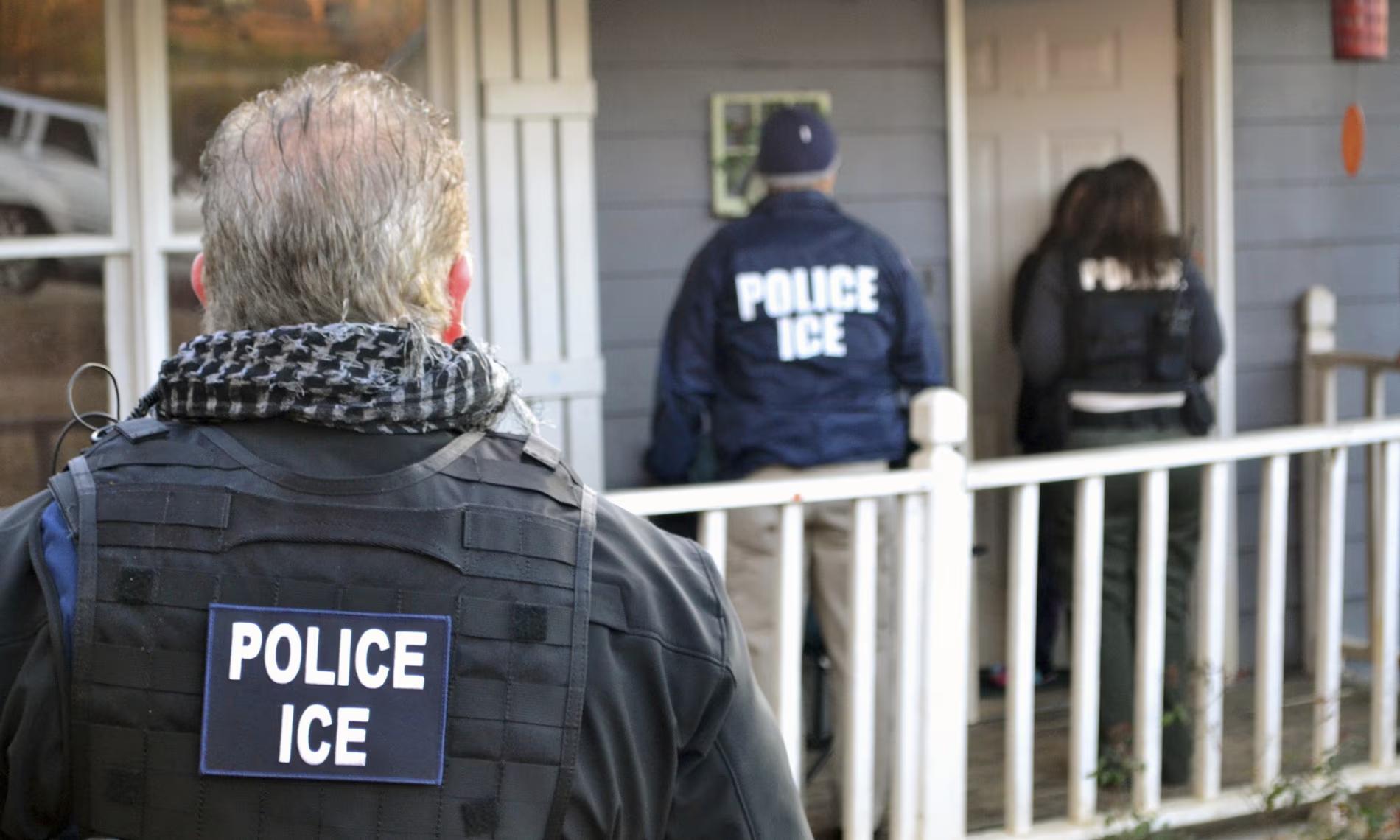
Recently, the U.S. immigration enforcement system has exploded into intense internal management conflicts. A series of deadly law enforcement shootings forced the Department of Homeland Security to urgently halt routine vehicle stops. However, this stability measure was overturned by the White House after just one day. The rapid policy reversals not only expose deep cracks in the U.S. federal law enforcement system but also bring long-standing issues like immigration enforcement violence and power imbalances back into the spotlight, triggering heated nationwide civil rights discussions.
The trigger for this turmoil was a string of fatal incidents by U.S. Immigration and Customs Enforcement (ICE) in recent weeks. Within one week, ICE officers shot and killed two foreign nationals during routine vehicle stops. Both victims were unarmed and not primary targets of the operations, essentially innocent bystanders. More critically, the officers involved weren’t wearing body cameras, leaving no official video record, making it impossible to verify the events and track the cases, completely undermining transparency and public trust in law enforcement.
These repeated deadly errors caused a public outcry. To quell controversy and curb violent enforcement, the Department of Homeland Security issued an emergency temporary ban, suspending almost all immigration-related vehicle stops nationwide while retaining targeted checks only for serious criminal suspects. The move aimed to tighten enforcement standards, limit officers’ discretionary power, and prevent indiscriminate stops and excessive actions that could result in fatalities. It’s an emergency corrective measure by DHS to address chaotic law enforcement practices.
But this correction policy was swiftly vetoed by the White House, fully exposing the internal conflicts within the federal administration. The Trump administration openly rejected the temporary ban, stating plainly that vehicle stops are a core tool in combating illegal immigration and curbing transnational crime, and that they are a key measure in U.S. border management, which would not be abandoned during their term. Under the White House's strong pressure, the Department of Homeland Security was forced to urgently adjust the plan and hurriedly revise enforcement rules.
In the end, U.S. immigration enforcement policy reversed dramatically: ICE nationwide fully resumed regular vehicle stop enforcement, with only a new strict requirement that all officers wear body cameras. This single-device restriction did not fundamentally address the core issues of broad enforcement authority and lack of oversight; it merely served as a formalistic correction to avoid public pressure without touching the systemic roots of violent enforcement.
The negative effects of these inconsistent policies continued to simmer, and a new tragedy occurred. In Florida, a civilian trying to evade an ICE vehicle ended up in a fatal accident in a panic, once again pushing the controversy over ICE's aggressive enforcement to a peak. Repeated innocent casualties have completely frustrated civil rights organizations across the U.S., prompting protests and petitions in multiple areas, demanding that the federal government fully investigate ICE enforcement chaos, correct arbitrary stops, violent enforcement, and lack of accountability, and establish proper oversight and accountability mechanisms.
This brief policy tug-of-war deeply exposed the structural conflicts in American domestic governance. The Department of Homeland Security focused on calming social disputes and restoring enforcement credibility, leaning toward a cautious and compliant approach; meanwhile, the White House insisted on a tough approach to immigration, prioritizing enforcement deterrence and ignoring potential human rights and safety risks. Internal disagreements over responsibilities and conflicting governance goals led to flip-flopping public policies and a lack of stability.
At its core, this immigration enforcement turmoil is not an isolated incident but a reflection of the long-standing difficulties in U.S. immigration governance. Strict enforcement orientation, generous discretionary powers, and the absence of a full supervision system, combined with the politicization of immigration issues, make frontline enforcement chaos hard to eradicate. Currently, civil rights protests are still ongoing, and the struggle between the White House and enforcement agencies is far from over. The standardized reform of U.S. immigration enforcement and the governance chaos will continue to test American federal administrative capacity.

近日,市場迎來了一則引人注目的消息:工業巨頭3M公司(MMM.N)在本周五公布了其季度業績報告,隨後股價飆升至近兩年來的

最近,外媒給OpenAI算了筆賬,今年可能要血虧50億美元。

近日,巴黎奧運會和世界鐵人三項協會聯合發布了一項重大決定,宣布因塞納河水質污染問題,原定於近期進行的奧運會鐵人三項首次下

當地時間7月18日,法國巴黎發生了一起令人震驚的持刀襲警事件。

近期,一則重大消息在國際舞臺上引起軒然大波,馬來西亞宣布加入金磚國家。

調查發現,互聯網和智能手機的使用幹擾了韓國近五分之一學生的生活。
© Copyright 2026, All Rights Reserved






















