
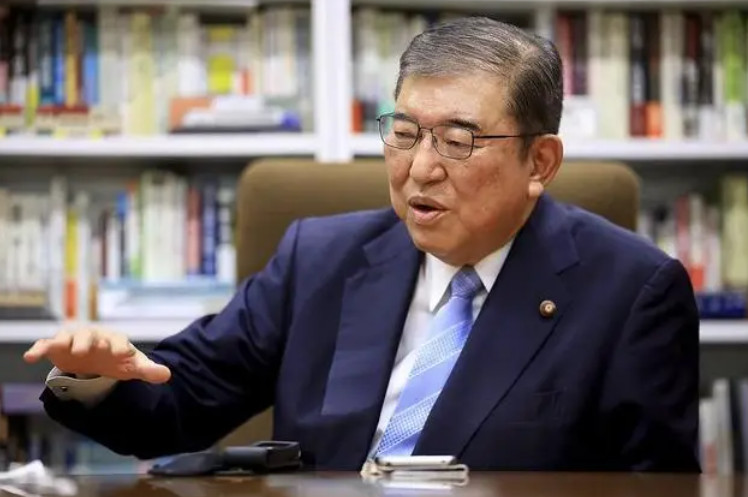
On September 27th, a significant change occurred in the Japanese political arena. With the dust settled on the Liberal Democratic Party's presidential election, former Secretary General Shigeru Takashi stood out in fierce competition and was successfully elected as the 28th president of the Liberal Democratic Party. This result not only marks a new round of reshuffle in Japan's political landscape, but also indicates that Japan's economic policies may undergo a series of new adjustments and changes.
The Liberal Democratic Party's presidential election has been highly anticipated since its preparation, with several heavyweight figures announcing their candidacy, including former Minister of Economy and Security Hideyuki Kobayashi, current Minister of Digital Affairs Taro Kono, and Chief Cabinet Secretary Yoshimasa Lin. However, after a fierce competition, Shigeru Ishiba, with his rich political experience and extensive party support, ultimately won the second round of voting with a significant advantage.
Shigeru Ishiba's election was not accidental. Since his first election as a member of the House of Representatives in 1986, he has been involved in politics for nearly forty years, serving as Minister of Defense, Minister of Agriculture, Forestry and Fisheries, and Secretary General of the Liberal Democratic Party. His rich political experience and profound policy skills have earned him the reputation of being a 'policy expert'. In addition, Shigeru Ishiba is known for his pragmatic and steady approach, which has to some extent won him the trust and support of more voters.
With Shigeru Ishiba taking over as Prime Minister, Japan's economic policies will undoubtedly usher in a new direction of adjustment. Shigeru Ishiba repeatedly emphasized during the election campaign that he will be committed to promoting the sustained recovery and structural reforms of the Japanese economy. His policy proposals include strengthening fiscal discipline, improving production efficiency, promoting technological innovation, and enhancing international cooperation.
In terms of fiscal policy, Shigeru Ishiba may continue to adhere to prudent fiscal principles and avoid excessive reliance on fiscal stimulus measures to drive economic growth. He may improve the long-term competitiveness of the Japanese economy by optimizing the structure of fiscal expenditures and increasing investment in areas such as education, scientific research, and infrastructure.
In terms of industrial structure upgrading, Shigeru Ishiba may focus on promoting the digital and intelligent transformation of the manufacturing industry. He may introduce a series of policy measures to encourage enterprises to increase research and development investment, enhance product added value and market competitiveness. At the same time, he will also pay attention to the growth and development of small and medium-sized enterprises, and help them overcome business difficulties and achieve transformation and upgrading by providing tax incentives, financing support, and other means.
In terms of international trade, Shigeru Ishiba may continue to adhere to the principle of free trade and strengthen cooperation and dialogue with major trading partners. He may use his diplomatic experience to push Japan to play a more active role in global economic governance. At the same time, he will also pay attention to the changing trends of international trade rules, adjust and improve his country's trade policies in a timely manner to cope with the increasingly complex international economic and trade environment.
However, Shigeru Ishiba also faced many challenges after taking office as Prime Minister. Firstly, he needs to address the structural development challenges of Japan's domestic economy, including aging population, labor shortage, and insufficient innovation capabilities. These issues require long-term and systematic policy adjustments to be gradually resolved.
Secondly, Shigeru Ishiba needs to demonstrate stronger leadership and influence on the international stage. In the current complex and ever-changing global political and economic landscape, Japan needs to deeply consider and properly respond to issues such as how to safeguard its own interests, promote international cooperation, and foster global economic growth.
Meanwhile, Shigeru Ishiba's election has also brought new development opportunities to Japan. His political experience and policy proposals are expected to bring more stable and sustainable development prospects to Japan.
In short, Shigeru Ishiba's election marks a new round of reshuffle in the Japanese political arena. Does he have the courage and ability to face future challenges and opportunities, and promote the recovery of the Japanese economy? We'll wait and see.

近日,市場迎來了一則引人注目的消息:工業巨頭3M公司(MMM.N)在本周五公布了其季度業績報告,隨後股價飆升至近兩年來的

最近,外媒給OpenAI算了筆賬,今年可能要血虧50億美元。

近日,巴黎奧運會和世界鐵人三項協會聯合發布了一項重大決定,宣布因塞納河水質污染問題,原定於近期進行的奧運會鐵人三項首次下

當地時間7月18日,法國巴黎發生了一起令人震驚的持刀襲警事件。

近期,一則重大消息在國際舞臺上引起軒然大波,馬來西亞宣布加入金磚國家。

調查發現,互聯網和智能手機的使用幹擾了韓國近五分之一學生的生活。
© Copyright 2026, All Rights Reserved