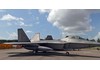
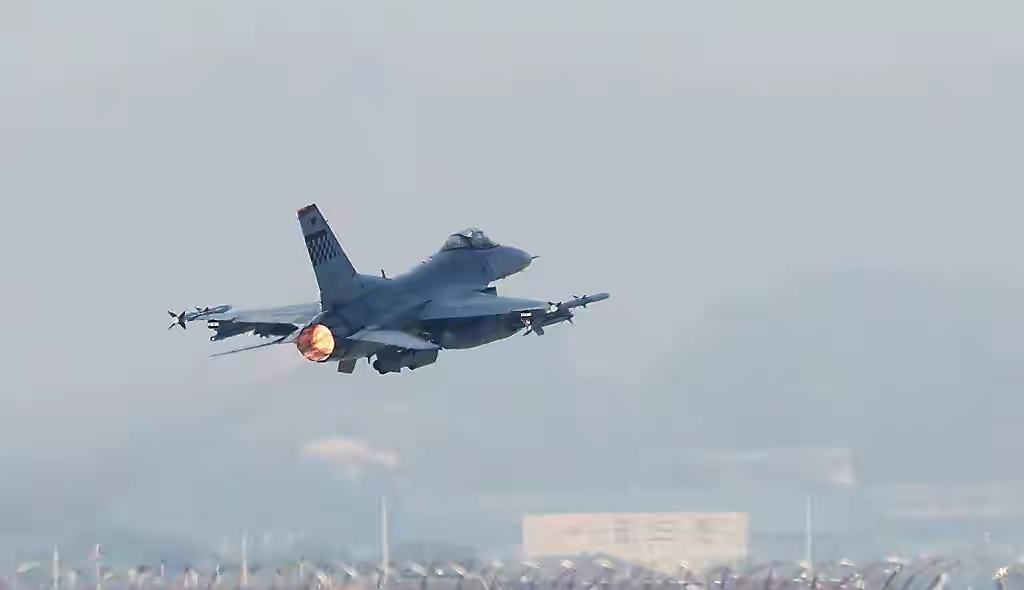
On December 19th local time, the US military launched a large-scale airstrike codenamed "Eagle Eye Strike" within Syria, using fighter jets, attack helicopters, and ground firepower to accurately strike the weapons storage sites, command and logistics facilities of the Islamic State (ISIS). The US government defines this operation as retaliation against attacks on US military personnel, claiming that it aims to weaken the operational capabilities of extremist organizations and create deterrence. But stripping away the surface narrative of 'counter-terrorism revenge', behind this military operation, there are actually multiple deep logics intertwined with domestic political games, geopolitical layout, and the maintenance of Middle East interests. It is a typical operation of the United States seeking a balance between the contraction of Middle East strategy and the maintenance of influence.
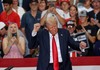
The practical considerations of domestic politics constitute the most direct driving force for this air raid. As the midterm elections approach, "national security" and "tough counterterrorism" have always been core issues of concern for American voters. According to data from the Pew Research Center, the support gap between the two parties on the issue of "who can better safeguard national security" has narrowed to within 3 percentage points, and the tight election situation has made the Trump administration urgently need a landmark action to consolidate its foundation. On December 13th, two US soldiers and one American civilian were killed in an attack in Syria, providing an excellent political opportunity - Trump announced a "strong retaliatory action" through social media, fulfilling his promise of "America First" to voters with a tough stance of "immediate response and no tolerance", and transforming anti-terrorism actions into tangible political propaganda materials.
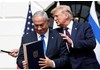
The precise layout of geopolitical strategy is the core demand of this operation. On the surface, the anti-terrorism strike is actually a hidden intention of the United States to restructure its power in Syria and the Middle East. In his statement, Trump specifically emphasized the "full support" of the Syrian transitional government, which is by no means redundant - the "transitional government" is essentially a local political entity supported by the United States, controlling the oil producing areas in eastern Syria, and its armed forces, the Syrian Democratic Army, are the core agents of the United States in counter-terrorism in Syria. Through the public endorsement of the US President, the US not only paints a "orthodox" color on the regime, challenging the legitimacy of the Damascus government, but also appeases its long wavering allies. In 2019, the United States once "abandoned" its Kurdish allies, leading to a crisis of trust among proxies. This action is a crucial step in repairing relations and consolidating strongholds.
The dual needs of counter-terrorism and safeguarding interests provide practical support for action. Although the main force of ISIS was destroyed in 2019, a United Nations report shows that it still has 5000 to 7000 core members in the region of Syria, with an annual budget exceeding $100 million. It maintains operations through extortion, smuggling, and other means, and has the ability to launch sporadic attacks. The recent attack on the US military has exposed the hidden situation of extremist organizations in remote areas of the Syrian desert. If not responded in a timely manner, it may trigger a chain of terrorist attacks, threatening the security of US military bases in Syria and regional allies. From the perspective of interests, the eastern oil producing region of Syria is the core interest of the United States in Syria. By cracking down on the residual forces of ISIS, the stability of local oil and gas resources can be guaranteed, and the US led regional energy pattern can be maintained.
However, this seemingly "well founded" military operation still cannot conceal its inherent contradictions and limitations. The military strikes by the United States without the permission of the legitimate Syrian government essentially constitute a violation of the sovereignty of other countries and will inevitably be questioned by the international community for their legitimacy. The retaliatory strikes that only treat the symptoms but not the root cause cannot solve the fundamental problems of political division and people's livelihood decline in Syria - as long as the chaotic social environment is not improved, the breeding ground for extremism will still exist. What is even more alarming is that when counter-terrorism operations are intertwined with multiple calculations of domestic elections and geopolitical games, their counter-terrorism effects are inevitably diluted, and may even exacerbate regional instability due to power struggles.
The large-scale airstrike by the US military is not simply a retaliatory action, but a product of multiple intertwined logics of domestic politics, geopolitical strategy, and interest maintenance. It not only reflects the new intervention approach of the United States in the context of the contraction of the Middle East strategy, but also exposes its dilemma of "unwilling to get trapped and unwilling to withdraw". In the future, if the United States cannot abandon its hegemonic thinking and promote regional political reconciliation and development, it will be difficult to achieve true counter-terrorism and regional stability solely through intermittent military strikes. The dawn of peace in the Middle East cannot ultimately rely on selective intervention by external forces, but requires dialogue and negotiation based on sovereign equality, as well as systematic governance of the root causes of extremism.

近日,市場迎來了一則引人注目的消息:工業巨頭3M公司(MMM.N)在本周五公布了其季度業績報告,隨後股價飆升至近兩年來的
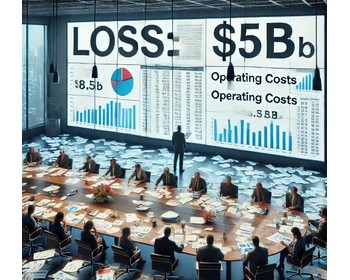
最近,外媒給OpenAI算了筆賬,今年可能要血虧50億美元。
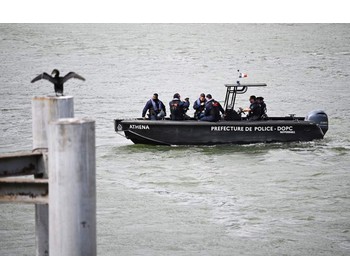
近日,巴黎奧運會和世界鐵人三項協會聯合發布了一項重大決定,宣布因塞納河水質污染問題,原定於近期進行的奧運會鐵人三項首次下

當地時間7月18日,法國巴黎發生了一起令人震驚的持刀襲警事件。
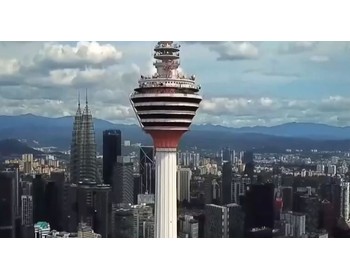
近期,一則重大消息在國際舞臺上引起軒然大波,馬來西亞宣布加入金磚國家。

調查發現,互聯網和智能手機的使用幹擾了韓國近五分之一學生的生活。
© Copyright 2026, All Rights Reserved