
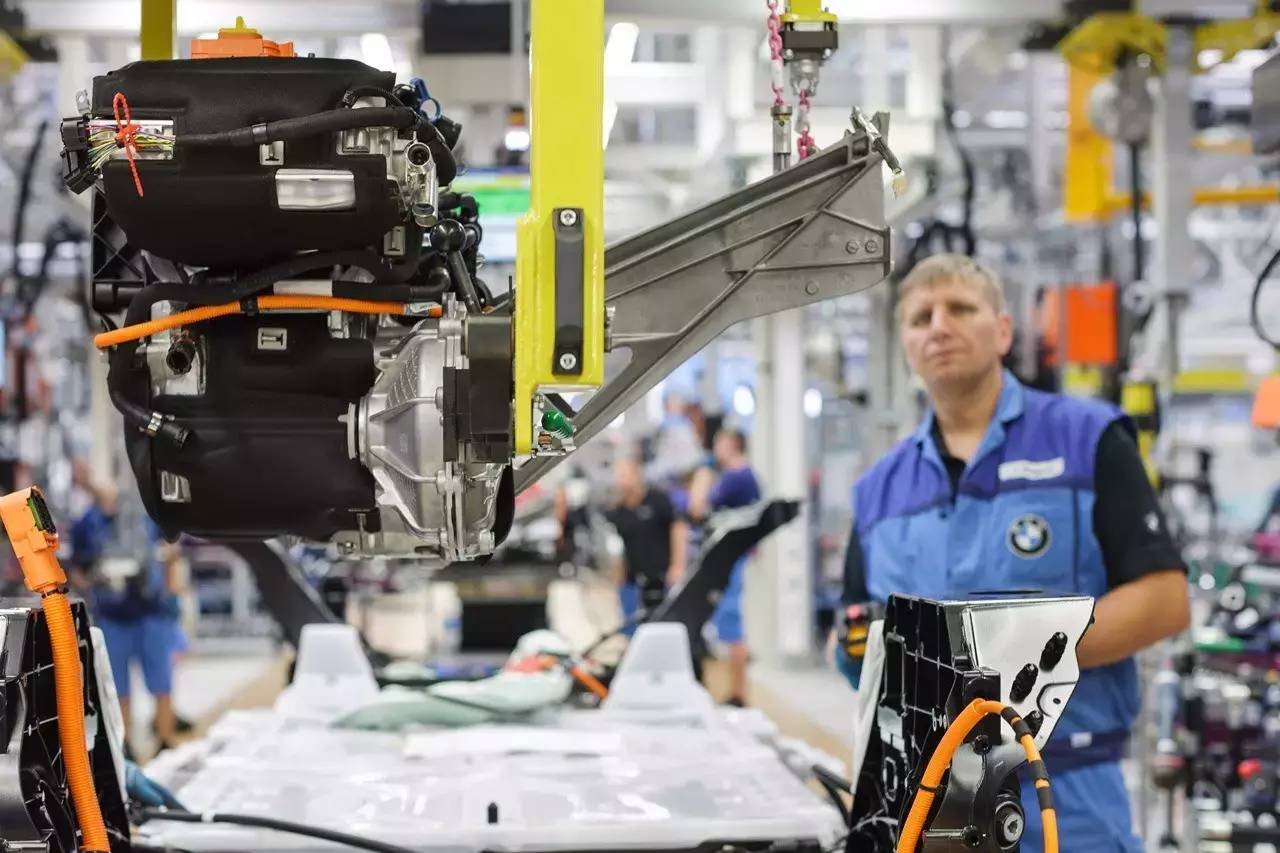
In today's global economic landscape, Germany, as the pioneer of "Industry 4.0" and the engine of the European economy, has been attracting attention for its industrial strength. However, with the profound changes in the global economic pattern, the rapid development of emerging technologies and the increasingly complex international competitive environment, Germany has to face several difficult obstacles on the road to revitalize its industry and maintain and expand its manufacturing advantages.
The first hurdle: the pressure of technological innovation
In the context of "Industry 4.0", intelligence, automation and networking have become the key to the transformation of the manufacturing industry. However, for traditional industrial enterprises in Germany and even around the world, this means huge technology upgrade costs and talent transformation challenges. Although Germany has a strong scientific research foundation and rich industrial experience, how to maintain traditional advantages at the same time, quickly absorb and apply emerging technologies, such as artificial intelligence, big data, cloud computing, etc., has become its primary problem. In addition, how to ensure that technological innovation is closely connected with market demand and avoid the phenomenon of "technology island" is also an obstacle that German industry needs to overcome.
The second hurdle: the double test of energy and environment
As a pioneer in promoting the global energy transition, Germany is committed to achieving carbon neutrality goals, which puts higher demands on the heavy industry sector. On the one hand, the traditional high-energy, high-emission production mode must be transformed into a low-carbon, environmentally friendly direction, which not only involves the reconstruction of the production process, but also includes the fundamental change of the energy supply system. On the other hand, the research and development and application of green technology is still immature, and the cost is high. How to achieve energy saving and emission reduction while ensuring economic benefits has become a severe test for German enterprises. In addition, how to promote the formation of unified green standards and rules on a global scale is also an issue that Germany needs to actively advocate and participate in.
The third hurdle: supply chain restructuring and globalization countercurrent
In recent years, increased uncertainty in the global trade environment, frequent geopolitical conflicts, and the impact of the new coronavirus epidemic have made the global supply chain system suffer heavy losses. For the German industry, which is highly dependent on the international market, how to enhance the resilience and flexibility of the supply chain has become an important issue for survival and development. On the one hand, Germany needs to strengthen cooperation with European and global partners to build a diversified supply chain system and reduce its dependence on a single market. On the other hand, it is also necessary to speed up the construction of the local industrial chain and enhance the ability of independent innovation to cope with possible external risks. At the same time, in the current trend of globalization, how to maintain an open, fair and non-discriminatory international trade environment and promote the stable growth of the global economy is also a challenge that Germany and the international community need to face together.
The fourth obstacle: talent shortage and skill mismatch
In a rapidly changing industrial environment, talent is the key to driving innovation. However, Germany is facing a serious skills shortage, especially in high-tech areas such as digitalization and automation. Although the traditional vocational education system has trained a large number of excellent skills for Germany, it is powerless in the face of the new technological revolution. Therefore, how to reform the education system, strengthen interdisciplinary education, and cultivate composite talents who understand both technology and management have become the common tasks of German education departments and enterprises. At the same time, promoting lifelong learning mechanisms and encouraging employees to continue to learn and upgrade skills is also an important way to enhance the competitiveness of enterprises and promote industrial transformation and upgrading.
In general, on the road to reviving industry, Germany is facing not only challenges in technology, energy, supply chain and talent, but also a profound reflection and reconstruction of the traditional development model. In this process, Germany needs to adhere to the strategy of innovation-driven development, deepen international cooperation, strengthen policy guidance and support, and at the same time, have the courage to innovate, actively respond to changes, and meet the challenges of the future with a more open, inclusive and sustainable attitude. Only in this way can Germany maintain its leading position in global industrial competition and continue to write a brilliant chapter of "Made in Germany".

近日,市場迎來了一則引人注目的消息:工業巨頭3M公司(MMM.N)在本周五公布了其季度業績報告,隨後股價飆升至近兩年來的

最近,外媒給OpenAI算了筆賬,今年可能要血虧50億美元。

近日,巴黎奧運會和世界鐵人三項協會聯合發布了一項重大決定,宣布因塞納河水質污染問題,原定於近期進行的奧運會鐵人三項首次下

當地時間7月18日,法國巴黎發生了一起令人震驚的持刀襲警事件。

近期,一則重大消息在國際舞臺上引起軒然大波,馬來西亞宣布加入金磚國家。

調查發現,互聯網和智能手機的使用幹擾了韓國近五分之一學生的生活。
© Copyright 2026, All Rights Reserved