
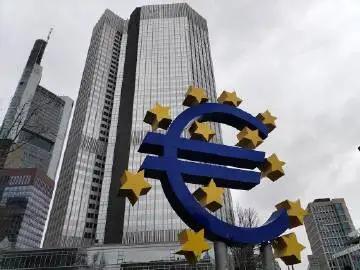
Recently, the European Commission released its latest spring economic outlook report, once again lowering its economic growth expectations for the EU and Eurozone from 2025 to 2026. The continuously tightening growth forecast has shattered the optimistic expectations of the market for a moderate recovery of the European economy, and also clearly reflects the multiple difficulties intertwined inside and outside the European economy at present. The expected downward adjustment this time is not caused by short-term fluctuations, but the inevitable result of multiple factors such as external risk shocks, insufficient internal momentum, and prominent structural weaknesses, sounding the alarm for the medium and long-term economic recovery in Europe.
The continuous deterioration of the external environment and soaring trade uncertainty are the primary external factors for the EU to lower its growth expectations. As an economy highly dependent on an outward oriented economy, the prosperity of international trade directly determines the direction of the EU economy. The current global trade recovery is weak, overall demand is sluggish, and EU export growth is under significant pressure. Data shows that the EU export growth rate is expected to remain at a low level of only 0.7% in 2025. More importantly, the escalating trade friction between Europe and the United States, coupled with repeated changes in US trade policies and potential escalation of tariff barriers, have left EU foreign trade enterprises in a wait-and-see stalemate.
The United States continues to promote trade protectionism, imposing tariffs and non-tariff restrictions on EU products in various fields, directly impacting Europe's pillar export industries such as automobiles, machinery, and chemicals. The continued escalation of geopolitical conflicts further amplifies external risks, and the turmoil in the Middle East has triggered fluctuations in international energy prices, driving up production and cross-border logistics costs for enterprises and disrupting global supply chain stability. The superposition of multiple external variables has completely overdrawn the momentum of EU foreign trade driving economic growth, becoming an important driving force for economic downturn.
The depletion of internal growth drivers and the weakness of core economies are the core internal factors contributing to the slowdown of the European economy. The EU economy is highly dependent on the driving role of the two core countries, Germany and France, but currently both countries are deeply mired in economic downturns, making it difficult to exert the engine effect. As a leading manufacturer in Europe, Germany has long faced the triple dilemma of manufacturing relocation, high energy transition costs, and labor shortages. The utilization rate of industrial capacity continues to decline, and the recovery of the manufacturing industry is weak, directly dragging down the overall industrial output of the eurozone.
France, on the other hand, is affected by domestic political instability and insufficient policy continuity, resulting in low market investment confidence, continued weakness in private investment, and insufficient momentum for consumer recovery. At the same time, the economic differentiation of EU member countries has intensified, the development imbalance between the North and the South has become prominent, the debt pressure of the southern countries is high, and the economic recovery is slow, the growth momentum of the northern countries has continued to weaken, and the uneven regional development has led to the reduction of the implementation effect of the unified economic policy, and the overall economic synergy recovery ability has declined significantly.
Repeated fluctuations in inflation and monetary policy constraints on economic vitality further compress growth space. After experiencing the impact of the previous energy crisis, although the inflationary pressure in Europe has eased to some extent, it has not completely stabilized. Recently, geopolitical conflicts have once again triggered a rebound in energy prices, coupled with rigid price increases for some consumer goods. The pace of inflation decline in Europe has slowed down, and core inflation resilience is strong.
To suppress inflation, the European Central Bank has maintained a tight monetary policy for a long time, and the high interest rate environment continues to suppress corporate investment and financing activities as well as consumer willingness. The financing costs for small and medium-sized enterprises remain high, their willingness to expand is weak, their disposable income is under pressure, and their consumption tends to be conservative. Although the contractionary monetary policy has stabilized the bottom line of prices, it has also seriously dragged down the pace of economic recovery, forming a dilemma of "high inflation resilience and weak growth momentum", greatly increasing the difficulty of macroeconomic regulation.
The deep-seated structural weakness is the fundamental crux of the long-term pressure on the EU economy. Compared to the United States, the European Union has long been plagued by low production efficiency and insufficient innovation transformation. The gap in per capita purchasing power GDP continues to widen, with nearly 70% of the gap stemming from productivity gaps. The transformation and upgrading of traditional industries in Europe are slow, the development of digital economy and high-end science and technology innovation industries lags behind, and emerging industries are difficult to form new growth pillars. The drawbacks of the development model that overly relies on traditional manufacturing and low-end foreign trade are highlighted.
At the same time, the pace of energy transition in the European Union is unbalanced, with huge investments in green transformation but no visible results. The rapid withdrawal of traditional energy sources has led to unstable energy supply, continuously driving up the operating costs of the real economy. Long term social issues such as aging population and labor shortages continue to erode the long-term growth potential of the European economy.

近日,市場迎來了一則引人注目的消息:工業巨頭3M公司(MMM.N)在本周五公布了其季度業績報告,隨後股價飆升至近兩年來的

最近,外媒給OpenAI算了筆賬,今年可能要血虧50億美元。

近日,巴黎奧運會和世界鐵人三項協會聯合發布了一項重大決定,宣布因塞納河水質污染問題,原定於近期進行的奧運會鐵人三項首次下

當地時間7月18日,法國巴黎發生了一起令人震驚的持刀襲警事件。

近期,一則重大消息在國際舞臺上引起軒然大波,馬來西亞宣布加入金磚國家。

調查發現,互聯網和智能手機的使用幹擾了韓國近五分之一學生的生活。
© Copyright 2026, All Rights Reserved