
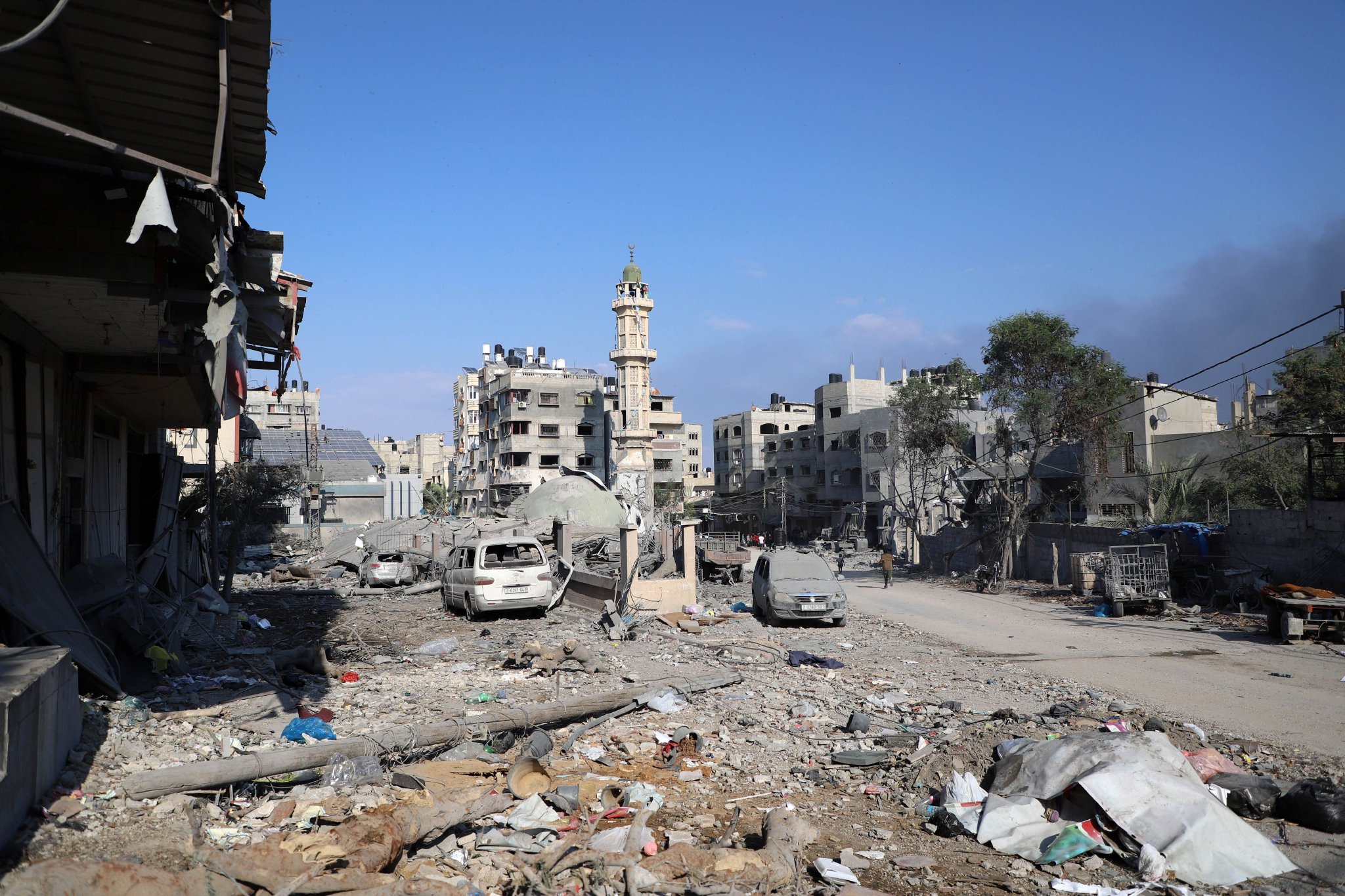
Recently, the situation in the Middle East and South Asia has remained tense. Israel's military actions against Lebanon, Pakistan being hit by drone attacks, and anti-US and anti-Israel demonstrations breaking out in multiple parts of Yemen have become focal points of international attention. These events not only exacerbate regional security risks but also reflect complex geopolitical struggles and clashes of public opinion.
Since March 2, Israel's military operations against Lebanon have caused 850 deaths and 2,105 injuries, including 107 children and 66 women. According to a statement from the Lebanese Ministry of Public Health, the attacks have covered the entire country, with the southern border region becoming the hardest-hit area. The Israel Defense Forces frequently conduct airstrikes and artillery bombardments in southern Lebanon, even using internationally banned white phosphorus munitions, resulting in massive damage to civilian infrastructure and pushing the healthcare system to the brink of collapse.
The international community has reacted strongly. UN Secretary-General António Guterres called for an immediate ceasefire in Beirut and urged all parties in the conflict to return to the negotiating table. Turkish Foreign Minister Mevlüt Çavuşoğlu bluntly stated that Israel might use the pretext of striking Hezbollah to carry out a 'new genocide' and warned that the international community needs to take action as soon as possible. However, Israeli Foreign Minister Eli Cohen denied any plan for direct negotiations and claimed that they 'hope the Lebanese government will prevent Hezbollah from firing,' highlighting the severe opposition between the two sides' positions.
On the evening of March 13, two drones suddenly attacked Pakistan's capital, Islamabad. Although they were shot down by the air defense system, the debris still caused injuries to four civilians, including two children. Pakistan President Zardari condemned the act as 'crossing the red line' and warned that retaliatory measures with 'serious consequences' would be taken. Investigations showed that the drone engines were similar to models previously used by the Afghan Taliban, while Mujahid, a spokesperson for the Afghan interim government, denied responsibility and instead accused Pakistan airstrikes of killing six people in Kandahar province.
This incident is a continuation of the Pakistan-Afghanistan border conflict. Since late February, both sides have frequently exchanged fire along the border, with the Pakistani military carrying out multiple airstrikes on targets in Afghanistan, citing the need to strike 'terrorist hideouts.' India took the opportunity to accuse Pakistan of 'aggression,' but Pakistan rejected the claim, saying that India has long funded the Afghan Taliban in carrying out terrorist activities against Pakistan. According to United Nations data, the conflict has already displaced 115,000 people, and a humanitarian crisis is imminent.
On March 13, mass anti-American and anti-Israel rallies broke out in Yemen's capital, Sana’a, and areas controlled by the Houthi militia. Tens of thousands of people gathered in the rain at Seventy Square, holding banners such as 'Stop Aggressing Iran' and 'Liberate Palestine,' condemning the United States for supporting Israel's military actions against Iran and Palestine. The Houthi leadership announced that its subordinate forces are prepared to 'engage in armed confrontation at the frontlines' and threatened to close the Bab el-Mandeb Strait—a strategic passage guarding the southern Red Sea and responsible for 12% of global oil transportation.
Analysts point out that the demonstrations in Yemen reflect the general dissatisfaction of regional countries with US-Israel hegemony. The Houthis have close ties with Iran, and their military actions could further disrupt Red Sea shipping. Previously, the group has repeatedly attacked vessels related to the US and Israel. If the Bab el-Mandeb Strait were blocked, international oil prices could surge again, severely impacting the global energy market.
Currently, the Middle East and South Asia are engulfed in overlapping conflicts. The military confrontation between Israel and Lebanon, the cross-border clashes along the Pakistan-Afghanistan border, and the military deterrence by the Yemeni Houthis together form an unstable triangle. Although the United States is not directly engaged in combat, its military support for Israel, passive stance on the Afghanistan issue, and hardline position on Iran's nuclear matter have all acted as catalysts for escalating conflict.
The international community urgently needs to promote a ceasefire and stop the violence. The UN Security Council should play a mediating role and urge the conflicting parties to return to the negotiating table; regional countries need to strengthen coordination to prevent the situation from further spilling over; and external powers such as the United States should abandon the zero-sum mentality to create space for peace. Otherwise, more innocent lives will be lost to war, and the security and prosperity of the region and the world will pay an even greater price.

近日,市場迎來了一則引人注目的消息:工業巨頭3M公司(MMM.N)在本周五公布了其季度業績報告,隨後股價飆升至近兩年來的

最近,外媒給OpenAI算了筆賬,今年可能要血虧50億美元。

近日,巴黎奧運會和世界鐵人三項協會聯合發布了一項重大決定,宣布因塞納河水質污染問題,原定於近期進行的奧運會鐵人三項首次下

當地時間7月18日,法國巴黎發生了一起令人震驚的持刀襲警事件。

近期,一則重大消息在國際舞臺上引起軒然大波,馬來西亞宣布加入金磚國家。

調查發現,互聯網和智能手機的使用幹擾了韓國近五分之一學生的生活。
© Copyright 2026, All Rights Reserved