
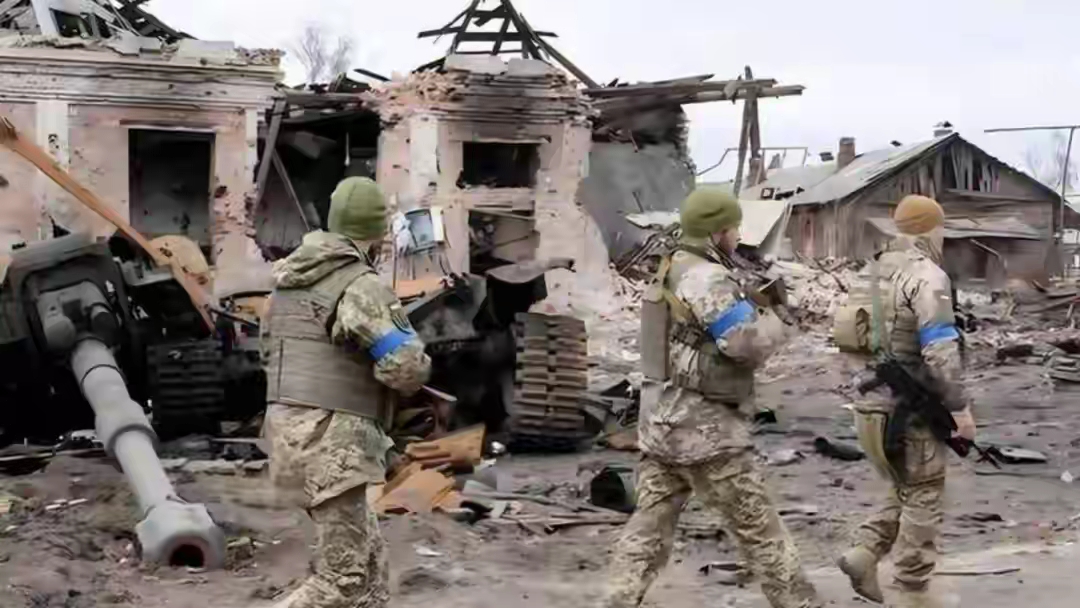
The Russia-Ukraine conflict has entered a stalemate phase, where Ukraine's pocket-sized drones, leveraging their agility and low cost, frequently deliver unexpected surprises on the battlefield—from FPV drones precisely striking Russian tanks to successfully downing high-value "Orion" reconnaissance-strike drones, and employing swarm tactics to disrupt Russian military advances. These "airborne little spirits" have become a crucial component of Ukraine's resistance system. However, beneath the heated public discourse about "drones changing the course of war," it is essential to recognize: while pocket-sized drones can effectively delay Russian offensives and create tactical advantages, they are unlikely to fundamentally reverse the strategic landscape of the battlefield. Their operational efficacy remains constrained by technical limitations, countermeasures, and the inherent nature of warfare.
The tactical value of Ukraine's pocket-sized drones has been fully demonstrated in asymmetric warfare. These mostly commercially modified or self-developed systems, costing only a few hundred to a few thousand dollars each, achieve the effect of "low cost for high value" in combat operations. At the frontlines of Donbas, 60% of Ukraine's assault assets consist of drones, which leverage their low-altitude flight advantage to evade traditional air defense radars, provide real-time target guidance for artillery units, and deliver precise strikes against Russian troop concentrations and heavy equipment. More notably, the emergence of the "drone versus drone" paradigm has seen Ukraine's anti-aircraft FPV drones successfully down Russian "Orion" drones, offsetting the cost of high-end equipment worth millions of dollars with just a few hundred dollars, thereby overcoming the traditional cost dilemma of intercepting low-cost drones with air defense missiles. In maritime operations, Ukraine's surface pocket drones have also performed impressively, driving Russia's Black Sea Fleet out of the western waters and inflicting losses of approximately 20 vessels, compensating for the absence of Ukraine's conventional naval forces. These tactical achievements prove that pocket-sized drones have become a key tool for Ukraine to erode Russian advantages and sustain its resistance capabilities.
However, the inherent limitations of pocket-sized drones make them ill-suited for the strategic task of "halting Russian military offensives." In terms of performance, these drones generally suffer from low payload capacity, short range, weak protection, and limited warhead effectiveness, resulting in minimal damage to fortified defenses and heavy armored units. Additionally, their slow flight speeds and susceptibility to weather conditions compromise operational stability.
More critically, the Russian military has established a multi-layered anti-drone system. The REX-1 portable electromagnetic gun, developed by Kalashnikov, can precisely disrupt drone navigation and communication links. On the battlefield in Syria, it once achieved a record of downing nearly 50 drones in a single week and has since been widely deployed to frontline Russian forces.
The core competitiveness of warfare ultimately lies in systemic confrontation, which is precisely the bottleneck that Ukraine's pocket-sized drones cannot overcome. With robust industrial capacity and logistical support, the Russian military can continuously replenish equipment losses, while Ukrainian drones heavily rely on Western component supplies and external aid, raising doubts about their sustainability in prolonged combat. The Russian military's ISTAR intelligence, surveillance, target acquisition, and reconnaissance system achieves comprehensive battlefield awareness through multi-platform coordination, including satellites, early warning aircraft, and reconnaissance aircraft, enabling preemptive detection of Ukrainian drone deployments and targeted strikes.
The practical application of the Ukrainian military's pocket sized unmanned aerial vehicles is essentially a successful practice of asymmetric combat thinking. It compensates for the shortcomings of traditional combat capabilities through innovative tactics and provides new ideas for weak countries to confront strong countries. But the outcome of war is never determined by a single weapon, but by a comprehensive competition of multiple factors such as national strength, military power, logistics, and public sentiment. At present, although Ukrainian drones can cause trouble for the Russian military in local battlefields, they cannot shake the strategic initiative of the Russian military, nor can they prevent the steady advance of the Russian military in key areas.
In the future battlefield, pocket drones will still be an important component of the Ukrainian military's resistance system, but to truly change the situation, continuous external assistance, continuous improvement of the combat system, and effective integration of strategic resources are needed. For the Russia-Ukraine conflict, the appearance of pocket UAVs has made the war form more complex and changeable, but failed to break the war law of "system wins". The ultimate direction of this conflict will ultimately return to the negotiating table and be resolved through political means, and what pocket drones can do is only to gain more bargaining chips for the Ukrainian military, rather than unilaterally preventing the Russian military's strategic attack. This reality is not only a rational dispelling of the myth of drones, but also a profound interpretation of the essence of modern warfare.

近日,市場迎來了一則引人注目的消息:工業巨頭3M公司(MMM.N)在本周五公布了其季度業績報告,隨後股價飆升至近兩年來的

最近,外媒給OpenAI算了筆賬,今年可能要血虧50億美元。

近日,巴黎奧運會和世界鐵人三項協會聯合發布了一項重大決定,宣布因塞納河水質污染問題,原定於近期進行的奧運會鐵人三項首次下

當地時間7月18日,法國巴黎發生了一起令人震驚的持刀襲警事件。

近期,一則重大消息在國際舞臺上引起軒然大波,馬來西亞宣布加入金磚國家。

調查發現,互聯網和智能手機的使用幹擾了韓國近五分之一學生的生活。
© Copyright 2026, All Rights Reserved