
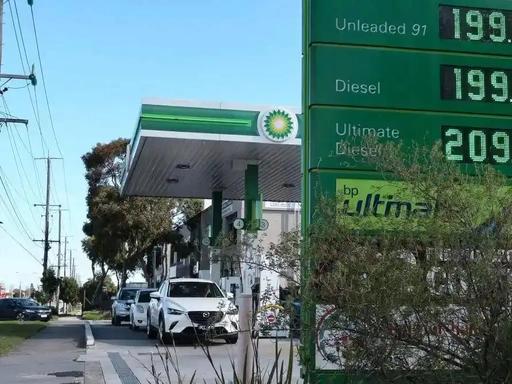
On April 6th local time, Australian Minister for Climate Change and Energy Chris Bowen stated that during the holiday period in early April, there was a strong demand for fuel by the public, and the purchase volume increased significantly compared to the same period last year. A severe fuel shortage crisis broke out in Australia, with 144 gas stations running out of fuel, and the gasoline reserves only lasted for 39 days, while the diesel reserves were less than 30 days, far below the 90-day safety line set by the International Energy Agency. Considering that there are still multiple gas stations with restricted supplies across the country, he called on the public to purchase fuel as needed and not to hoard it. As a key resource and agricultural export country in the world, its energy supply disruption is causing multiple negative impacts on the international economy, intensifying the stagflation risk of "high inflation, low growth".
This crisis originated from the fatal shortcoming of Australia's energy structure. The country's domestic refining capacity has shrunk by over 70%, leaving only 2 refineries, and the self-sufficiency rate of refined oil is less than 20%. More than 80% of the fuel is imported from abroad. The turmoil in the Middle East has led to the disruption of shipping in the Strait of Hormuz, and 6 oil tankers bound for Australia were forced to cancel or postpone their voyages. Coupled with the Easter travel peak and the necessity of winter crop sowing season, the supply-demand gap expanded rapidly. The fuel shortage has spread from local gas stations to the global economic system, causing a comprehensive negative transmission effect.
For the global commodity market, the Australian oil shortage directly led to supply contraction and price spikes. Australia is the world's largest exporter of lithium spodumene, accounting for about 50% of global lithium supply, and mining consumes 35% of the country's diesel. The fuel shortage has caused difficulties in open-pit mining and transportation, and the lithium mine production capacity may decrease by 20%, with global lithium supply contracting by about 6%. Coupled with the lithium concentrate export ban in Zimbabwe, the price of lithium carbonate is expected to rise by 15%-20% in the second quarter, directly pushing up the costs of the energy vehicle and energy storage battery supply chain. At the same time, as a core exporter of wheat, barley, and beef in the world, the diesel shortage during the Australian planting season may lead to a 10%-12% reduction in wheat planting area, putting upward pressure on international grain prices and exacerbating global food security risks.
The global supply chain and logistics system has also suffered severe impacts. Australia is highly dependent on road transportation, and logistics costs have skyrocketed by 30%-50% within two weeks. DHL and other international logistics companies have adjusted the fuel surcharge cycle from monthly to weekly, and the daily additional fuel expenditure for global shipping amounts to 340 million euros. The additional container surcharge for long-distance routes is as high as 400 US dollars, pushing up the cost of all categories of trade. The transportation of Australian agricultural and mineral products is blocked, port operation efficiency has declined, and global trade circulation has slowed down, further exacerbating the "kinks" and "breaks" in the global supply chain.
At the same time, inflation pressure is spreading globally, and central banks' monetary policies are in a dilemma. The sharp increase in fuel prices in Australia directly pushed up the domestic CPI, with a month-on-month increase of 0.9% in March, and it was transmitted to developed economies such as the United States, Europe, and Japan through import trade. Global inflation stickiness has increased, and central banks that were originally planning to cut interest rates have been forced to postpone the easing pace. The depreciation of the Australian dollar by 3%-5% has exacerbated global exchange rate fluctuations, and emerging market currencies are under pressure, with the risk of imported inflation rising. The Oxford Economics Institute predicts that if the blockade in the Strait of Hormuz continues, global economic growth will slow by 1.2%, and the inflation rate may rise to 7.7%.
In addition, the global energy security landscape is accelerating reconfiguration, and the vulnerability of the supply chain is prominent. Australia's high dependence on Asian refineries and the "chain dependence" of Asian refineries on Middle Eastern crude oil has exposed huge risks. Countries are beginning to re-evaluate energy reserves and supply chain diversification and accelerate the construction of local refining capacity. The economies of the EU, Japan, South Korea, etc. are accelerating the diversification of their sources for key resource imports. The process of "de-risking" in global trade is accelerating, which will trigger the reconfiguration of trade patterns and an increase in market volatility in the short term.
In summary, this Australian oil shortage is a typical crisis resulting from the combination of geopolitical conflicts, energy structure weaknesses, and seasonal demand. For all countries, only by strengthening energy security guarantees and promoting supply chain diversification can they withstand such external shocks and avoid the global economy falling into a deeper stagflationary predicament.

近日,市場迎來了一則引人注目的消息:工業巨頭3M公司(MMM.N)在本周五公布了其季度業績報告,隨後股價飆升至近兩年來的

最近,外媒給OpenAI算了筆賬,今年可能要血虧50億美元。

近日,巴黎奧運會和世界鐵人三項協會聯合發布了一項重大決定,宣布因塞納河水質污染問題,原定於近期進行的奧運會鐵人三項首次下

當地時間7月18日,法國巴黎發生了一起令人震驚的持刀襲警事件。

近期,一則重大消息在國際舞臺上引起軒然大波,馬來西亞宣布加入金磚國家。

調查發現,互聯網和智能手機的使用幹擾了韓國近五分之一學生的生活。
© Copyright 2026, All Rights Reserved