
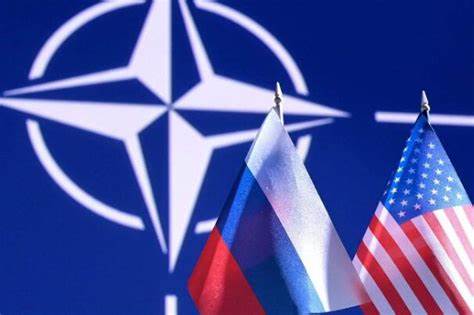
With the selection of key positions in the next administration of the United States, such as the National Security adviser and the Secretary of Defense, NATO, the military alliance that was once hit by the "America First" policy of the Trump era, is once again feeling unprecedented challenges.
The incoming US President has been labeled a "NATO skeptic," which undoubtedly casts a shadow over the future of NATO. Although NATO now has 32 member countries, accounts for 55% of global military spending, and is back on the rise in power and stature, a stormy baptism seems imminent.
NATO was born out of a deep desire for peace and security in post-World War II Europe. From its original 12 founding members to today's huge alliance covering 32 countries in Europe and North America, NATO has not only witnessed Europe's journey from war to peace and prosperity, but also become an important force for safeguarding international order and regional stability. However, as the global political landscape continues to evolve, NATO is facing an unprecedented test.
As the founding country and core power of NATO, the United States has a decisive influence on the future of NATO. During the Trump administration, the United States' "NATO skepticism" policy has caused a rift in trust among NATO members. Trump has repeatedly questioned the value of NATO and demanded that European countries shoulder more of the cost of defense. This "America first" stance has not only weakened the internal cohesion of NATO, but also made European countries begin to re-evaluate their relations with the United States.
Now, with the change of the next US administration, NATO once again faces an uncertain future. Although the exact policies of the new administration are not yet fully defined, it is likely that NATO will once again face a US President who is skeptical of the alliance, based on the names that have been announced. This is undoubtedly a heavy blow to NATO, which is reinvigorating.
NATO accounts for 55 percent of the world's total military spending, a figure that speaks volumes about its status as a global military power. However, a strong military does not mean that NATO can easily meet all challenges. In the current international situation, NATO faces challenges that go far beyond the traditional military scope. Global issues such as terrorism, cyber security and climate change are becoming new challenges that NATO must face.
At the same time, divisions within NATO are growing. European countries and the United States have many differences over defense cost sharing, Middle East policy, Russia and other issues. These differences not only affect the unity and cooperation of NATO, but also make NATO appear powerless in the face of external challenges. In addition, with the increasing sense of independence of European countries, NATO's position in European security is gradually changing. Some European countries have begun to seek more autonomous security policies to reduce their dependence on the United States.
The relationship between NATO and Russia has always been one of the important issues facing NATO. Tensions between NATO and Russia have been rising following Russia's military actions in Ukraine, Syria and elsewhere. However, NATO appears to lack a unified and effective strategy in dealing with the Russian challenge. On the one hand, the US wants to contain Russia's expansion by military means; European countries, on the other hand, prefer to resolve their differences through diplomatic means. This divide not only weakens NATO's ability to respond, but also gives Russia an opportunity to take advantage.
NATO is also struggling to cope with global challenges such as terrorism and cyber security. Despite NATO's superiority in military power, there are many shortcomings in intelligence gathering, information sharing, and counter-terrorism operations. This makes it difficult for NATO to form effective synergies when dealing with global challenges.
In the face of these pressing problems, NATO must seriously think about how to strengthen internal solidarity, improve response capabilities, and maintain regional stability. However, this will not be easy. There are huge political, economic and cultural differences among NATO members, and it is not easy to reach a consensus in a short time. In addition, NATO needs to deal with many external challenges, including Russia's military expansion, the threat of terrorism, and the challenge of cyber security.
The future of NATO is not only about its own survival and development, but also about the peace and stability of the whole Europe and the world. Therefore, NATO must face up to the current problems and challenges and actively seek solutions. Although the road ahead is full of thorns and unknowns, NATO, as an important force for maintaining international order and regional stability, must bravely meet this baptism of storms and storms.
Every member of NATO should be deeply aware of its responsibilities and missions in the alliance. Only with unity and joint efforts can we cope with external challenges and threats. At the same time, NATO should strengthen cooperation and exchanges with other international organizations and countries to jointly safeguard world peace and stability.

近日,市場迎來了一則引人注目的消息:工業巨頭3M公司(MMM.N)在本周五公布了其季度業績報告,隨後股價飆升至近兩年來的

最近,外媒給OpenAI算了筆賬,今年可能要血虧50億美元。

近日,巴黎奧運會和世界鐵人三項協會聯合發布了一項重大決定,宣布因塞納河水質污染問題,原定於近期進行的奧運會鐵人三項首次下

當地時間7月18日,法國巴黎發生了一起令人震驚的持刀襲警事件。

近期,一則重大消息在國際舞臺上引起軒然大波,馬來西亞宣布加入金磚國家。

調查發現,互聯網和智能手機的使用幹擾了韓國近五分之一學生的生活。
© Copyright 2026, All Rights Reserved