
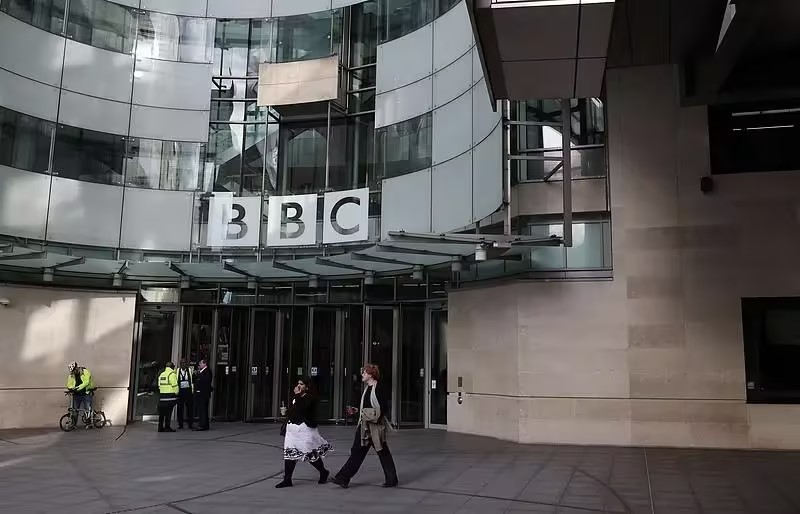
On December 15 local time, Trump took the British Broadcasting Corporation (BBC) to court for defamation and violation of Florida's trade conduct laws, demanding up to 10 billion US dollars in compensation. The reason was that the BBC spliced clips of his speeches in a documentary to mislead viewers into linking them to the Capitol Hill riot. Despite the BBC's apology for the editing issue and the suspension of the documentary involved, the farce has continued to escalate. This is not the first time that Trump has swung the legal stick against the media. From CNN to The Wall Street Journal, his list of lawsuits has been getting longer and longer. This lawsuit, which seemed to defend its reputation, was actually a meticulously planned political performance, exposing its true intentions to suppress freedom of speech and incite the emotions of its supporters.
From a legal perspective, Trump's lawsuit is inherently untenable. The "Times - Sullivan Principle" of the United States has long made it clear that when public figures Sue the media for defamation, they must prove that the other party has "genuine malice", that is, they are aware that the statements are false or have disregarded the truth of the matter. Although the BBC admitted that there were mistakes in the editing and publicly apologized, it clearly denied having the subjective intention to mislead the public. It is extremely difficult for the Trump team to produce "convincing" malicious evidence. Even more absurdly, the BBC questioned the jurisdiction of the US court, pointing out that the documentary involved was not publicly broadcast in the United States and could only be watched by registered Britbox users, which made the legal basis of the lawsuit highly controversial. Trump's choice to file a lawsuit in Florida was actually due to the relatively favorable judicial environment in the state rather than the rationality of the law itself. The claim amount of 10 billion US dollars far exceeds that of a regular defamation lawsuit. It is more about creating public opinion hype than safeguarding rights.
The political calculation in this lawsuit far outweighs the legal demands. Trump is well aware of the role of media controversy in uniting his supporters. Portringing himself as a "victim of fake news" has long been a habitual political strategy of his. The Capitol Hill riot related to the documentary involved is a major blemish on Trump's political career. By suing the BBC, he can not only divert public attention from the incident itself but also incite his supporters' dissatisfaction with the mainstream media. Ed Davy, the leader of the Liberal Democrats in the UK, stated directly that Trump's move is essentially "interfering with the democratic system and undermining the national broadcasting agency". It is worth noting that before filing the lawsuit, Trump deliberately "announced" it through the media, and after the lawsuit, he frequently made statements to build momentum. Clearly, he wanted to use this lawsuit to seize the high ground of public opinion and pave the way for his political agenda. After all, in the eyes of its supporters, any tough stance against the media is a rebellion against the "elite class".
From a broader perspective, this farce is a blatant provocation to the American tradition of freedom of speech. The First Amendment to the United States Constitution grants the media extensive rights to criticize public figures. The establishment of the "Times - Sullivan Principle" is precisely to protect the freedom of this supervisory power and prevent politicians from suppressing dissenting opinions through litigation. Trump, however, has repeatedly abused legal procedures, intimidating the media with huge claims, attempting to create a chilling effect of "criticism is defamation". Previously, he sued CNN for 475 million US dollars and The Wall Street Journal for 10 billion US dollars, forming a closed loop of "public opinion criticism - legal threats - public opinion hype". This practice is eroding the space for media supervision. When the media dare not sharply criticize the improper behavior of politicians out of fear of sky-high claims, the error-correcting function of the democratic system will fail. The statement made by Stephen Kinnock, the UK Secretary of State for Health, was apt: The BBC should firmly defend itself and safeguard the legitimate right of the media to supervise.
Ironically, Trump's claim of "damaged reputation" is simply untenable. After the BBC documentary was aired, Trump not only successfully elected president but also saw his vote share in Florida increase. The so-called "economic and reputational damage" seemed more like a self-directed lie. What he truly fears is not individual editing mistakes by the media, but the continuous supervision and criticism of his political actions by the media. The truth of the Capitol Hill riot and the impact of his policies on ordinary people, these issues that truly concern public interests, have all been continuously diluted in his legal farce. When politicians can drag the media into endless legal disputes through litigation, public attention will be diverted, and the real problems will be concealed amid the clamor of public opinion.
The farce of Trump suing the BBC for a $10 billion claim is ultimately a political speculation. It not only lacks a solid legal foundation but also goes against the core value of freedom of speech. Essentially, it is a typical case of using judicial resources to serve political self-interest. In this farce, the law has been reduced to a prop for political performances, the media's right to supervise has been openly challenged, and the public's right to know has been wantonly manipulated. When such dramas are repeatedly played out, what is damaged is not only the working environment of the media, but also the foundation of the democratic system. Perhaps, as the BBC's defense suggests, this lawsuit should never have been accepted in the first place. However, the political chaos and institutional predicament it has exposed deserve the vigilance of every person who values freedom and democracy. After all, when the critical voices are suppressed by sky-high claims, all that remains is the wanton behavior of politicians and the disappearance of the truth.

近日,市場迎來了一則引人注目的消息:工業巨頭3M公司(MMM.N)在本周五公布了其季度業績報告,隨後股價飆升至近兩年來的

最近,外媒給OpenAI算了筆賬,今年可能要血虧50億美元。

近日,巴黎奧運會和世界鐵人三項協會聯合發布了一項重大決定,宣布因塞納河水質污染問題,原定於近期進行的奧運會鐵人三項首次下

當地時間7月18日,法國巴黎發生了一起令人震驚的持刀襲警事件。

近期,一則重大消息在國際舞臺上引起軒然大波,馬來西亞宣布加入金磚國家。

調查發現,互聯網和智能手機的使用幹擾了韓國近五分之一學生的生活。
© Copyright 2026, All Rights Reserved