
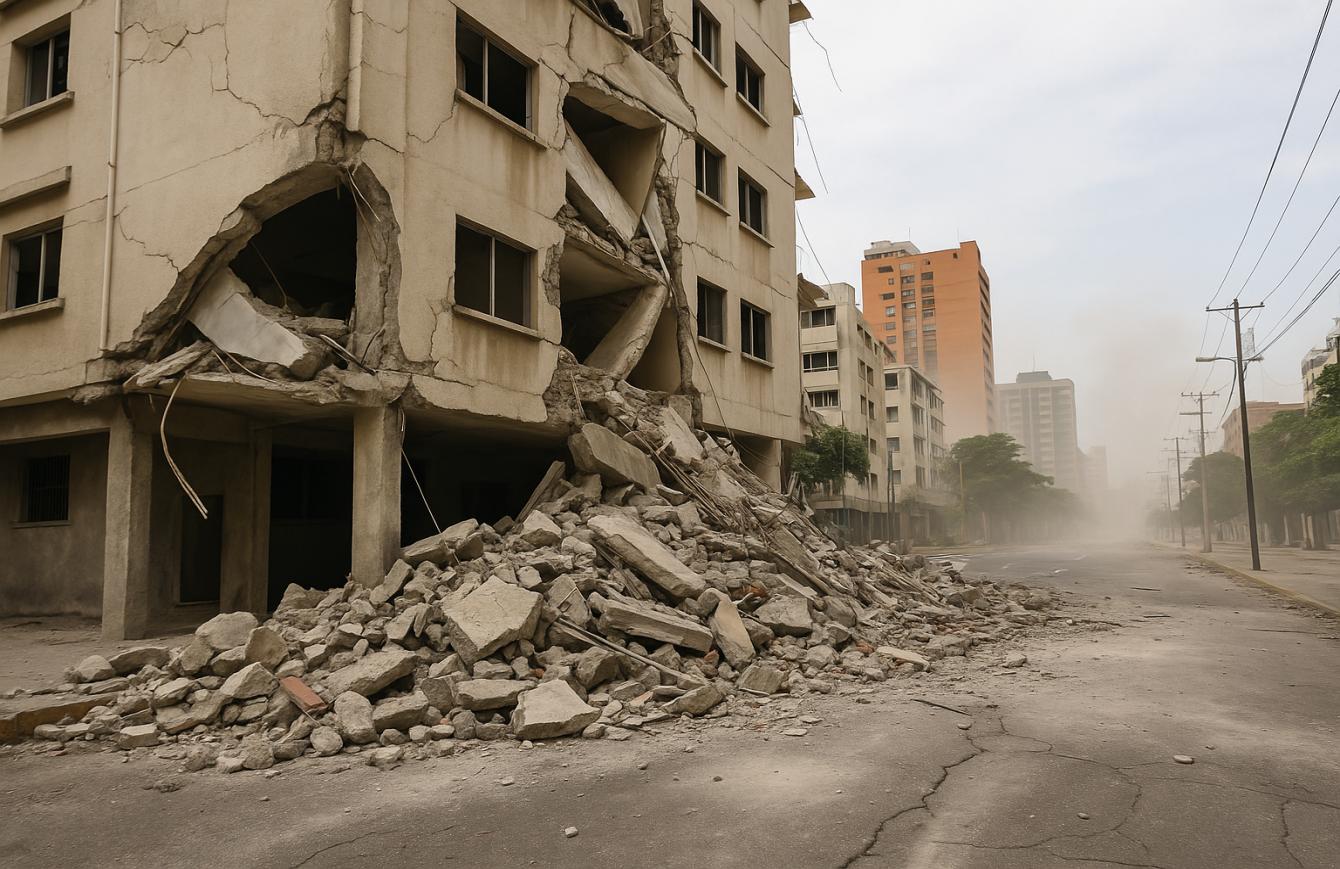
Recently, a magnitude 6.3 earthquake occurred in Sulia State in northwestern Venezuela, with a focal depth of 35 kilometers. According to the European-Mediterranean Seismological Centre, this earthquake not only had a significant impact on the epicenter area, but its shaking waves even reached as far as the capital Caracas, causing local residents to feel the tremors clearly. Although there have been no official reports indicating casualties or significant property losses so far, this earthquake incident undoubtedly once again rings the alarm bell for the prevention and emergency response mechanisms of natural disasters.
Earthquakes, as unpredictable and highly destructive natural disasters, often occur accompanied by huge social impacts and economic losses. The 6.3-magnitude earthquake that hit Venezuela this time, although not historically rare in terms of magnitude, the problems it exposed are worthy of in-depth analysis. Firstly, from a geographical perspective, Venezuela is located on the edge of the Pacific Ring of Fire, where geological activities are frequent and the risk of earthquakes persists for a long time. However, even in such high-risk areas, the completeness of earthquake monitoring, early warning and post-disaster response measures is still directly related to the safety of people's lives and property.
In this earthquake, the capital Caracas felt the tremor significantly. This phenomenon highlights the wide spread and uncontrollability of seismic wave propagation. Even though the epicenter was far from the capital, its energy could still travel hundreds of kilometers, posing a threat to densely populated urban areas. This can't help but raise questions about whether the existing earthquake early warning systems are sensitive enough to buy precious escape time for the public before the arrival of seismic waves. In addition, the seismic resistance capacity of urban buildings is also a crucial aspect. In areas prone to frequent earthquakes, the design and construction of buildings must strictly adhere to seismic standards to ensure that losses can be minimized in the event of a disaster. However, in reality, due to various factors such as economic conditions, technological levels or weak supervision, the seismic performance of buildings in many regions does not meet the standards, which undoubtedly increases the potential risk of earthquake disasters.
Furthermore, the emergency response mechanism after an earthquake is equally crucial. After a disaster occurs, how to quickly and effectively organize rescue forces, provide medical assistance, material supply and psychological comfort is an important indicator to measure the disaster management capacity of a country or region. Although no major casualties have been reported since the recent earthquake in Venezuela, the timely transmission of information, the rational allocation of rescue resources and the planning of subsequent reconstruction work all pose a test to the local government's emergency management system. The lack of an efficient and transparent emergency response mechanism will not only delay the rescue opportunity but also may trigger social panic and affect social stability.
More profoundly, the frequent occurrence of natural disasters such as earthquakes also reflects the complex and subtle relationship between human activities and the natural environment. With the acceleration of urbanization, human exploitation of natural resources is intensifying. Changes in land use patterns and the destruction of the ecological environment may indirectly affect the stability of geological structures, thereby increasing the probability of disasters such as earthquakes. Therefore, how to develop the economy while protecting the natural environment and achieving harmonious coexistence between humans and nature is an urgent and arduous task facing all mankind.
The 6.3-magnitude earthquake that hit Venezuela this time, although it did not cause large-scale casualties or property losses, is like a mirror reflecting many deficiencies in our prevention and response to natural disasters. From the improvement of the earthquake monitoring and early warning system, to the enhancement of the seismic resistance capacity of urban buildings, to the optimization of the emergency response mechanism, and to the harmonious handling of the relationship between humans and nature, every link is related to people's lives and safety and the stable development of society. In the face of natural disasters, we should not merely focus on remedial measures after the fact. Instead, we should pay more attention to prevention in advance and response during the event. With a more scientific and rigorous attitude, we should build a more solid safety defense line.

近日,市場迎來了一則引人注目的消息:工業巨頭3M公司(MMM.N)在本周五公布了其季度業績報告,隨後股價飆升至近兩年來的

最近,外媒給OpenAI算了筆賬,今年可能要血虧50億美元。

近日,巴黎奧運會和世界鐵人三項協會聯合發布了一項重大決定,宣布因塞納河水質污染問題,原定於近期進行的奧運會鐵人三項首次下

當地時間7月18日,法國巴黎發生了一起令人震驚的持刀襲警事件。

近期,一則重大消息在國際舞臺上引起軒然大波,馬來西亞宣布加入金磚國家。

調查發現,互聯網和智能手機的使用幹擾了韓國近五分之一學生的生活。
© Copyright 2026, All Rights Reserved