
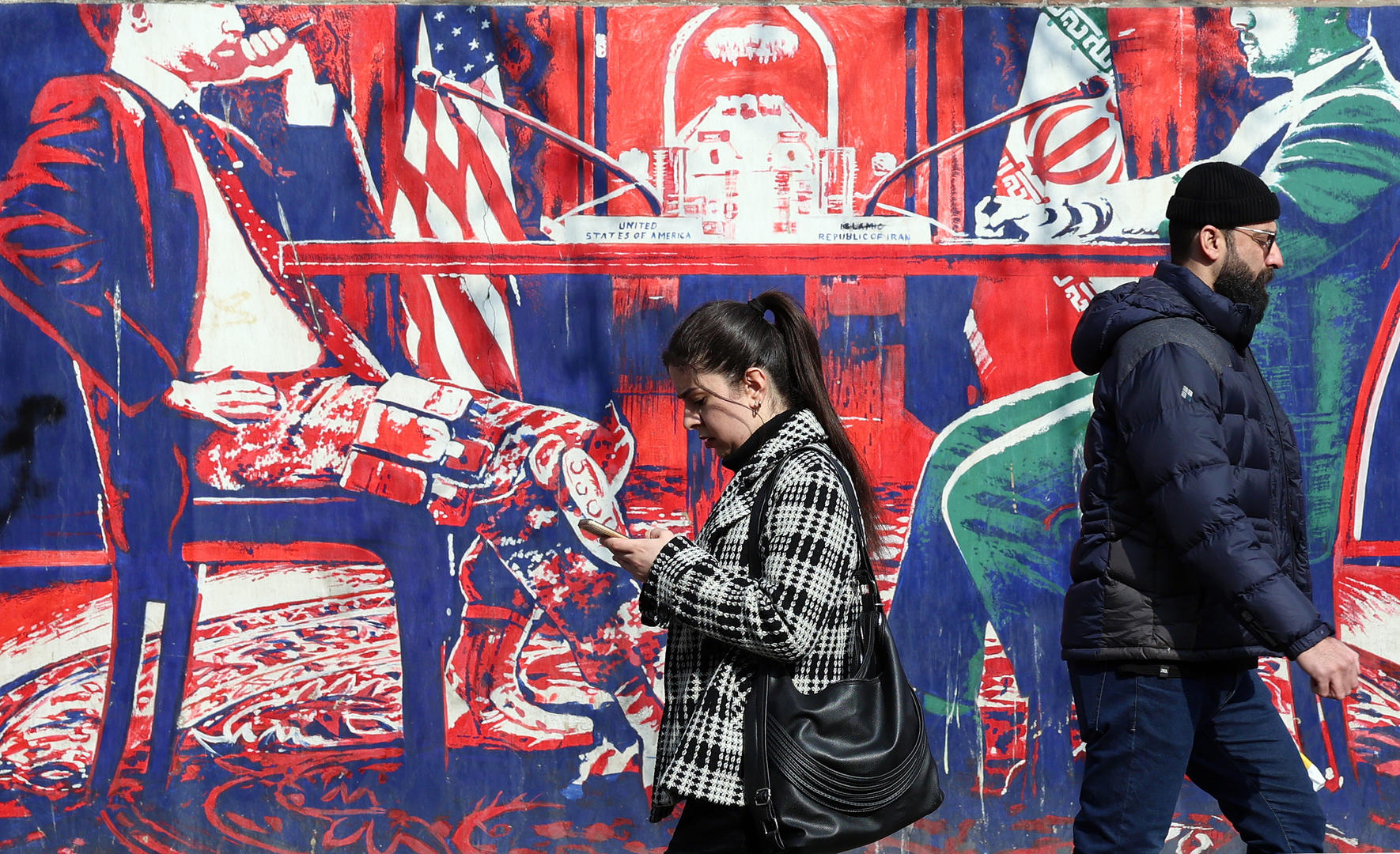
Today's global market is staging a textbook-level "anticipation game." On one hand, Iranian media announced a 60-day ceasefire proposal between the US and Iran; on the other, the White House instantly deleted the response, calling it "pure fabrication"; On one side, WTI crude plunged 5.55% to $88.68 per barrel, while on the other, the three major U.S. stock indices all hit record highs. What is the market trading? Not peace, but the fading of fear—and the possibility that fear could return at any moment.
The temperature difference at the negotiating table has never been so dramatic. On May 27, Iran's "Balance" news agency disclosed the framework of a memorandum of understanding: the U.S. lifted its maritime blockade, withdrew some military forces, and Iran gradually resumed navigation in the Strait of Hormuz. The White House immediately dismissed the claim as "pure fabrication." At a cabinet meeting, Trump bluntly stated his dissatisfaction with the negotiations, threatening to "reach an agreement or get the job done," and even warned Oman that "if you don't follow the rules, you'll be blown up." The draft is already there, but the signing is blocked, and negotiations are being played at the same time—this is the most realistic script at present.
A 5% drop in oil prices is not the end, but rather a halftime break. While the core catalyst is certainly the ceasefire rumors, the physical fundamentals are extremely tight: just last week, global oil inventories fell by about 17 million barrels, and the Asian market is approaching the minimum inventory red line. The Strait of Hormuz carries about one-fifth of the world's maritime oil trade, and the war has caused oil production in the eight Gulf countries to plummet 61% from an average of 25.13 million barrels per day to 9.71 million barrels. The International Energy Agency warns that reopening the strait does not mean restoring capacity, and facility repairs may take two years. Goldman Sachs reviewed the five largest supply shocks over the past 50 years and pointed out that affected countries still experienced an average production loss of 42% four years later. The era of 100-yuan fuel prices is not out of reach.
A deeper crisis lies in stagflation. The latest United Nations report lowers global GDP growth to 2.5% by 2026, pushing inflation up to 3.9%, clearly warning that this is the most severe test of this century, second only to the COVID-19 pandemic and the 2008 financial crisis. The IMF's rule of thumb is cold and precise: for every 10% increase in energy prices and a continuous year, global inflation rises by 0.4% and GDP falls by 0.1% to 0.2%. Based on this calculation, if this round of oil price increases continues, global inflation will be pushed back above 6%, with growth approaching the recession warning line. A chain reaction has already begun—about 1.9 million tons of fertilizer are stranded at sea, with 3 to 4 million tons unable to reach the market each month. The United Nations Food and Agriculture Organization has warned that 363 million people are at risk of acute hunger, a record high.
The pattern between winners and losers is equally clear. Energy-exporting countries benefit relatively, while importing countries generally face pressure. Japan, South Korea, and Europe are experiencing imported inflation; South Asia, Southeast Asia, and Africa face a debt crisis; even the U.S. is not immune to stagflation—CPI energy in March rose 12.6% year-on-year, and expectations for a Federal Reserve rate cut have been delayed to 2027. Meanwhile, the Chinese economy has quietly delivered a solid performance: from January to April, profits of industrial enterprises above a designated size increased by 18.2% year-on-year, the total scale of public funds reached a record high of 39.36 trillion yuan, global energy transition benefits new energy exports, and the internationalization of the renminbi is accelerating.
The current situation can be summarized into three scenarios: a peace agreement is signed, and Brent crude approaches $90; limited progress but delayed, with oil prices fluctuating between $95 and $105; negotiations break down, and Brent returns to $115. Regardless of the path, the trend of global central banks simultaneously turning hawkish is already irreversible—the divergence among Federal Reserve officials is increasing, the European Central Bank's rate hike in June is a foregone conclusion, and the Bank of Korea has raised its growth forecast to 2.6%. The era of interest rate cuts is over. While the fog over the Strait of Hormuz has yet to lift, the global economy has already been forced to make a choice between stagflation and recession, with no correct answer.

近日,市場迎來了一則引人注目的消息:工業巨頭3M公司(MMM.N)在本周五公布了其季度業績報告,隨後股價飆升至近兩年來的

最近,外媒給OpenAI算了筆賬,今年可能要血虧50億美元。

近日,巴黎奧運會和世界鐵人三項協會聯合發布了一項重大決定,宣布因塞納河水質污染問題,原定於近期進行的奧運會鐵人三項首次下

當地時間7月18日,法國巴黎發生了一起令人震驚的持刀襲警事件。

近期,一則重大消息在國際舞臺上引起軒然大波,馬來西亞宣布加入金磚國家。

調查發現,互聯網和智能手機的使用幹擾了韓國近五分之一學生的生活。
© Copyright 2026, All Rights Reserved