At the beginning of 2026, the US economy presented a rare fragmented picture: the ISM manufacturing PMI unexpectedly soared to 52.6, marking the fastest expansion rate in four years, with the new order index increasing by nearly 10 percentage points; yet the Federal Reserve paused its rate cuts at its first monetary policy meeting, and US tech stocks suffered a sell-off, with market divergence over policy paths reaching an unprecedented level. This deviation between data and policy reflects the complex game between political intervention, inflation stickiness, and growth resilience in the US economy, and its direction will profoundly affect the global financial market landscape.
The "strong signals" of the economic fundamentals contrast sharply with the "slow motion" of policies. The strong rebound in manufacturing seems to have reversed the contraction trend that lasted for nearly a year, with the backlog of orders expanding for the first time since 2022, and the recovery in export demand injecting new impetus into economic growth. The resilience is supported by factors such as the continued release of the tax rebate effect of the "Big and Beautiful Act", and the expected boost in energy and agricultural exports after the US-India trade agreement. At the same time, the employment market remains stable, with the unemployment rate falling to 4.4% in December, and stable consumer spending supporting domestic demand. However, behind this resilience lies hidden concerns: data from the S&P Global PMI shows that the growth rate of output far exceeds the sales rate, and the degree of inventory accumulation has reached a new high since the 2009 financial crisis. If future demand fails to follow through, the risks of production slowdown and employment pressure will gradually emerge.
The policy dilemma of the Federal Reserve has become the biggest source of uncertainty in the current market. After three consecutive rate cuts in 2025, the Federal Reserve paused its easing pace at the beginning of 2026, maintaining interest rates at the range of 3.5%-3.75%, and the meeting statement upgraded the economic description from "moderate" to "robust", and removed the statement of employment risks. The core logic of this decision lies in the lack of smoothness in the decline of inflation - although the CPI in December 2025 dropped to 2.7%, core sub-items such as rent and food prices accelerated in rising, and the lagging effect of tariff transmission is still ongoing. Powell clearly stated that tariff inflation may be postponed until the middle of the year, meaning that the interest rate cutting space in the first half of the year is severely limited. More complex is that the Federal Reserve is facing unprecedented political pressure: the Trump administration has repeatedly criticized Powell for cutting interest rates too slowly, and the proposed new chairperson candidate Hasit publicly advocated "immediate rate cuts", this political intervention risk has sparked widespread concerns about the independence of the Federal Reserve.
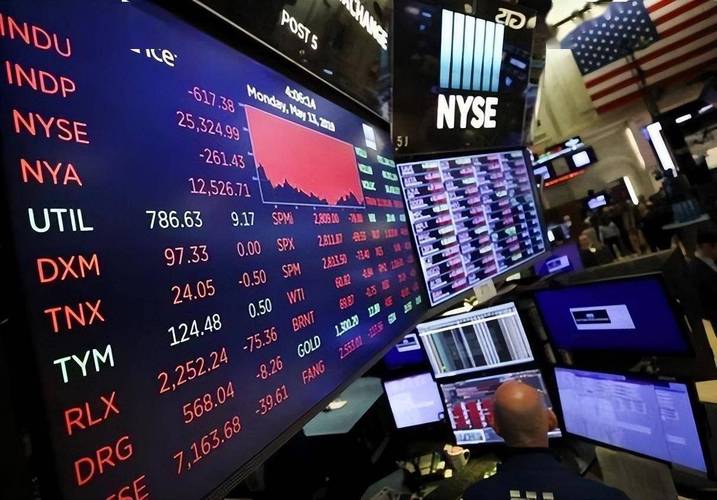
The ripple effects of policy shifts have been spreading continuously in the financial market and industrial sectors. In the capital market, the rise in US bond yields pushed the valuation of US stocks to be restructured, technology stocks suffered a sell-off due to high interest rate sensitivity, and the Nasdaq almost erased its gains for the year; while precious metals became the preferred choice for safe-haven funds, with spot gold breaking through the historical high of 4,900 US dollars per ounce, reflecting the market's dual hedging demand for inflation stickiness and policy uncertainty. In the industrial sector, the policy adjustments of the Trump administration are more disruptive: expanding offshore oil and gas extraction, relaxing automotive fuel efficiency standards, and canceling tax credits for electric vehicles. Although these measures are short-term catering to the interests of traditional manufacturing and the energy industry, in the long term, they will not only delay the process of clean energy transition but also increase inflation pressure due to energy price fluctuations and trade frictions, conflicting with the inflation governance goals of the Federal Reserve.
The future direction of the US economy will depend on the evolution of three core contradictions: First, the balance between inflation stickiness and growth resilience. If core inflation fails to fall as expected, the Federal Reserve may be forced to maintain high interest rates for a longer period, thereby suppressing investment and consumption; Second, the game between monetary policy independence and political intervention, with the determination of the new chairperson of the Federal Reserve becoming a key node, if Hasit takes office, he may push for aggressive rate cuts, although it is short-term positive for the market, it may reignite inflation; The third point is the long-term effect of industrial policy adjustments. The "backward-moving" policies in the energy and automotive industries may cause the United States to lose its competitive edge in the new energy sector and exacerbate the imbalance in the industrial structure.
Currently, the US economy is at a critical crossroads. The surface growth resilience cannot hide the deep-seated structural contradictions. The Federal Reserve needs to find a balance between data dependence and policy foresight, avoiding being misled by short-term data or being pressured by political factors; while the market needs to be vigilant of the risk of "strong data but weak foundation", and rationally view the fluctuations brought about by policy shifts. For global investors, in the coming months, they need to focus on the Federal Reserve's policy meeting in June, the dynamics of midterm elections, and core inflation data. These factors will jointly determine whether the US economy can maintain its resilience or fall into the predicament of "high inflation and low growth". In this policy fog and economic game, only by accurately grasping the essence of the contradictions can one find certain opportunities in uncertainty.

近日,市場迎來了一則引人注目的消息:工業巨頭3M公司(MMM.N)在本周五公布了其季度業績報告,隨後股價飆升至近兩年來的
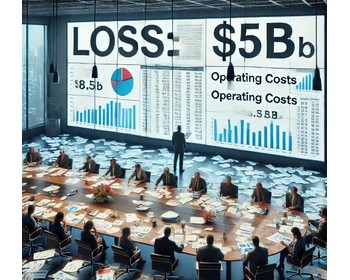
最近,外媒給OpenAI算了筆賬,今年可能要血虧50億美元。

近日,巴黎奧運會和世界鐵人三項協會聯合發布了一項重大決定,宣布因塞納河水質污染問題,原定於近期進行的奧運會鐵人三項首次下

當地時間7月18日,法國巴黎發生了一起令人震驚的持刀襲警事件。
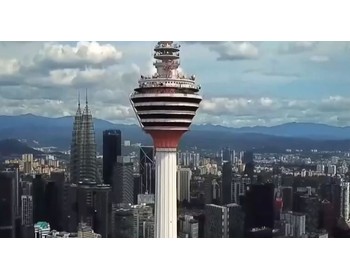
近期,一則重大消息在國際舞臺上引起軒然大波,馬來西亞宣布加入金磚國家。

調查發現,互聯網和智能手機的使用幹擾了韓國近五分之一學生的生活。
© Copyright 2026, All Rights Reserved