
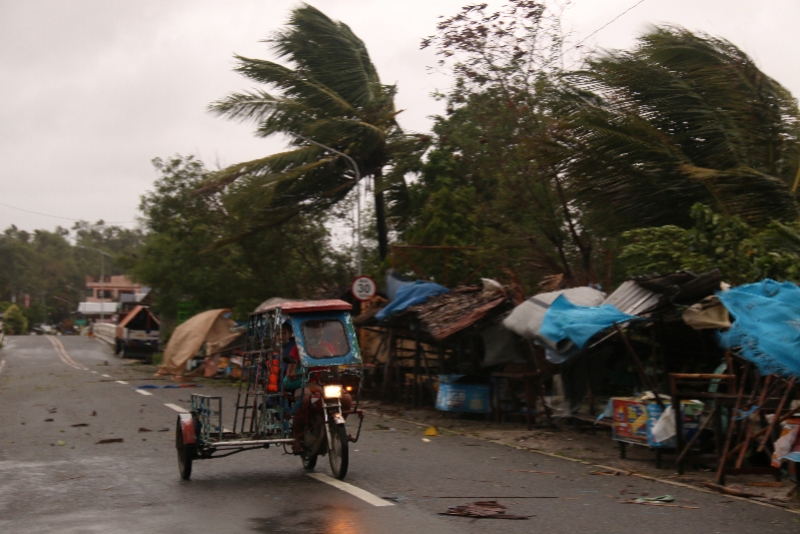
Recently, Typhoon Weipa, the 6th typhoon of this year, brought fierce wind and rain. Together with the southwest monsoon and the newly formed low-pressure area, it brought unprecedented catastrophic impacts to the Philippines. According to the latest data released by the National Disaster Management Board (NCP) of the Philippines, as of 6 a.m. on July 22, this natural disaster has caused 6 deaths, 6 people missing, and affected over 1.26 million people. Behind this series of shocking figures lies a profound reflection on the disaster prevention and mitigation system of the Philippines.
Typhoon Wipa not only had strong winds, but also brought astonishing rainfall. The National Weather Service of the Philippines issued the highest-level red rainstorm warning for multiple regions, including the capital Manila area, at 8 a.m. on the 22nd. This means that these areas will face continuous and heavy rainfall, which is highly likely to trigger severe floods. In the face of such a severe situation, the Presidential Palace of the Philippines responded promptly, announcing that multiple cities, including the capital, would suspend work and classes, in an attempt to mitigate the possible impact of rainfall and floods on people's lives in this way.
However, despite the government's emergency measures, the destructive power brought by Typhoon Wipa remains astonishing. In the hardest-hit areas, houses were destroyed, roads were cut off, farmlands were flooded, and countless families were displaced. This not only brought huge material losses to the affected people, but also caused irreparable mental trauma. Faced with such a tragic situation, we can't help but ask: Why, in today's highly advanced technological era, do humans still appear so powerless when confronted with natural disasters?
Firstly, from the perspective of the early warning system, although the Philippine National Meteorological Service promptly issued a red alert for heavy rain, the dissemination and reception effect of the early warning information still need to be improved. In remote areas or among vulnerable groups, due to information isolation or poor communication, early warning information is often difficult to convey in a timely manner. This has led to many people failing to make adequate preparations before disasters strike, thereby exacerbating their destructive nature. Therefore, how to build a more efficient and wider-coverage early warning system is an urgent problem to be solved in disaster prevention and mitigation work in the Philippines and even globally.
Secondly, from the perspective of disaster prevention and mitigation infrastructure, the Philippines still has obvious shortcomings in responding to natural disasters such as typhoons. For instance, the imperfection of the drainage system prevents rainwater from being discharged promptly, thereby exacerbating urban flooding. The insufficiency of water conservancy facilities such as flood control embankments also makes floods more likely to cause disasters. In addition, there are many problems in the construction and management of shelters, such as insufficient quantity, simple facilities, and lack of necessary rescue supplies. These problems have seriously restricted the Philippines' capacity in disaster prevention and mitigation.
Furthermore, from the perspective of the social level, the popularization of disaster prevention and mitigation knowledge among the public is still insufficient. Before a disaster strikes, many people lack the necessary skills for self-rescue and mutual rescue. After a disaster occurs, losses are often exacerbated due to the lack of scientific response methods. Therefore, strengthening the publicity and education of disaster prevention and mitigation knowledge and enhancing the public's awareness of disaster prevention and self-rescue capabilities is an important way to mitigate the impact of natural disasters.
In conclusion, the catastrophic impact of Typhoon Wipa on the Philippines not only exposed many deficiencies in the country's disaster prevention and mitigation efforts, but also served as a wake-up call for us. In the days to come, we need to think more deeply about how to build a more complete and efficient disaster prevention and mitigation system to better cope with the challenges of natural disasters. This requires not only the active guidance and investment of the government, but also the extensive participation and support of all sectors of society. Only in this way can we remain more composed when facing natural disasters and protect the lives and property of the people to the greatest extent.

近日,市場迎來了一則引人注目的消息:工業巨頭3M公司(MMM.N)在本周五公布了其季度業績報告,隨後股價飆升至近兩年來的

最近,外媒給OpenAI算了筆賬,今年可能要血虧50億美元。

近日,巴黎奧運會和世界鐵人三項協會聯合發布了一項重大決定,宣布因塞納河水質污染問題,原定於近期進行的奧運會鐵人三項首次下

當地時間7月18日,法國巴黎發生了一起令人震驚的持刀襲警事件。

近期,一則重大消息在國際舞臺上引起軒然大波,馬來西亞宣布加入金磚國家。

調查發現,互聯網和智能手機的使用幹擾了韓國近五分之一學生的生活。
© Copyright 2026, All Rights Reserved