
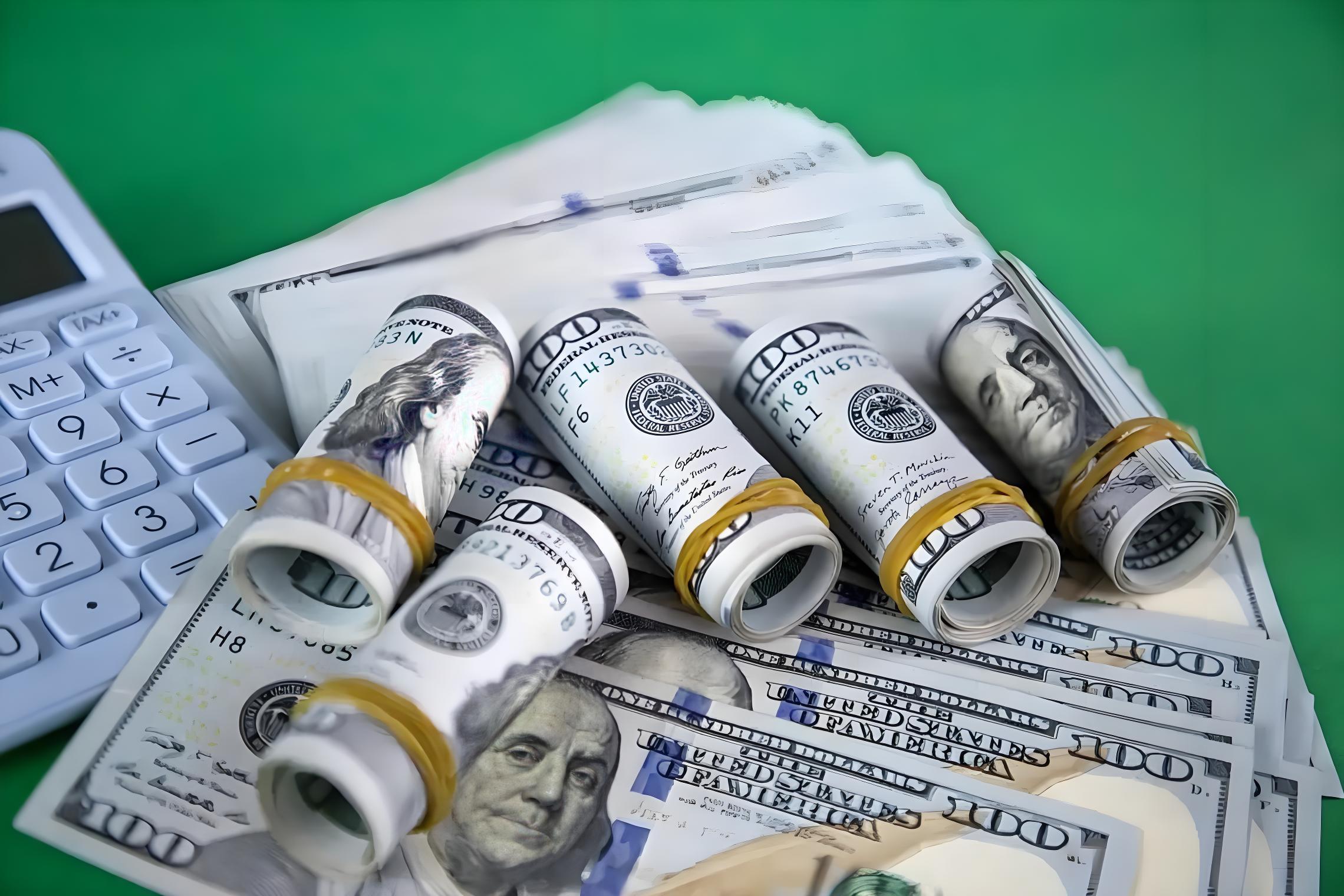
Recently, a research report released by Goldman Sachs has sent shockwaves throughout the global economic community, much like a boulder being dropped into a calm lake. Goldman Sachs has significantly raised its tariff expectations for the United States in 2025. It anticipates that the average tariff rate will increase by 15 percentage points, far exceeding the previously projected baseline of 10 percentage points. This major adjustment is primarily due to Trump's plan to announce comprehensive “reciprocal tariffs” on April 2nd. The policy aims to impose an average 15% tariff on all US trading partners. This not only signals a major shift in US trade policy but also sends a strong risk signal to the global economy.
In this research report, Goldman Sachs’ outlook for the US economic prospects is rather bleak. As trade tensions escalate, the US economy will be hit on multiple fronts. In terms of inflation, Goldman Sachs has raised its core PCE inflation forecast for the end of 2025 by 0.5 percentage points to 3.5%. The increase in tariffs raises the costs of imported goods. Eventually, these costs are passed on to consumers, driving up prices across the board and putting greater pressure on US inflation control.
Regarding economic growth, the GDP growth rate is expected to slow to 1.0% in the fourth quarter. In response to US tariff measures, trading partners are highly likely to take countermeasures, which will directly impact US export trade. Industries in the US that rely on exports, such as manufacturing and agriculture, may experience a significant decline in order volumes. As a result, corporate revenues will drop, investment and production scales will be restricted, and the overall economic growth rate will be dragged down.
The job market will also be affected. The unemployment rate is projected to climb to 4.5% by the end of the year. To cope with the rising costs brought about by tariffs, companies often cut jobs to reduce operating costs. Some small and medium-sized enterprises that depend on import and export businesses may even face the risk of collapse, leading to the disappearance of a large number of job positions and a substantial increase in the number of unemployed. Based on these unfavorable factors, Goldman Sachs has raised the probability of a US economic recession within 12 months to 35%.
In fact, many institutions and experts have previously warned about the harms of US trade protectionism. Fitch Ratings released a report, lowering its global economic growth forecast for 2025 to 2.3%. It pointed out that the trade war launched by the United States will slow down economic growth in both the US and the world, drive up US inflation, and delay the Federal Reserve's rate cuts. Joseph Stiglitz, a Nobel laureate in economics, also stated that the US government's economic policies not only damage the global trading system but may also plunge the US itself into a recession, resulting in stagflation characterized by stagnant growth and high inflation.
The research report released by China International Capital Corporation (CICC) also corroborates Goldman Sachs’ predictions. CICC estimates that if Trump's “reciprocal tariffs” are implemented, in the baseline scenario, the effective tariff rate in the US will rise from 2.4% to 16.3%, an increase of 13.9 percentage points. In the extreme scenario, it will rise to 20.2%. This will drive up US inflation and slow down economic growth.
If the United States implements the “reciprocal tariff” policy, it will not only harm its own economy but also severely disrupt the global economic order. Global trade costs will increase significantly, the risk of supply chain disruptions will intensify, and the uncertainty in the international trade environment will rise remarkably. The economic growth of many countries will be impacted to varying degrees.
The United States should abandon trade protectionism and return to a rational trade policy. Resolving trade disputes through dialogue and negotiation and promoting the establishment of a fair, open, and inclusive global trading system is the correct path to achieve sustainable economic development. Otherwise, the United States will not only struggle to achieve its expected policy goals but may also plunge itself into an economic recession quagmire, causing incalculable losses to the global economy.

近日,市場迎來了一則引人注目的消息:工業巨頭3M公司(MMM.N)在本周五公布了其季度業績報告,隨後股價飆升至近兩年來的

最近,外媒給OpenAI算了筆賬,今年可能要血虧50億美元。

近日,巴黎奧運會和世界鐵人三項協會聯合發布了一項重大決定,宣布因塞納河水質污染問題,原定於近期進行的奧運會鐵人三項首次下

當地時間7月18日,法國巴黎發生了一起令人震驚的持刀襲警事件。

近期,一則重大消息在國際舞臺上引起軒然大波,馬來西亞宣布加入金磚國家。

調查發現,互聯網和智能手機的使用幹擾了韓國近五分之一學生的生活。
© Copyright 2026, All Rights Reserved