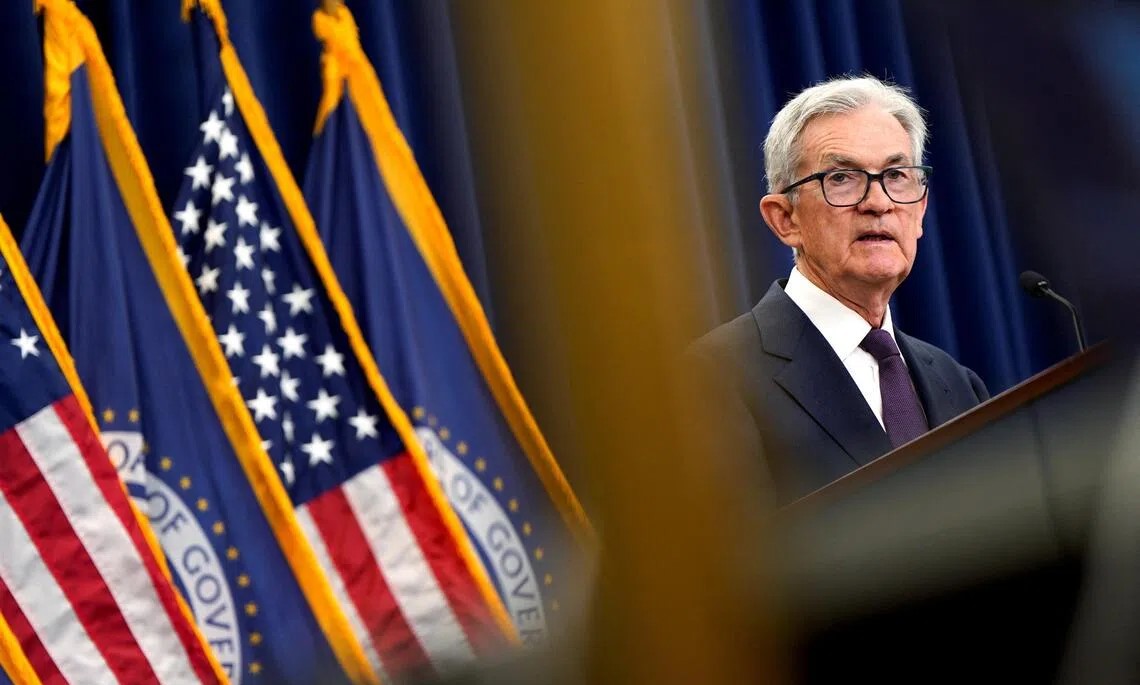
The Federal Reserve's decision to cut interest rates by 25 basis points in December has garnered widespread attention in financial markets. On the surface, a rate cut is typically seen as a conventional tool to stimulate economic growth. However, given the complex environment currently facing the U.S. economy, the rationale behind this policy adjustment and its potential impacts warrant deeper examination. From slowing economic growth and demand suppression due to high tariffs to persistent inflation risks, the U.S. economy is grappling with multiple structural contradictions. The Fed's decision appears insufficient in addressing these deeper, underlying issues.
The anticipated slowdown in economic growth is not accidental. According to the latest projections, U.S. economic growth is expected to decelerate to 2.0% in 2025. This figure is not only below the historical average but also reflects the reality of insufficient domestic demand momentum. Consumption, the core engine of U.S. economic growth, is being squeezed by multiple factors. On one hand, high tariff policies directly increase the prices of imported goods. From everyday consumer products to industrial raw materials, rising costs are ultimately passed on to consumers, eroding household purchasing power. On the other hand, businesses, forced to adjust to tariff costs, are compelled to reconfigure their supply chain layouts. Relocating some production segments to lower-cost regions has put pressure on the domestic job market, further dampening consumer confidence. This "tariff-cost-consumption" transmission chain is creating a self-reinforcing downward cycle. There is considerable doubt whether a 25-basis-point rate cut can effectively break this cycle.
The demand-suppressing effects of high tariffs are already evident. The trade wars initiated during the Trump administration were intended to support domestic industries through protectionist policies, but the actual results have been contrary to the original intent. Plans for manufacturing reshoring have progressed slowly, with some sectors even accelerating their relocation abroad due to rising tariff costs. For example, to avoid tariffs on Chinese goods, the automotive manufacturing industry has moved some production lines to Mexico or Southeast Asia, leading to a reduction in related domestic jobs. Simultaneously, in the agricultural sector, retaliatory tariffs imposed by major export markets like China have obstructed agricultural exports, caused severe inventory backlogs, decreased farmer incomes, and further dragged down rural consumption. This dual squeeze on both supply and demand continuously diminishes the marginal effect of a rate cut on stimulating demand. After all, when consumers face higher living costs and employment uncertainty, their willingness to borrow and spend is inhibited, even if loan interest rates decline.
The risk of persistent inflation is even more critical and cannot be ignored. One context for the Fed's rate cut is that, although the inflation rate has retreated from its peak, it remains above the 2% target. However, cutting rates could further exacerbate inflationary pressures. First, a low-interest-rate environment stimulates credit expansion and pushes up asset prices, particularly in real estate and the stock market. This "wealth effect" could indirectly drive up consumer prices. Second, the supply chain restructuring caused by tariffs is a long-term process. To cope with uncertainty, businesses often choose to hoard raw materials or produce in advance. This "precautionary inventory" behavior can exacerbate short-term supply-demand imbalances, pushing prices higher. More critically, the current drivers of U.S. inflation have shifted from the demand side to the supply side. As a demand management tool, a rate cut has limited effectiveness in solving supply-side problems. For instance, energy prices fluctuate sharply due to geopolitics, and the labor market suffers from structural shortages due to tighter immigration policies—factors that a rate cut cannot resolve.
From a broader perspective, the U.S. economy is caught in a policy dilemma: the combination of high tariffs and rate cuts is essentially a contradictory overlay of protectionism and loose monetary policy. Protectionism attempts to alter market dynamics by artificially erecting barriers, but market forces always seek a new equilibrium, such as regional supply chain reorganization. Meanwhile, loose monetary policy, while stimulating demand, may also intensify asset bubbles and inflationary pressures. The short-term effectiveness of this policy mix is likely limited, and in the long run, it could damage economic resilience. For example, businesses sacrificing efficiency to cope with tariff costs and consumers reducing savings to counter inflation are behaviors that might alleviate immediate pain but weaken the economy's long-term growth potential.
The Federal Reserve's December rate cut decision is a stopgap measure under multiple pressures: slowing economic growth, demand suppression by high tariffs, and persistent inflation. However, this policy adjustment fails to adequately address the deep-seated structural contradictions facing the U.S. economy. To achieve sustainable growth, the United States needs to reassess its trade policies, reduce artificial intervention, and allow the market to play a decisive role in resource allocation. Simultaneously, monetary policy should focus more on being forward-looking to avoid conflicting with fiscal policy. Only in this way can the economy avoid falling into the stagflation trap of "low growth and high inflation."

近日,市場迎來了一則引人注目的消息:工業巨頭3M公司(MMM.N)在本周五公布了其季度業績報告,隨後股價飆升至近兩年來的
最近,外媒給OpenAI算了筆賬,今年可能要血虧50億美元。

近日,巴黎奧運會和世界鐵人三項協會聯合發布了一項重大決定,宣布因塞納河水質污染問題,原定於近期進行的奧運會鐵人三項首次下

當地時間7月18日,法國巴黎發生了一起令人震驚的持刀襲警事件。

近期,一則重大消息在國際舞臺上引起軒然大波,馬來西亞宣布加入金磚國家。

調查發現,互聯網和智能手機的使用幹擾了韓國近五分之一學生的生活。
© Copyright 2026, All Rights Reserved